
Introduction
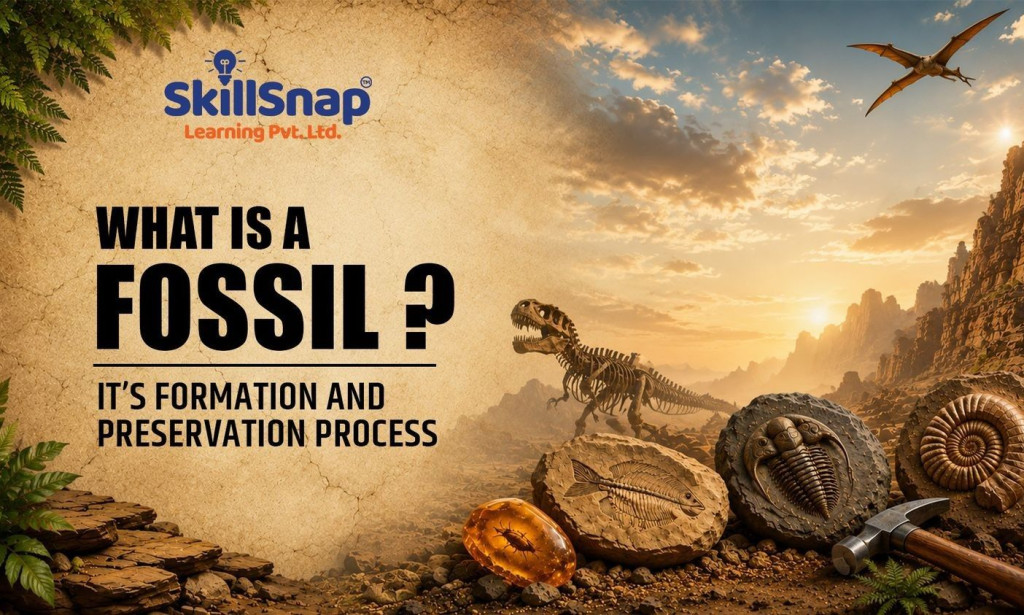
Fossils are the preserved remains, impressions, or traces of ancient plants and animals that lived on Earth millions of years ago. They serve as important evidence of past life and help scientists understand how living organisms have changed over time. Fossils can be found in various parts of the world, especially in sedimentary rocks, and may include bones, teeth, shells, leaves, footprints, and other signs of ancient organisms. By studying fossils, researchers gain valuable insights into Earth's history and the evolution of life.
What Is a Fossil?
A fossil is any preserved evidence of a living organism from the distant past. Fossils can be the actual remains of plants and animals or traces left behind by them. These traces may include footprints, burrows, or impressions in rocks. Most fossils are formed over thousands or millions of years and provide a glimpse into life that existed long before humans appeared on Earth.
Fossils are important because they help scientists identify extinct species and understand how different organisms are related. They also reveal information about ancient ecosystems and environmental conditions that existed in different geological periods.
Why Are Fossils Important?
The study of fossils, known as paleontology, helps scientists learn about the history of life on Earth. Fossils provide evidence of how plants and animals evolved and adapted to changing environments. They also help researchers understand major events such as climate changes, natural disasters, and mass extinctions.
By examining fossils, scientists can reconstruct ancient habitats and determine what kinds of organisms lived together. This information helps create a clearer picture of Earth's biological and geological history.
How Are Fossils Formed?
Fossils are usually formed when a plant or animal dies and becomes buried under layers of mud, sand, or sediment. These layers protect the remains from decay and scavengers. Over time, additional layers accumulate and harden into rock.
As millions of years pass, minerals carried by groundwater may replace or fill the remains, preserving their shape and structure. In some cases, only impressions or traces of the organism survive. The fossilization process is rare, which is why only a small percentage of ancient organisms become fossils.
Conclusion
Fossils are valuable records of ancient life that help scientists understand evolution, extinct species, and Earth's changing environments. Through fossil formation and preservation, evidence of organisms from millions of years ago survives to tell the story of our planet's past. Studying fossils continues to provide important discoveries about the history of life on Earth.

You must be logged in to post a comment.