

A backyard pool is one of the most rewarding upgrades a Central Texas homeowner can make. Long, warm summers mean the swimming season here can stretch from late spring well into fall. When families start planning a pool, the first big decision is usually the type of pool to build. Fiberglass has become a popular choice across the region, and for good reasons.
This guide walks through seven things homeowners in towns like Waco, Temple, Killeen, Belton and Harker Heights should know before choosing a fiberglass pool.
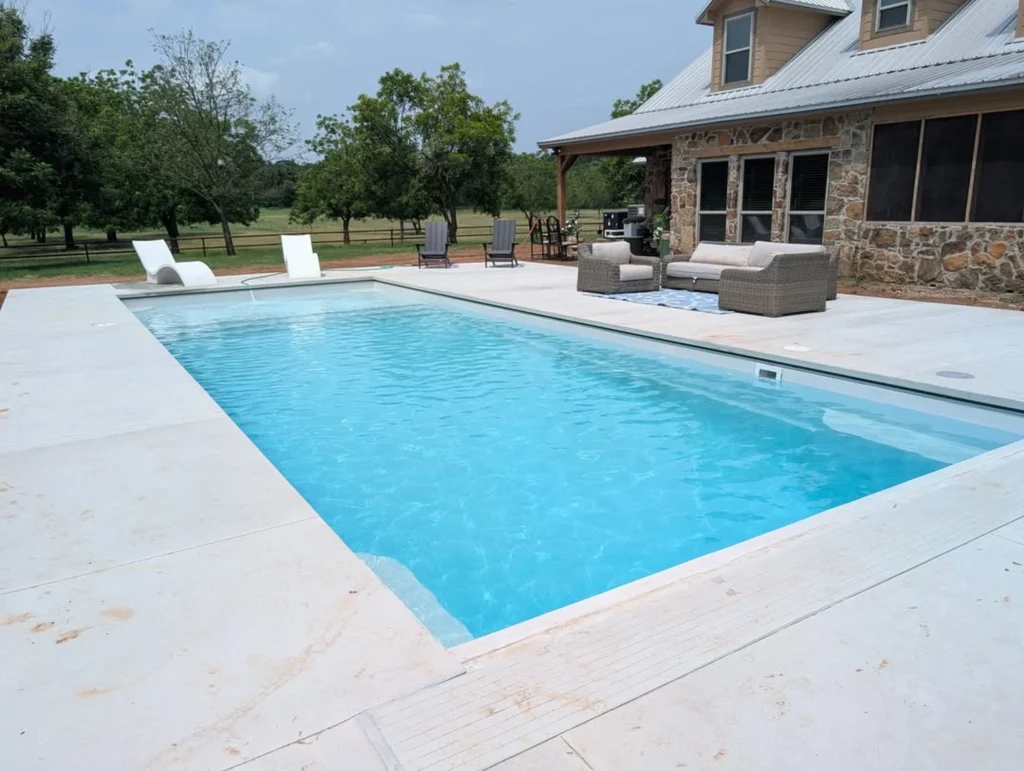
Image description: A finished fiberglass pool with a clean, modern backyard layout in Central Texas.
1. What Is a Fiberglass Pool?
A fiberglass pool is a single, pre-formed shell that is built in a factory and then delivered to your home on a truck. The installation crew excavates the yard, prepares a level base, sets the shell in place with a crane, and then connects the plumbing, equipment and backfill around it.
Because the shell is made in a controlled factory setting, the shape, depth and finish are consistent from pool to pool. Many models also come with built-in steps, benches and tanning ledges molded right into the shell.
2. How Long Does Installation Take?
Speed is one of the biggest advantages of fiberglass. Since the shell arrives finished, there is no on-site concrete shooting, curing or plastering. Many fiberglass projects are swim-ready in a few weeks once permits are approved, while a custom concrete pool often takes a few months.
For families who want to enjoy the pool this summer instead of next year, a shorter build schedule makes a real difference.
3. Why Does Soil Matter in Central Texas?
Much of Central Texas sits on clay-rich soil that expands when it gets wet and shrinks when it dries out. This band of land is known as the Texas blackland prairies, and its soil movement is something every builder in the area has to plan for.
Fiberglass shells have a small amount of natural flexibility, which helps them handle gradual ground movement well. Good preparation still matters, so a proper gravel base, careful backfill and correct drainage are all part of a quality installation.
Tips for building on clay soil
- Ask your installer how they prepare the base under the shell.
- Make sure roof gutters and yard drainage carry water away from the pool area.
- Keep the water level steady, especially during long dry spells.
4. Is a Fiberglass Pool Easier to Maintain?
The inside of a fiberglass pool is finished with a smooth gel coat. This surface is non-porous, so algae has a harder time taking hold compared with rougher surfaces. Many owners find they spend less time brushing and use fewer chemicals to keep the water clear.
Fiberglass also does not need the periodic replastering that concrete pools require, which helps keep long-term ownership costs predictable.
5. What Shapes and Sizes Are Available?
Fiberglass pools come in a wide range of designs, including:
- Rectangular pools for a clean, modern look and lap swimming.
- Freeform and kidney shapes for a relaxed, natural feel.
- Models with tanning ledges, where kids can splash and adults can lounge in a few inches of water.
- Matching spas and swim spas for year-round relaxation.
Because shells are transported by road, width is usually limited to around 16 feet. Most backyards fit comfortably within that range, and there are plenty of lengths and depths to choose from.
6. Which Features Make a Pool Feel Complete?
The pool itself is only part of the backyard experience. Popular add-ons in Central Texas include:
- LED lighting for evening swims and color effects.
- Shade structures such as pergolas to beat the afternoon sun.
- Patios and decking with space for outdoor furniture.
- Variable-speed pumps that run quietly and use less energy.
7. What Should You Ask Before Hiring an Installer?
Choosing the right builder is just as important as choosing the right pool. Before signing, ask these questions:
- Do you handle permits and inspections with the city?
- Which fiberglass manufacturer do you install, and what warranty comes with the shell?
- How do you prepare the base for clay soil?
- Will the safety barrier or fence meet local code? Many cities require pool barriers at least 48 inches tall.
- Can you show photos of finished local projects?
A local, experienced installer will be happy to answer each one. For example, Backyard Boyz Texas, a family-run fiberglass pool installer based in Rosebud, works with homeowners throughout the Waco, Temple and Killeen area on pools, spas and complete backyard upgrades.
Final Thoughts
A fiberglass pool offers a fast build, a smooth low-maintenance surface and a design that suits the shifting clay soils found across much of Central Texas. By understanding the options and asking the right questions up front, you can turn your backyard into a place your family will enjoy for many summers to come.

You must be logged in to post a comment.