

YouTube is filled with useful information, including tutorials, interviews, lectures, podcasts, product reviews, and technical discussions. As AI assistants become more capable of working with external information, developers are looking for practical ways to connect these systems with video content. A youtube transcript mcp server can help bridge that gap by making transcript information accessible to AI applications through a structured interface.
Instead of manually copying text from videos, an AI assistant can potentially request transcript data and use it as part of a larger workflow.
What Is an MCP Server?
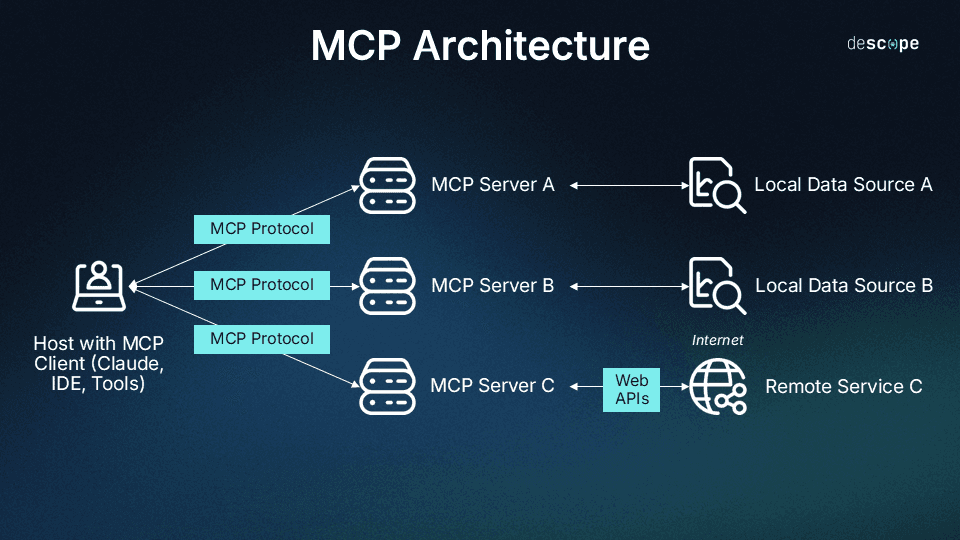
MCP stands for Model Context Protocol. It is a framework designed to help AI applications interact with external tools and data sources in a consistent way.
An MCP server can expose specific capabilities to an AI client. Rather than building a separate integration for every individual AI application, developers can create tools that follow the MCP approach and allow compatible clients to interact with them.
When transcript retrieval is included as an MCP tool, AI assistants can potentially access video-related text without requiring users to manually provide the transcript.
How a YouTube Transcript MCP Server Works
A typical setup involves an AI client, an MCP server, and a transcript source. The user may provide a YouTube video URL or request information about a particular video. The AI client sends an appropriate request through the MCP connection.
The MCP server then handles the transcript-related task and returns structured information to the client. Depending on the implementation, the returned data may include transcript text, timestamps, language information, or other relevant details.
The AI assistant can then use that information to answer questions, summarize content, or perform another supported task.
Why Connect YouTube Transcripts With AI?
Video contains a large amount of information, but AI systems generally work more easily with structured text. Transcripts provide a bridge between spoken content and text-based processing.
For example, an AI assistant could use transcript data to identify the main topics discussed in a long interview. Instead of requiring the user to watch the entire recording, the assistant could work with the available text and provide a concise summary.
Developers can also create workflows for extracting specific information from videos, depending on the capabilities of their applications.
Useful Applications
There are many potential applications for a transcript-focused MCP server. Researchers could use it to retrieve text from educational videos and then ask an AI assistant to identify relevant sections.
Students could use compatible tools to review lectures and locate explanations of specific concepts. Content teams could analyze interviews or discussions and organize important topics.
Developers could also combine transcript retrieval with other tools. For example, transcript data could be passed to a summarization system, a search tool, or a knowledge-management workflow.
The usefulness depends on what the MCP server exposes and how the AI client handles the returned information.
Timestamps Make Video Research Easier
Timestamps can add significant value to transcript-based workflows. A transcript containing timestamps allows an AI assistant to associate particular statements with specific moments in a video.
If a user asks where a particular subject was discussed, an application could potentially identify the relevant section and point back to the corresponding time.
This creates a more useful connection between text-based AI interactions and the original video.
Challenges to Consider
Building a reliable transcript MCP server requires more than simply retrieving text. Transcript availability can vary between YouTube videos, and some videos may not provide accessible captions.
Automatically generated captions can also contain errors. Names, technical terminology, numbers, accents, and unclear audio can affect transcript quality.
A well-designed server should therefore handle missing transcripts and retrieval errors gracefully. It should also make the returned data predictable so that AI clients can process it consistently.
Security and Responsible Data Use
Security is important whenever an MCP server connects an AI application to an external data source. Developers should carefully control which tools are exposed and how requests are handled.
Content rights are another consideration. A transcript may represent copyrighted video content, so applications should avoid assuming that accessible transcript data can automatically be republished or redistributed.
Developers should consider applicable copyright requirements, platform rules, and the terms of the transcript source they use.
The Future of Video-Aware AI Tools
As AI assistants become more connected to external tools, structured access to video information can become increasingly useful. An MCP-based approach provides a standardized way to expose capabilities that AI clients can use within larger workflows.
A youtube transcript mcp server can be one component in this ecosystem, connecting spoken video content with AI-powered search, summarization, research, and analysis.
Conclusion
A youtube transcript mcp server provides a practical concept for connecting AI assistants with YouTube transcript information. By exposing transcript retrieval through an MCP-compatible interface, developers can create workflows that make video content easier for AI systems to search, analyze, and summarize.
The quality of such a system depends on transcript availability, accuracy, reliable error handling, and responsible use of video content. With those considerations in place, transcript access can become a useful building block for AI-powered video research and information tools.

Add comment