

Gold and platinum both look stunning in a finished ring. But they behave very differently once you actually wear one. One is soft, warm-toned, and endlessly customizable. The other is dense, tough, and built to hold its color and shape with almost no change over the years.
So which one actually wins? It depends on what matters most to you. Below is a full breakdown of the key differences, the real pros and cons, and what each metal typically costs.
Gold vs Platinum: The Quick Comparison
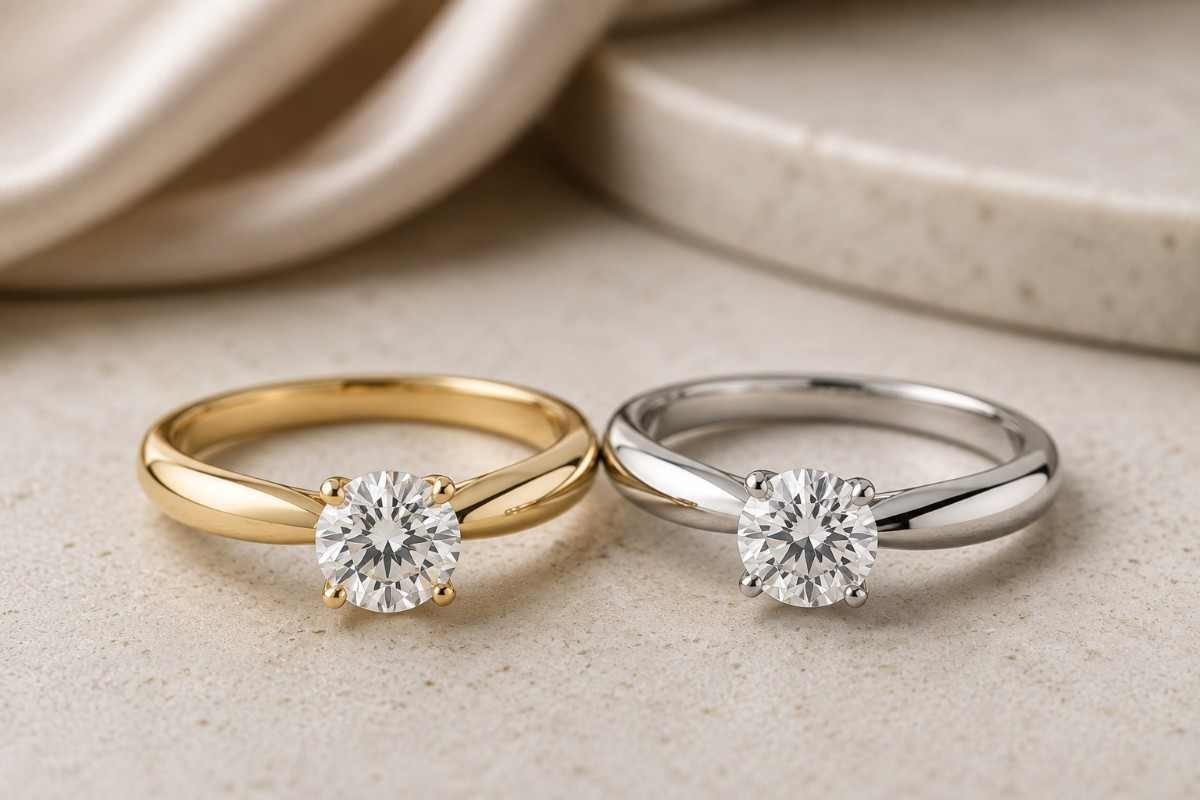
| Feature | Gold | Platinum |
|---|---|---|
| Durability | Softer, more prone to scratches | Very durable, resists wear well |
| Natural color | Yellow, white (plated), rose | Naturally white, never fades |
| Weight | Lighter on the hand | Noticeably heavier |
| Maintenance | White gold needs occasional replating | Low maintenance, develops a soft patina |
| Typical cost | More affordable | Generally higher, due to density and rarity |
| Best suited for | Color variety, budget flexibility, detailed designs | Long-term durability, sensitive skin, low upkeep |
Key Differences Between Gold and Platinum
Composition and Purity
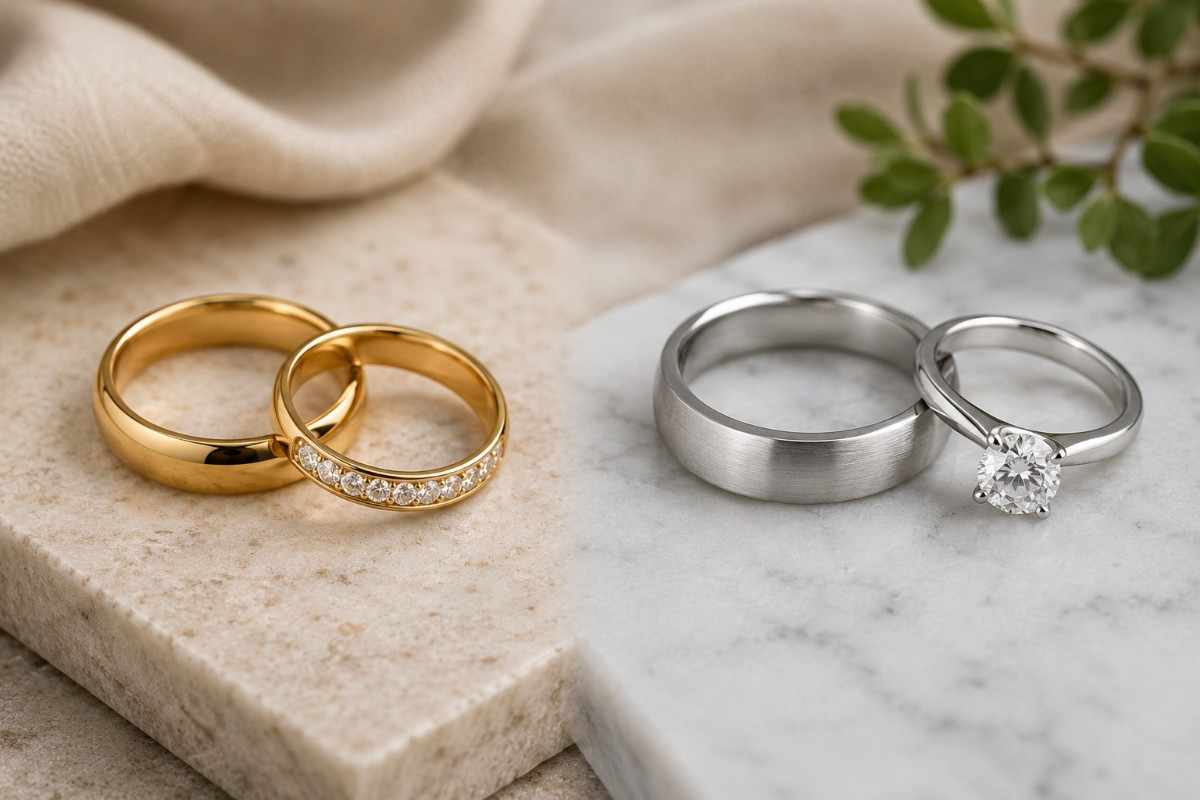
Gold jewelry is almost never pure 24K, since pure gold is too soft for daily wear. Most rings use 14K or 18K gold, mixed with other metals for strength. Platinum jewelry, by contrast, is typically 95% pure or higher, marked with a 950 or 900 stamp, since platinum is naturally strong enough to use at a much higher purity.
Color
Gold comes in three main tones: warm yellow, bright white (achieved through rhodium plating), and soft pink rose gold. Platinum only comes in one natural color — a bright, slightly grey-toned white that never needs plating or color treatment.
Density and Weight
Platinum is significantly denser than gold. A platinum ring will feel noticeably heavier than a gold ring of the same size, which some wearers love for its substantial feel, while others find it more than they expected.
Durability Over Time
This is where the two metals diverge the most. Gold, being softer, scratches more easily with daily wear. Platinum resists scratching far better, and instead of wearing away, it develops a brushed-looking surface called a patina over years of use — which can be polished back to a mirror shine at any time.
Pros of Gold
- Comes in three distinct colors: yellow, white, and rose
- Generally more affordable at comparable purity levels
- Easier for jewelers to shape into intricate, detailed designs
- Wide availability across nearly every price range
Cons of Gold
- Scratches and shows wear faster than platinum
- White gold needs periodic rhodium replating to stay bright
- Lower-karat gold can occasionally irritate sensitive skin due to alloy content
Pros of Platinum
- Highly durable and resistant to scratching
- Naturally white, with no plating or color treatment required
- Holds prongs and diamonds more securely over time
- Hypoallergenic, due to its high purity level
Cons of Platinum
- Typically more expensive than gold
- Heavier, which isn't always a preferred feel
- Only available in one natural color
Gold vs Platinum: Cost Breakdown
 Caption
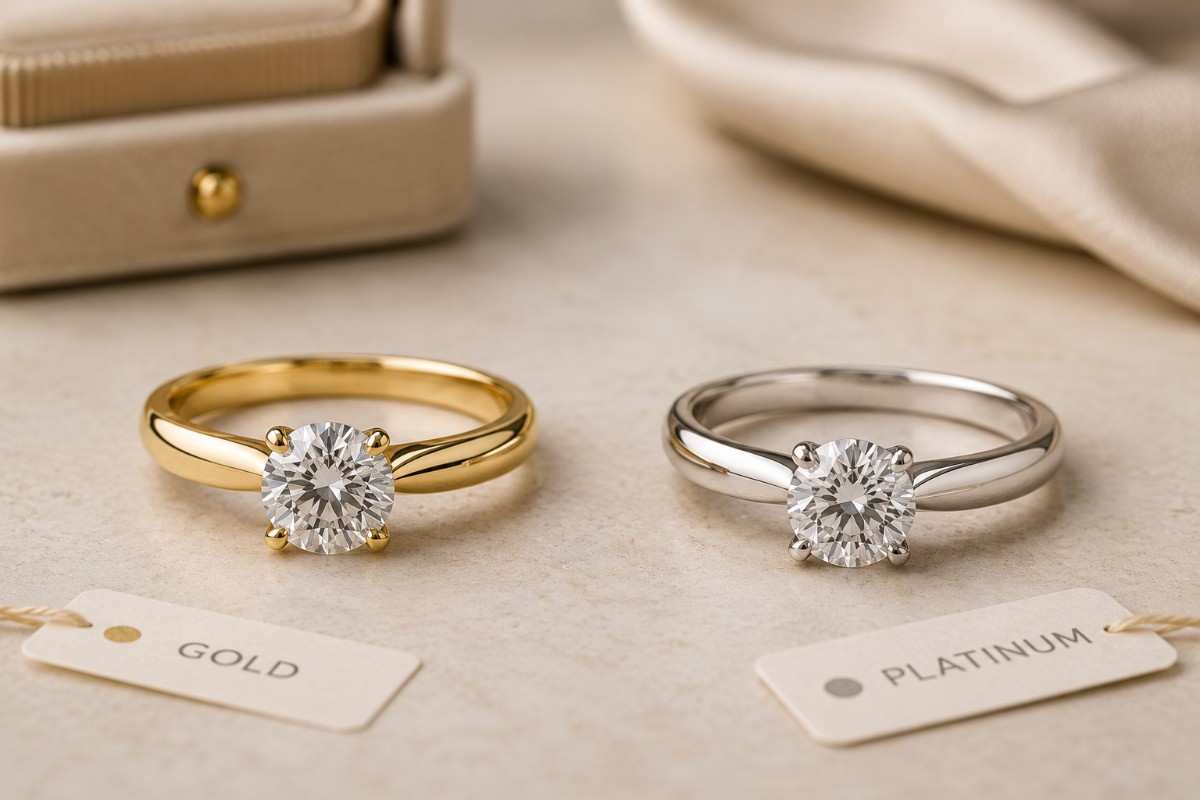
Platinum usually costs more than gold for a few clear reasons: it's rarer, denser (so a ring uses more raw metal by weight), and typically sold at a higher purity level. Gold offers more flexibility across budgets, especially at lower karats like 14K, which balances durability and cost well for everyday jewelry.
It's worth considering long-term cost too, not just the sticker price. A white gold ring needs rhodium replating every year or two to maintain its bright color, which adds ongoing cost that platinum simply doesn't require.
How the Setting Changes the Decision
The metal isn't the only factor shaping how a ring looks and wears. The setting plays a major role too. If you want a fuller, more eye-catching look regardless of which metal you choose, it's worth browsing halo rings for women, since the extra ring of diamonds adds brightness and visual size on top of whatever metal sits underneath it. A halo setting in platinum offers maximum durability with real presence. The same halo setting in gold offers more color flexibility with a slightly softer, more classic feel.
Which Metal Should You Choose?
Choose gold if you want color options, a lower price point, or intricate detailing in the design. Choose platinum if you want minimal maintenance, maximum durability, or you have sensitive skin. Neither metal is objectively better — they're built for different priorities, and both can look equally elegant in the right setting.
Practical Buying Tips
.jpeg)
- Ask about karat and purity upfront — 14K or 18K for gold, 950 or 900 for platinum.
- Factor in long-term maintenance costs, not just the initial price.
- Try both metals on in person if you can, since weight and color read differently than they do in photos.
- Confirm the warranty and resizing policy before buying, especially if you plan to Buy engagement ring online, since you won't get to feel the weight or color in person before deciding.
Frequently Asked Questions
Is platinum really stronger than gold?
Yes. Platinum is denser and more durable than gold, which means it resists scratching and wear better over years of daily use.
Does white gold look the same as platinum?
At first, yes. But white gold gets its bright white color from a rhodium coating that wears off over time. Platinum is naturally white all the way through, so it never needs that coating.
Which metal is better for someone with allergies?
Platinum is usually the safer option. It's typically 95% pure or higher, which makes allergic reactions far less likely compared to lower-karat gold alloys.
Is platinum always more expensive than gold?
In most cases, yes, because platinum is rarer and denser, which increases both material and manufacturing cost. Gold offers more flexibility for different budgets.
Can I get a halo setting in either metal?
Yes. Halo settings work beautifully in both gold and platinum. The choice comes down to whether you want more color options and a lower price point (gold) or maximum durability and no maintenance (platinum).
Final Thought
There's no universal winner in the gold vs platinum comparison. Gold gives you color, detail, and flexibility. Platinum gives you strength, simplicity, and peace of mind. The best choice is the one that matches how you'll actually wear the ring, every day, for years to come.

You must be logged in to post a comment.