

Introduction
Warning indication is an important part of many electrical and industrial systems. Operators may need to recognize a fault, machine condition, process warning, or attention signal without constantly monitoring the equipment.
There are several ways to provide this indication.
One option is to use separate audible and visual devices. Another is to use a combined Buzzer cum flasher, which incorporates both functions into one product.
The right approach depends on the requirements of the application rather than simply choosing one format universally.
What Is a Buzzer cum flasher?
A combined warning unit integrates an audible buzzer and flashing visual indication into a single device.
When activated, it can provide:
- An audible alert
- A flashing visual signal
- A compact installation arrangement
- Combined warning functionality
This design can be useful when both forms of indication are required in the same location.
What Are Separate Buzzer and Flasher Units?
With separate components, the audible warning device and visual indicator are installed independently.
This arrangement can provide greater flexibility in some panel designs. For example, the buzzer may be positioned in one location while the flashing indicator is installed where visibility is better.
However, using separate components may require additional panel space, wiring, mounting arrangements, and component coordination.
Installation Space
Space is an important consideration in control-panel design.
A combined unit can help consolidate two warning functions into one location. This may be useful for compact panels or installations where the designer wants a simple front-panel arrangement.
Separate components may require two mounting positions and potentially more space.
Before selecting either arrangement, review the panel drawing and available mounting area.
Wiring Considerations
Separate devices may require independent wiring for the audible and visual functions.
A combined unit can provide both functions through one integrated product, although the exact wiring arrangement depends on the model.
The important point is to review the manufacturer's wiring diagram rather than assuming that every combined device uses the same connection method.
Maintenance
Maintenance requirements can also influence product selection.
With separate components, one failed function can potentially be addressed independently. With a combined device, the maintenance approach depends on the construction of the product and the manufacturer's service or replacement recommendations.
The best arrangement should therefore be considered in relation to the site's maintenance practices and spare-parts strategy.
Application Flexibility
Separate devices may provide more flexibility when sound and visual indication need to be positioned differently.
For example, a flashing indicator may need to be located where it is clearly visible, while the buzzer may need to be positioned for suitable audible coverage.
A combined unit is more appropriate where both warning functions can effectively operate from the same location.
Panel Appearance
A combined warning device can create a simple and organized appearance on a control panel.
Instead of placing separate devices next to each other, one unit can provide both functions. This can be useful for standardized panel layouts.
However, visual design should always support the operator's ability to identify and understand the warning.
Quick Comparison
| Consideration | Combined Unit | Separate Devices |
|---|---|---|
| Audible indication | Integrated | Independent |
| Flashing indication | Integrated | Independent |
| Panel space | Can be more compact | May require additional space |
| Wiring | Depends on model | Individual connections |
| Positioning | Usually one location | Can be positioned separately |
| Maintenance | Combined product approach | Functions can be serviced separately |
| Panel layout | Compact arrangement | Greater positioning flexibility |
When a Combined Device May Be Considered
A Buzzer cum flashermay be considered when:
- Both sound and light are needed together
- Panel space is limited
- A compact warning arrangement is preferred
- Both signals can be positioned at the same location
- A simplified front-panel design is desired
When Separate Devices May Be Considered
Separate components may be useful when:
- Audible and visual alerts require different positions
- Independent control is necessary
- The panel design allows additional components
- Maintenance procedures favor individual replacement
- Different specifications are required for sound and visual indication
Comparing Combined and Separate Warning Devices
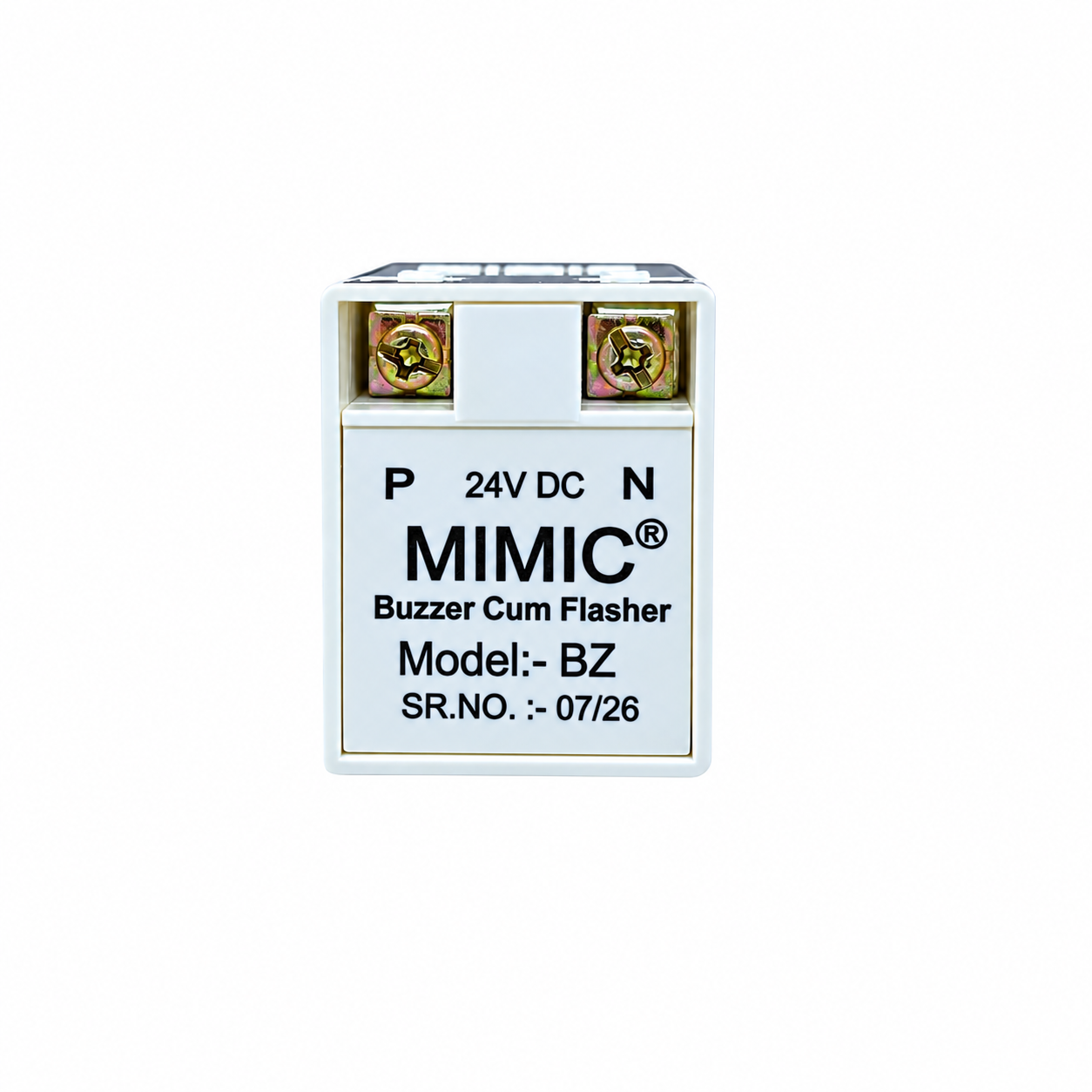
Buzzer cum flasher vs Separate Warning Components
Selection Checklist
Before making a decision, consider:
- Available panel space
- Required operating voltage
- AC or DC supply
- Desired mounting arrangement
- Wiring requirements
- Operator position
- Environmental conditions
- Maintenance strategy
- Required warning functions
- Manufacturer specifications
Frequently Asked Questions
Is a Buzzer cum flasher better than separate devices?
The choice depends on the application. A combined unit may suit installations where sound and flashing indication are needed together, while separate components may offer more positioning or control flexibility.
Does a combined device reduce wiring?
It may simplify the overall arrangement, but wiring requirements vary by product. Always follow the manufacturer's wiring diagram.
Can separate devices be installed in different locations?
Yes, depending on the system design. This is one of the practical reasons separate components may be selected.
Which option requires less panel space?
A combined device can potentially require less mounting space because two warning functions are incorporated into one unit. Actual dimensions should be checked before installation.
Can a combined unit be used in automation systems?
Yes, suitable models can be integrated into automation and control applications when their electrical specifications match the control circuit.
What should I consider before choosing?
Review voltage, mounting space, wiring, environmental conditions, warning requirements, operator visibility, maintenance needs, and the manufacturer's technical specifications.
Conclusion
Choosing between a combined warning device and separate components depends on the requirements of the electrical system. A Buzzer cum flasher brings audible and flashing indication together, which can be useful for compact control-panel arrangements and applications where both alerts are needed in the same location.
Separate devices, on the other hand, can provide greater flexibility in positioning and individual control.
Rather than selecting one arrangement based only on convenience, evaluate the panel layout, electrical requirements, operating environment, maintenance approach, and operator needs. A clear understanding of these factors can help create a warning system that is practical, organized, and suitable for its intended application.

Add comment