

“The blood you donate gives someone another chance at life. One day that ‘someone’ may be a close relative, a friend, a loved one—or even you.”
World Blood Donor Day is celebrated on June 14 each year. The World Health Organization (WHO), the International Federation of Red Cross and Red Crescent Societies, the International Federation of Blood Donor Organizations (IFBDO), and the International Society of Blood Transfusion (ISBT) were the first international organizations to recognize the day in 2004. The purpose of the campaign was to spread awareness of the importance of receiving safe blood and blood products, as well as to thank blood donors for their selfless and life-saving donations.
History of Blood Transfusion
“The life of the flesh is in the blood.”
This was a biological truth. Red cells carry oxygen, required for our heart to beat and our brain to function. White cells defend us against invasion by lethal pathogens. Platelets and proteins in plasma form clots that can prevent fatal hemorrhages.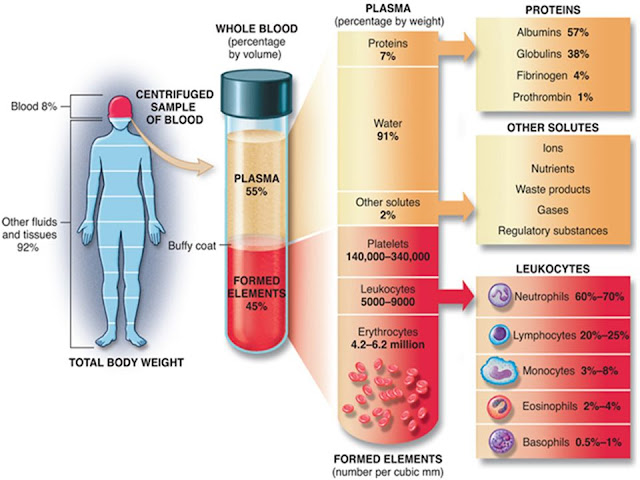
Richard Lower delivered the first scientific report on transfusion in 1666 before the Royal Society in London. He had transfused blood between two dogs by using a goose quill to connect an artery in the neck of one to the jugular vein in the neck of the other.
A young man was given calf blood by French medical professionals a year later. They carried out the experiment again since they thought the process was safe, and this time the man's back pain and pulse increased as the blood entered him. These signs would indicate that after the initial injection, his body formed antibodies against the calf's blood and was now rejecting it. The man passed away immediately after the French physicians gave him a third transfusion because they remained unfazed.
The Catholic Church, the French parliament, and the Royal Society all banned human blood transfusions as a result of these early failures. The technique was outlawed in traditional medicine for 150 years.
Until 1900, when Karl Landsteiner, a doctor at the University of Vienna, took the first step towards the discovery of blood kinds, it was not feasible as a treatment. Five of his coworkers and himself made up the six healthy men whose serum was analyzed. He discovered that certain donors' sera encouraged red blood cells from other donors to cluster together. Landsteiner assumed that there must be several blood types and that these agglutinations could be used to categorize them. In the years that followed, Landsteiner and his colleagues identified the main blood types we are familiar with today— A, B, AB, and O and showed how the interactions between them impacted the safety of a transfusion.
O blood carriers were universal donors, just like Landsteiner himself, whereas AB blood carriers were universal recipients who could accept blood from any donor.
The "universal donor" is frequently referred to as type O negative, but this only applies to red cell and whole blood transfusions. The method is flipped for platelet and plasma transfusions: AB positive is the universal platelet donor type, whilst AB positive and AB negative are the two universal plasma donor types.
Who requires a blood transfusion?
- Due to blood loss during surgeries.
- Some people have suffered serious accidents.
- Some people's ailments require them to receive blood or blood components.
Who is able to give blood?
There are a few requirements you must fulfill before donating blood. The WHO recommends that a donor should:
- Weigh at least 50 kg (donors should not weigh less than 45 kg in some countries).
- Age range of 18 to 65 years
- Not be suffering from the flu, a cold, a sore throat, or any other diseases.
- Possess a hemoglobin count of at least 12.5 g/dl.
- When donating, the blood pressure should be normal.
Who is unable to give blood?
- Blood cannot be donated by women who are pregnant, nursing, or who have had an abortion.
- For the following six months, you are prohibited from donating blood if you recently got a tattoo or body piercing.
- After a simple dental procedure, you must wait for 24 hours, and after a significant dental procedure, you must wait for a month.
- If you've ever had an HIV test that was positive
- If you've ever injected illicit substances for fun
- People who drank alcohol 48 hours before donating
- those who have had surgery within the last six months
- It's possible that people with active tuberculosis shouldn't donate blood.
Benefits of blood donation
Maintaining a Healthy Heart and Liver: Iron is essential to our bodies since it is a crucial part of hemoglobin. It aids the red blood cells in distributing oxygen throughout the body from the lungs. There will be certain iron deficiency issues if we do not have enough iron in our bodies. Therefore, doctors Favor foods high in iron. It is not a problem to consume iron-rich foods; the issue is doing so in excess. An adequate amount of iron is used by the body. The pancreas, liver, and heart all have deposits of leftover iron material. Heart and liver issues are resulting from this. Thus, donating blood lowers iron levels and aids in lowering heart and liver issues.
Restoration of Blood Cells: 470 ml of whole blood can be donated during a typical blood donation. This takes up close to 8 or 9 percent of an adult's typical blood volume. The process of blood regeneration will begin shortly after. The lost volume will restore in 24 to 48 hours. It is reliant on hydration. Additionally, lost cells are replaced by stem cells within 8 to 9 weeks. The bone marrow is where this process occurs. An individual's energy levels and activity increase, their body maintains health, and they are more productive thanks to the freshly formed blood cells.
A free health examination: Donors must go through a quick health examination before giving blood. To ensure they are in good enough health to donate, it functions as a kind of mini-checkup. A person is informed during this examination whether they have any undiagnosed health conditions, such as excessive blood pressure or a heart ailment called atrial fibrillation. Additionally, it aids in the individual seeking prompt diagnosis and care.
Chance to Save Human Lives: By donating blood to those in need, we have the potential to save a life. You not only saved the life of one individual but also the lives of countless others who depended on that person. The person who received life from others eagerly awaits their turn. This mentality spreads through society like a domino effect. And as a result of this chaining process, everyone on the planet is now connected.
“Blood: Costs nothing to you and is priceless to someone else.”
In conclusion, giving blood is a particularly potent deed. Your donation of blood may enable urgent surgery, save the life of a woman experiencing birth problems, resuscitate and sustain a youngster with severe anemia, or offer vital support in the event of a public health emergency.
“Remember that the happiest people are not those getting more, but those giving more.”
– H. Jackson Brown Jr.

You must be logged in to post a comment.