

The Covid-19 pandemic had a significant influence on the last two school years for many youngsters worldwide. Now that schools are reopening, all regulations must be followed, and with the resumption of classes, parents must be more vigilant in terms of meeting their children's nutritional needs. “School is the ideal time for youngsters to begin making independent lifestyle choices. At this period of life, eating becomes a social activity. It can be challenging to guarantee that your children are receiving an adequate diet when you are not present to oversee their choices. Thus, parents must involve their children in planning and preparing their breakfast and lunch selections so that their children can learn about healthy eating and also make more informed choices about what they will eat during the day,” advises Gurpreet Kaur, Senior Clinical Nutritionist, Cloud nine Group of Hospitals, Chandigarh who says children may spend a greater portion of their time at school than they do at home. The expert discusses some critical points about the diet and nutrients that children should consume.
Importance Of Breakfast:
Breakfast plays an important role in cognitive functions, and kids who start their day with a good meal are likely to make healthy choices throughout the day. A hungry child can often lose concentration in class and could snack on unhealthy foods such as chips or biscuits when famished. Wholesome and healthy breakfast every day is very important to maintain a balanced diet.
Serve your young ones a balanced breakfast that includes some carbohydrates, protein, and fiber. Carbohydrates provide an immediate source of energy for the body, while energy from protein tends to kick in after the carbs are used up. Fiber helps in providing a feeling of fullness and, therefore, discourages overeating.
Some healthy breakfast options include: vegetable upma, poha, vermicelli upma, idli/dosa with sambhar and chutney, porridge-like ragi, rawa, and oats made with milk, and multigrain bread with either an egg or veggies. It is healthier to have a good energy drink besides water with breakfast, such as low-fat milk or freshly squeezed fruit juices that are low in sugar.
*One of the reasons for childhood obesity is also attributed to skipping meals. If the child misses breakfast, they tend to eat more during the next meal, and all of it may not necessarily be healthy.
Healthy Lunches:
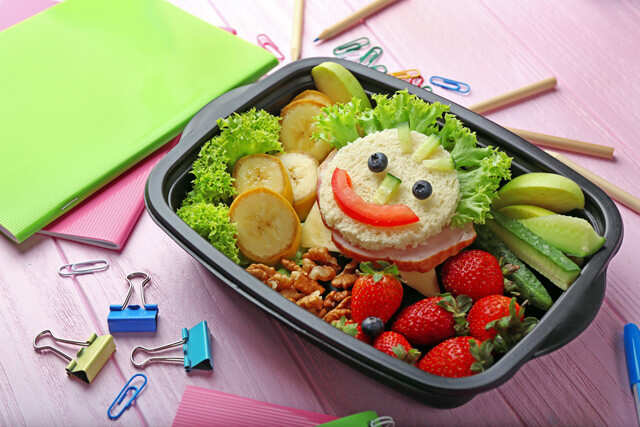
Children consume approximately one-third of the food at school. Therefore, children must have a daily balanced diet through packed healthy snacks and lunches. Six key food groups are mandatory to include in the healthy lunch box:
• A grain or cereal such as whole wheat or multigrain bread, a roll, multigrain or wheat Chapati (wholemeal or wholegrain choices are best)
• Fresh crunchy seasonal vegetables
• Fresh seasonal fruit
• Milk, yogurt, or cheese (for children who cannot tolerate milk products, offer appropriate alternatives like calcium-fortified soy drink or soy yogurt)
• Protein sources such as lean meats, eggs, beans, lentils, pulses, soy products, peanut butter
• Drinking Water.
Foods To Be Avoided For Lunch:
Some items do not belong in a healthy school lunchbox:
• All sweet drinks such as canned fruit juices, iced teas, and soft drinks (these are high in sugar and could lead to weight gain and oral health problems in children)
• Dried fruit bars (low in fiber and can stick to children’s teeth causing tooth decay)
• Dairy desserts, chocolate bars, and muesli bars (high in fat and sugar)
• Fatty and salt processed food items

You must be logged in to post a comment.