
Introduction
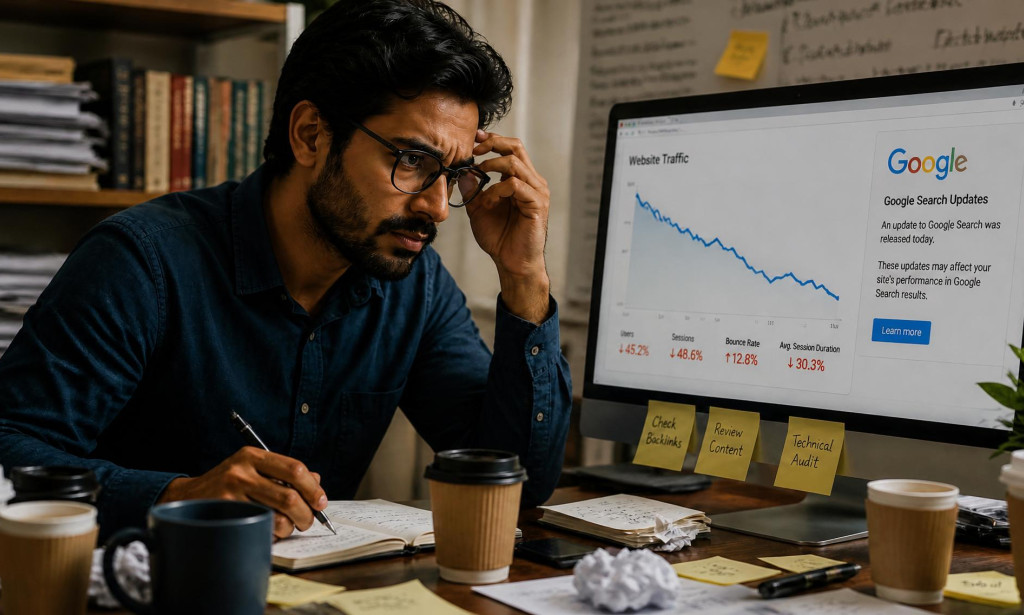
Google algorithm updates are one of the biggest reasons websites lose rankings and organic traffic. Many SEO strategies that once worked effectively suddenly stop delivering results after a core update.
The problem is not SEO itself, it is the evolution of Google’s ranking systems. In 2026, Google focuses heavily on semantic understanding, user satisfaction, content quality, and real expertise signals rather than outdated ranking tactics.
This article explains why SEO strategies fail after Google updates and provides a clear, actionable framework to fix them using modern SEO principles.
Why SEO Strategies Fail After Google Updates
1. Over-Optimization of Keywords (Old SEO Mindset)
Old SEO focused on:
- Exact match keywords
- Keyword density
- Repetitive optimization
Modern Google systems use semantic indexing, meaning it understands context, not just keywords.
Result: Pages lose relevance after updates if they are not contextually rich.
2. Weak Search Intent Alignment
Google prioritizes pages that fully satisfy user intent.
Common mistakes:
- Informational queries answered with sales pages
- Generic blog posts without depth
- Missing direct answers
Industry insight: Studies from Ahrefs show that over 90% of pages receive no organic traffic, often due to weak keyword-intent alignment.
3. Lack of E-E-A-T Signals
Google evaluates content using:
- Experience
- Expertise
- Authoritativeness
- Trustworthiness
Websites without credibility signals are heavily impacted after updates.
Examples:
- No author information
- No real case studies
- No citations or references
4. Thin or AI-Generated Content Without Value
AI has increased content volume, but not all content is valuable.
Google now detects:
- Generic rewriting
- Lack of originality
- No real-world experience
Result: Thin content is devalued after updates.
5. Weak Technical SEO Foundations
Even strong content fails when technical SEO is weak:
- Slow page speed
- Poor Core Web Vitals
- Crawl errors
- Index bloat
Google increasingly uses UX signals as ranking factors.
6. No Topical Authority Strategy
Modern SEO is based on topic ecosystems, not isolated articles.
Failure occurs when:
- Content is scattered
- No internal linking structure
- No content clusters
Websites without topical depth lose authority after updates.
How to Fix SEO Strategy Failures in 2026
1. Shift to Semantic SEO
Focus on:
- Entities
- Context
- Topic relationships
Instead of targeting single keywords, build semantic content clusters.
2. Build a Search Intent Mapping Systems (2026 SEO Framework)
Before writing content:
- Analyze SERPs
- Identify user expectations
- Match content format (guide, list, comparison)
This ensures higher relevance and ranking stability.
3. Strengthen E-E-A-T Signals
To improve trust signals:
- Add expert authorship
- Include real data and case studies
- Cite authoritative sources
- Build brand authority
4. Upgrade Content Quality Standards
High-ranking content in 2026 includes:
- First-hand experience
- Unique insights
- Data-driven analysis
Avoid purely AI-generated or repetitive content.
5. Fix Technical SEO
Key areas:
- Improve Core Web Vitals
- Optimize site speed
- Clean URL structure
- Improve crawl efficiency
Google Search Central emphasizes UX as a core ranking factor: https://developers.google.com/search
6. Build Topical Authority with Clusters
Create structured content systems:
- Pillar pages
- Supporting blogs
- Internal linking clusters
This improves semantic relevance and ranking resilience.
Data amp; Industry Insights (2026 SEO Trends)
- Google processes 8.5B+ searches daily
- Over 60% of searches are zero-click results
- Websites with strong topical authority are 3–5x more stable during updates
- Poor-quality content sites see major ranking volatility after core updates
Internal Linking Strategy
Link this article to:
- SEO strategy guides
- Technical SEO tutorials
- Keyword research content
- Content optimization posts
- Google algorithm update analyses
This strengthens site structure and crawl depth.
External Authority Links
- https://developers.google.com/search
- https://ahrefs.com/blog/
- https://moz.com/learn/seo
- https://www.semrush.com/blog/
Recommended Multimedia Elements
Images
- SEO ranking drop vs recovery chart
- Google algorithm update timeline
- Core Web Vitals performance report
Infographics
- “Why SEO Fails After Google Updates”
- “SEO Fix Framework 2026”
- “Semantic SEO vs Traditional SEO”
Videos
- Google algorithm update breakdown
- SEO recovery case studies
- Technical SEO audit walkthrough
Conclusion
SEO strategies fail after Google updates because they rely on outdated practices that no longer match how Google evaluates content.
In 2026, success depends on:
- Semantic SEO
- Intent-driven content
- Strong E-E-A-T signals
- Technical optimization
- Topical authority building
Websites that adapt to these principles will not only recover from updates but also gain long-term ranking stability and sustainable organic traffic.
Call to Action
If your rankings drop after every Google update, it’s time to rebuild your SEO strategy using semantic SEO, intent mapping, and technical-first optimization frameworks designed for 2026 and beyond.

You must be logged in to post a comment.