

No oxygen needed for these minerals to form on Mars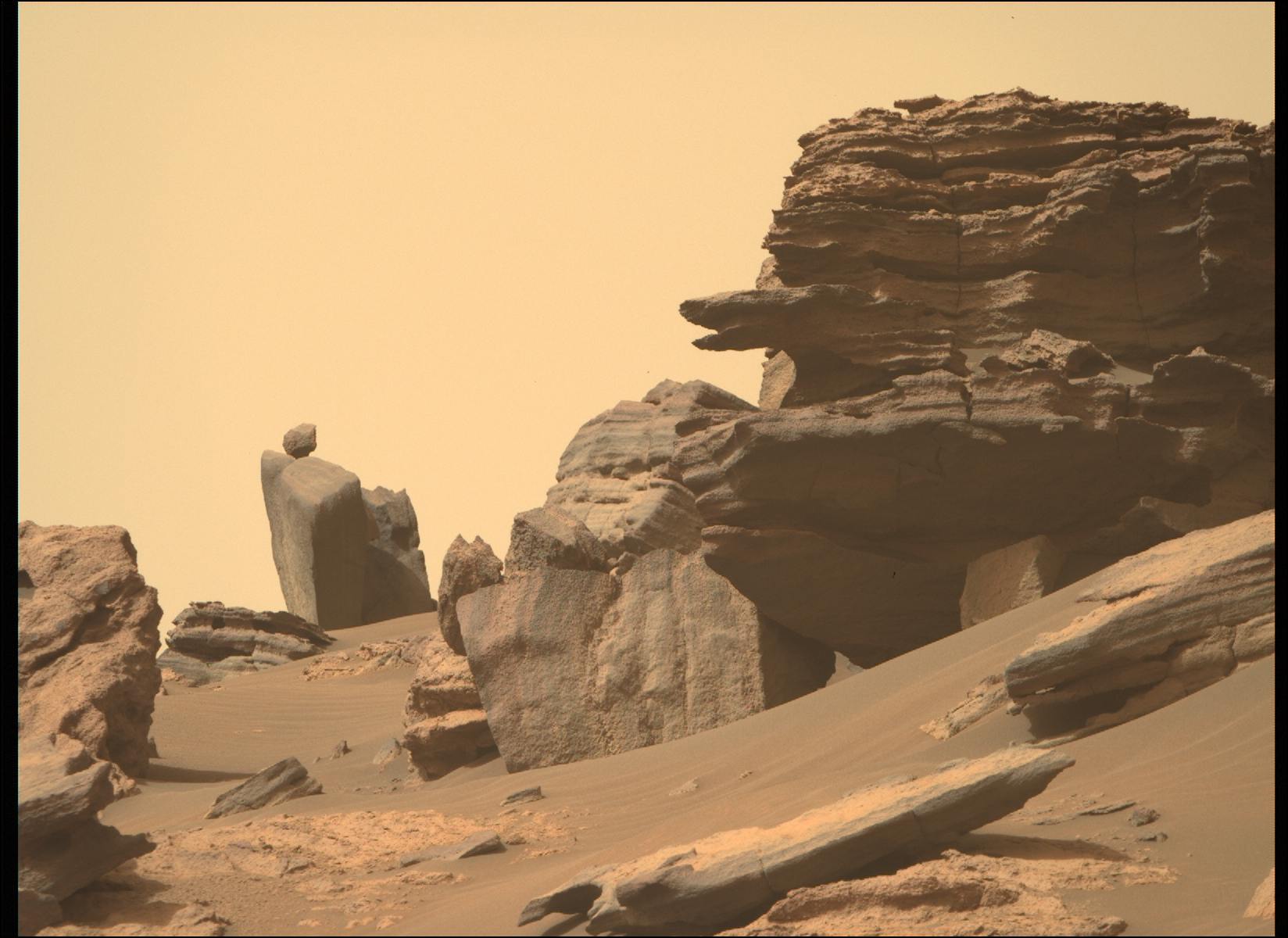
Anew experimental study from Washington University in St. Louis shows that under Mars-like conditions, minerals like manganese oxides can be readily formed without atmospheric oxygen, overturning the belief that the minerals probably required abundant water and highly oxidizing conditions to form.
Back in 2014, NASA's Mars rovers discovered manganese oxides in rocks in the Gale and Endeavor craters on Mars. Scientists later concluded that the presence of these minerals indicated that the Red Planet had experienced periodic increases in atmospheric oxygen in its past - before declining to today's low levels.
"The link between manganese oxides and oxygen suffers from an array of fundamental geochemical problems," said Jeffrey Catalano, a professor of earth and planetary sciences in Arts & Sciences and corresponding author of the study published Dec. 22 in Nature Geoscience.
Catalano and Kaushik Mitra, the first author of the study and now a postdoctoral research associate at Stony Brook University, conducted laboratory experiments using chlorate and bromate - the halogen elements which are ubiquitous on Mars - to oxidize manganese in water samples that they made to replicate fluids on the Mars surface in the ancient past. They found that halogens converted manganese dissolved in water into manganese oxide minerals thousands to millions of times faster than by oxygen.
According to the researchers, under the weakly acidic conditions that scientists believe were found on the early Martain surface, bromate produces manganese oxide minerals more quickly than any other available oxidant. Under many of these conditions, oxygen is altogether incapable of forming manganese oxides.
"There are several life forms even on Earth that do not require oxygen to survive.I don't think of it as a 'setback' to habitability — only that there was probably no oxygen-based lifeforms. Every planet is unique in its own right, and we cannot extrapolate the observations made on one planet to exactly understand a different planet," Mitra said.
Anew experimental study from Washington University in St. Louis shows that under Mars-like conditions, minerals like manganese oxides can be readily formed without atmospheric oxygen, overturning the belief that the minerals probably required abundant water and highly oxidizing conditions to form.
Back in 2014, NASA's Mars rovers discovered manganese oxides in rocks in the Gale and Endeavor craters on Mars. Scientists later concluded that the presence of these minerals indicated that the Red Planet had experienced periodic increases in atmospheric oxygen in its past - before declining to today's low levels.
"The link between manganese oxides and oxygen suffers from an array of fundamental geochemical problems," said Jeffrey Catalano, a professor of earth and planetary sciences in Arts & Sciences and corresponding author of the study published Dec. 22 in Nature Geoscience.
Catalano and Kaushik Mitra, the first author of the study and now a postdoctoral research associate at Stony Brook University, conducted laboratory experiments using chlorate and bromate - the halogen elements which are ubiquitous on Mars - to oxidize manganese in water samples that they made to replicate fluids on the Mars surface in the ancient past. They found that halogens converted manganese dissolved in water into manganese oxide minerals thousands to millions of times faster than by oxygen.
According to the researchers, under the weakly acidic conditions that scientists believe were found on the early Martain surface, bromate produces manganese oxide minerals more quickly than any other available oxidant. Under many of these conditions, oxygen is altogether incapable of forming manganese oxides.
"There are several life forms even on Earth that do not require oxygen to survive.I don't think of it as a 'setback' to habitability — only that there was probably no oxygen-based lifeforms. Every planet is unique in its own right, and we cannot extrapolate the observations made on one planet to exactly understand a different planet," Mitra said.

You must be logged in to post a comment.