
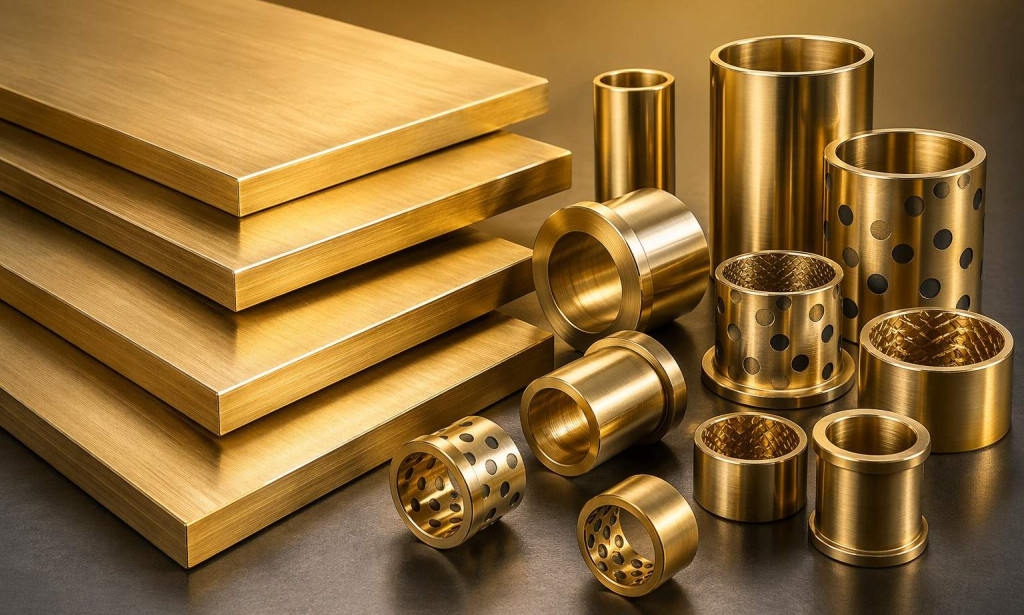
A shipment arrives. Dimensions look fine on paper, but the Brass Plates show micro-pitting along the edges, and suddenly your machining yield drops by 7.3%. That’s where most procurement decisions fall apart—after the invoice is paid.
And yet, buyers keep selecting suppliers based on price sheets instead of process control. Which means the real cost shows up later: rejected batches, delayed assemblies, or worse, silent performance failures in the field.
The Spec Detail Most Buyers Skip in Brass Plates and Bushes
Material Composition & Grades
Most Brass Plates Manufacturers in India work with grades like IS 319, IS 410, or ASTM B36 equivalents. The copper-zinc ratio matters more than brochures admit. A shift from 70/30 to 63/37 can affect corrosion resistance and machinability noticeably.
Thickness Tolerance & Flatness
That’s where things quietly go wrong. Buyers accept ±0.5 mm tolerance on paper, but don’t verify flatness deviation across the sheet. A plate can pass thickness spec and still warp during cutting.
Surface Finish
Not just aesthetic. Surface roughness (Ra value) affects downstream polishing, coating adhesion, and even friction in certain Brass Bushes applications.
Grain Structure
Here’s what almost nobody checks. Improper rolling or annealing leads to uneven grain flow, which directly impacts wear resistance in bushes.
Bush Inner Diameter Precision
For Brass Bushes Manufacturers, tolerance stacking is a real issue. A 0.02 mm deviation might sound small—until it causes shaft misalignment under load.
What a Lapsed Certificate Actually Costs You
-
Certification Validity
A supplier saying “ISO-certified” without sharing expiry dates is a red flag. A lapsed ISO 9001 certificate often correlates with inconsistent QC logs. -
Batch Traceability
Good answer: Heat number tracking with mill test reports.
Bad answer: “We can check if needed.” That means they don’t track it routinely. -
Rejection Policy
A supplier who says “we’ll handle defects case by case” doesn’t have a policy. That’s a negotiation you’ll lose after the shipment lands. -
Lead Time Consistency
Strong suppliers commit to 12–14 days and hit it. Weak ones quote 7 days and deliver in 19. -
Export Documentation Accuracy
Incorrect HS codes or missing certificates can delay shipments by 5–9 days at ports. That delay doesn’t show up in the supplier’s quote—but it hits your project timeline.
Why Slightly Higher Prices Often Protect Your Margin
Most buyers chase the lowest quote. That’s a mistake.
-
Lower Scrap Rates
Better-grade Brass Plates Suppliers reduce machining rejection rates by up to 6.8% in mid-scale operations. -
Consistent Machinability
Uniform composition means fewer tool changes. Tool wear drops. Cycle time stabilizes. -
Reduced Assembly Failures
Precision-made Brass Bushes fit right the first time. That cuts rework costs, which are often 2–3x the original machining cost. -
Fewer Logistics Surprises
Reliable Brass Plates Manufacturers in India plan dispatches around real production cycles, not optimistic promises. -
Longer Component Life
Especially in high-load or corrosive environments, better brass composition extends lifecycle by measurable margins—sometimes 18–22%. -
Vendor Stability
A supplier exporting to 31 countries since 2013 has already survived audits, rejections, and compliance cycles. That experience shows up in fewer mistakes.
Why Location Is a Supply Chain Decision, Not Just an Address
India isn’t one uniform supply base.
Clusters in Gujarat, Maharashtra, and parts of North India dominate Brass Plates Manufacturers in India and Brass Bushes Manufacturers for a reason—access to raw material, skilled labor, and port connectivity.
Which means if your supplier is inland without strong logistics ties, expect longer dispatch cycles. A plant 900 km from the nearest port can add 3–5 days to export timelines, even before customs.
And yet, many buyers ignore this completely.
About Us — What We Learned the Hard Way
We’ve been working in metal supply long enough to see patterns repeat. At Ganga R Ispat Metals, we don’t just ship Brass Plates and Brass Bushes—we track how they perform after delivery.
We stopped sourcing from a low-cost mill in 2020 after three clients reported inconsistent hardness levels across batches. The supplier blamed handling. We tested it ourselves. They were wrong.
That’s the difference. We don’t argue with data—we change suppliers.
If you’re sourcing from Ganga R Ispat Metals, send us your exact specs: grade, thickness, tolerance, application, and required quantity.
We typically respond within 24 hours. MOQ depends on product type, but for standard Brass Plates and Brass Bushes, it starts at manageable batch sizes for B2B buyers.
And here’s the thing—if your spec is incomplete, we’ll tell you before production starts, not after defects show up.
CONCLUSION
Choosing the right Brass Plates supplier isn’t about who quotes lowest. It’s about who reduces your risk before production even begins.
And the buyers who understand that are the ones who stop firefighting and start scaling.
FAQs
1. How do I verify Brass Plates Manufacturers in India before placing bulk orders?
Ask for recent mill test certificates, not samples from last year. Check batch traceability and request a small pilot order first. Many Brass Plates Manufacturers in India look consistent until you test across batches.
2. What are the key differences between Brass Plates Suppliers and manufacturers?
Suppliers may stock and distribute, while manufacturers control production. Working directly with Brass Plates Manufacturers in India gives better control over specs, but not always faster delivery—stockists sometimes ship quicker.
3. Do higher-priced Brass Plates Suppliers always offer better quality?
No. Price alone isn’t a guarantee. Some mid-tier Brass Plates Suppliers maintain excellent process control. The key is consistency across batches, not just initial samples.
4. Can Brass Bushes be customized for specific industrial applications?
Yes, most Brass Bushes Manufacturers offer customization. But complex tolerances or special alloys may increase lead time and cost. Not every supplier handles custom work well—ask for past project examples.
5. What certifications should Brass Plates Manufacturers in India have?
ISO 9001 is common, but check validity. Some export-focused Brass Plates Manufacturers in India also maintain RoHS or REACH compliance. A certificate is only useful if it’s current and backed by process audits.

You must be logged in to post a comment.