

INTRODUCTION:
I am a woman of India, and I’m still afraid to walk the streets by myself. I feel that someone is following me all the time. A stare from a random boy terrifies me. Even when I'm writing this article, someone out there is getting raped.
A survey conducted by the Thomson Reuters Foundation has ranked India as the world's most dangerous country for women, ahead of Afghanistan, Syria, and Saudi Arabia. But is this really true?
The poll surveyed 548 experts on six different indices - healthcare, discrimination, cultural traditions, sexual and non-sexual violence, and human trafficking. They were first asked to name the five most dangerous countries from 193 United Nations member states. And then, they were asked to name the worst country in each of the above categories. India topped three - cultural traditions, sexual violence, and human trafficking.
A simple question was asked to some people. The question being, “Why do men rape women?” The answers are an eye-opener.
Like most people who took the survey, the answers lie in correcting the mindset that leads to such incidents. Interestingly clothes, alcohol, drugs, and provocation weren't the popular triggers that some of our leaders would have us believe. Delayed and often denial of justice is another reason people cited as the cause of rapes.
Some of the answers were:
- Delhi Chief Minister Arvind Kejriwal recently commented that rape tendencies start from drug and sex rackets.
- West Bengal Chief Minister Mamata Banerjee had said rape cases are on the rise in the country because men and women interact with each other more freely now.
- Jitender Chhatar, a khap panchayat leader, had blamed spicy food, specifically chowmein, on the growing number of rape cases. Another Khap leader, Sube Singh, said women should be married off by the age of 16 to have their husbands for their sexual needs and don't need to go elsewhere. This way, rapes will not occur.
2012 Delhi Rape Case:
A 23-year old physiotherapy intern, Jyoti Singh, boarded an off-duty bus at around 20:30 local time on 16 December 2012 with a male friend. They were returning home after watching a film at an upscale mall. The six men, who were already on board, attacked the couple, taking turns to rape the woman before brutally assaulting her with an iron rod. Her friend was beaten.
They were then thrown out onto the roadside to die. Some passers-by found them naked and bloodied and called the police. Two weeks later - after widespread protests that demanded India reckon with its treatment of women - the victim died in a hospital in Singapore, where she was taken for further treatment after her condition deteriorated in a Delhi hospital.
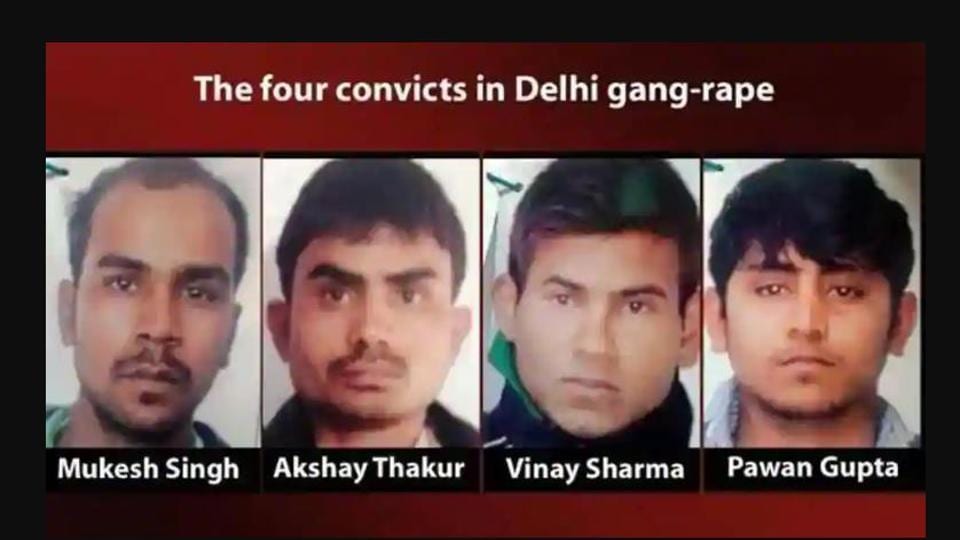
Sentence: Four convicts were executed on 20 March 2020 (it took 8 long years to get justice)
2013 Mumbai Gang Rape Case:
On 22 August 2013, at about 5 pm the victim, a photojournalist aged 22 and was interning under the English Magazine, went to the premises of Shakti Mills along with her colleague, namely Anurag, for a project which involved capturing old articles and deserted premises of Mumbai.
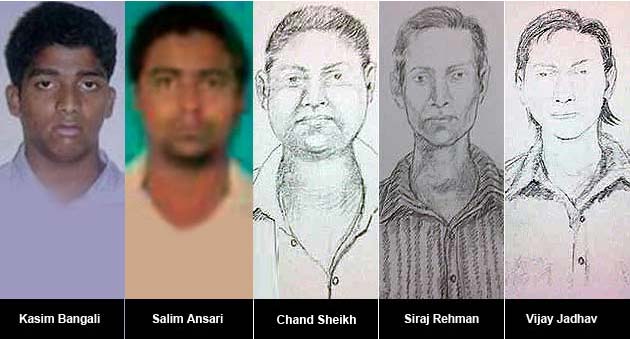
There they encountered Vijay Jadhav and Salim, who were later identified as accused. Both of them initially helped the victim and his colleague to enter the premises of Shakti Mills but later called their partners, that is, the other three accused, one of them was a juvenile and tied Anurag and dragged the victim to an isolated room where they one by one brutally raped the victim and also took her photographs for threatening her if she complains about them.
Verdict: In this case, it was ruled out that all the accused were liable for several offenses, including gang rape, disrobing, and unnatural offenses. Three of the accused, who were adults, were hanged till death. In contrast, the minor one was tried by the Juvenile Justice Board and was convicted on 15 July 2014, and sentenced to three years (including time in custody) in a Nashik reform school, the maximum punishment that a juvenile offender can receive under Indian law.
2015 Kandhamal Gang Rape Case
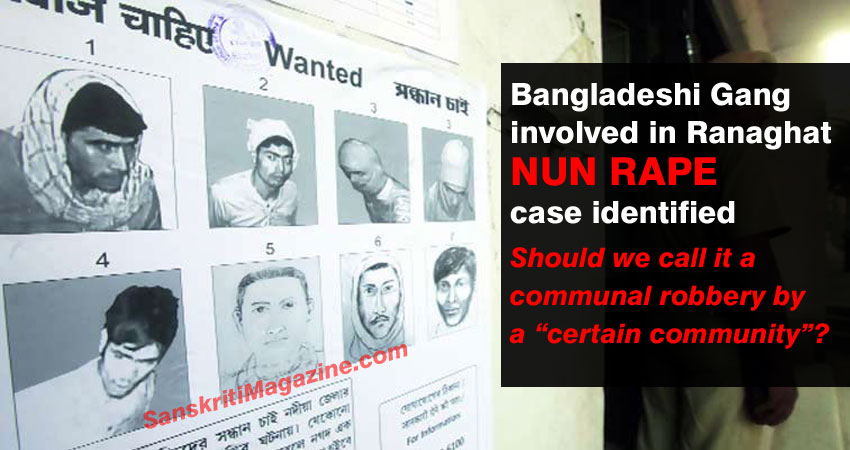
On 14 March 2015, a 71-year-old nun was gang-raped in Ranaghat, West Bengal, by intruders at the Convent of Jesus and Mary. Six men were arrested and charged with the crime by 1 April 2015 and identified as Bangladeshi Muslims. The six intruders have recorded on CCTV while ransacking the chapel, destroying religious items, looting cash, and gang rape.
2021 Badaun Gang Rape Case
The victim, an Anganwadi worker, left for a temple in her village at around 6 pm on Sunday (January 3). When she did not return for two to three hours, her family went to the police station but were turned back. Later that night, at around 11:30 pm, three men dumped her body outside her home and fled. According to the victim’s family, the three men were temple priest Baba Satyanarayan, Vedram, and driver Jaspal. It is said that before dumping her body outside her home, the accused had also taken her to a medical center. But when she died, they came to her home, rang the bell, threw her blood-soaked body there, and fled.
In the postmortem, which was conducted 18 hours after the body was found, the doctors found serious injuries to the victim’s private parts, evidence of substantial blood loss, and fracture in a leg and ribs.

Marital rape- An Understanding
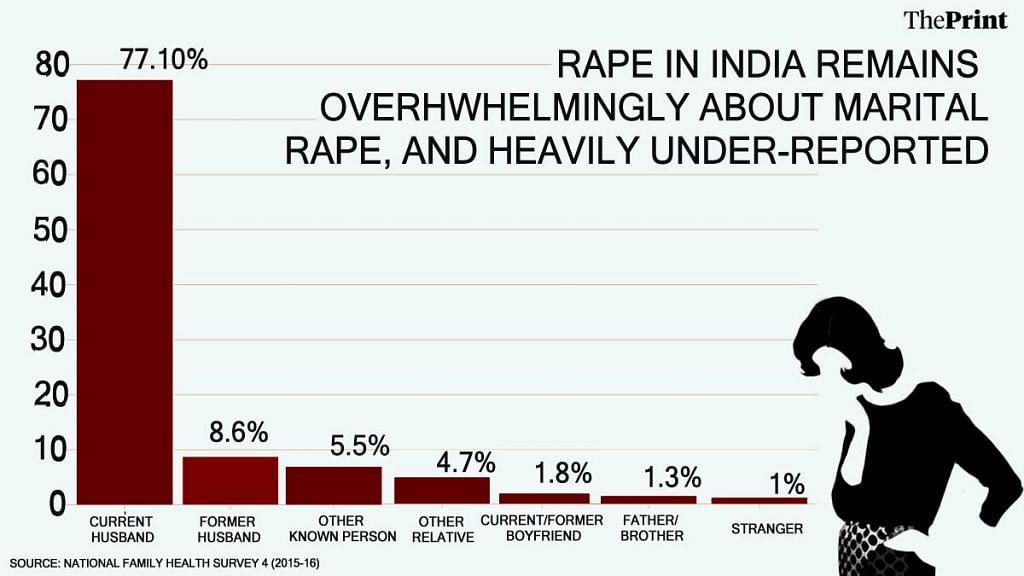
Marriage is a legally sanctioned contract between a man and woman. Sexual intercourse between husband and wife is legal. Due to the legality of sex, the husband gains the right over the wife, which becomes the sole reason for marital rape. While the legal definition varies, marital rape can be defined as unwanted sexual intercourse or penetration obtained by force, the threat of force, or when the wife cannot consent. In proper perception, the husband can not be held guilty of raping his wife because of presumed matrimonial consent to cohabit. However, despite the increasing number of cases of marital rapes in our country, marital rape is not defined in any statute or law. In Indian Constitution, Article 14 talks about the Right to Equality, but women face infringement in their rights in cases of marital rape.
In India, marital rape exists de facto but not de jure. While in other countries, either the legislature has criminalized marital rape, or the judiciary has played an active role in recognizing it as an offense. In India, however, the judiciary seems to be operating at cross-purposes.
The Justice System
A victim of rape in India not only experiences social stigmatization, but what is more, her fight for justice is not made easy due to the system that often faults the victim for their misfortune. Instances have been reported where victims are confronted with hostile conditions at police stations and have been often pressured to withdraw their cases. However, once a case goes to trial, it can take decades before anything is resolved. Rape cases, in particular, face a huge backlog where the number of new cases supersedes the number of cases disposed of every year. The process is arduous and could add so much trauma to the victim’s life that they often buckle under pressure from their own family or that of the perpetrator.

You must be logged in to post a comment.