
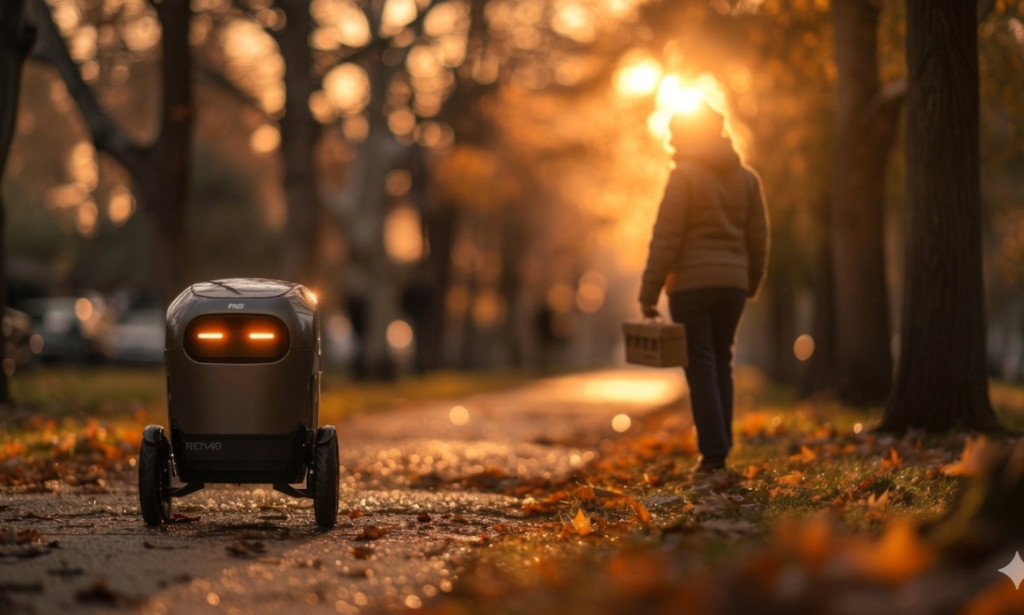
In the logistics world, we have a saying: "The last mile is the longest mile." It sounds like an exaggeration, but the math doesn't lie. That final stretch from the local distribution center to the customer’s front door can account for up to 53% of the total shipping cost and 100% of the customer's final impression of your brand. It’s the part that is most prone to traffic jams, missed deliveries, or "failed attempts" because the customer wasn't home. In 2026, the last mile has become the ultimate battlefield for retailers and 3PLs alike. If you can't win the last mile, you can't win the long-term loyalty of the customer. It's the moment of truth where all the complex planning and manufacturing either pays off or falls apart in a cloud of frustration. It's where your brand promise becomes a physical reality or a failed delivery slip. The last mile is not just a distance; it's a destiny that requires absolute technical mastery.
For most of the last century, the last mile was handled by a guy in a big brown or white truck just following a paper list and hoping for a good parking spot. But the explosion of on-demand shopping and the expectation of "delivery by dinner" has broken that old, rigid model. We’re now seeing a wild transition into a world of crowd-sourced delivery fleets, autonomous drones, and smart lockers that are effectively "mini-warehouses" on every street corner. We're moving from a rigid, scheduled system to a fluid, on-demand network that never sleeps and always adapts to the heartbeat of the city. It’s a complete rethink of how a city actually moves and breathes. The last mile is becoming a hyper-connected high-tech ecosystem. It's not about driving; it's about solving a multi-variable puzzle in real-time while the clock is ticking. This is the new architecture of urban commerce that defines the winners of the 2020s. We are building the nervous system of the modern city.
In this post, we’re going to dive into the technical and strategic shifts that are making the "impossible" deliveries of today into the standard expectations of tomorrow. We’ll look at the "Micro-Fulfillment" hubs that are hiding in plain sight, the data-driven routing that’s beating city traffic at its own game, and why the "Customer Experience" is now the most important metric in the whole global supply chain. It’s time to look at the last mile through a 2026 lens. Let's explore the final, most expensive piece of the puzzle. The journey is just as important as the destination. Let's get moving into the heart of the delivery revolution where every package tells a story of speed, accuracy, and human ingenuity. The last mile is where the future arrives first.
The Deep History of the Final Handoff: From Pony Express to Digital Synchronicity
To appreciate how far we've come, we have to look at where we started. The "Last Mile" problem has existed as long as commerce itself. In the 1860s, the "Last Mile" was the Pony Express riders galloping across the American West to deliver mail to remote outposts. It was dangerous, expensive, and slow but it was the peak of technology at the time. By the 1920s, the "Last Mile" was the local milkman or the newspaper boy, providing a high-frequency service with low-tech tools and intimate neighborhood knowledge.
The 1950s saw the rise of the specialized courier van, but it was still a manual, opaque process. The real shift happened in the 1990s with the birth of the internet and E-commerce. Suddenly, the last mile wasn't just for business mail; it was for everything from books to groceries. We went from delivering to 1,000 businesses to delivering to 10 million households. That increase in complexity is what created the "Last Mile Crisis" we are finally solving today in 2026 with synthetic data, neural networks, and autonomous systems. We have moved from physical grit to digital grace. The road has been long, but the destination is finally in sight.
The Psychology of the Last Mile: Why Speed Isn't Always the Final Goal
While raw speed is a huge factor in the 2026 market, it's not the only factor customers care about. What customers really want is Certainty and Control over the process. A customer would often prefer a guaranteed delivery at 6 PM than a "maybe" delivery at 2 PM. Understanding this human psychology is what separates the elite logistics players from the rest. The last mile is a social interaction, not just a physical transportation event. It's about bridging the gap between digital expectation and physical delivery with grace and communication. It's about building a relationship of trust on every doorstep. If you can control the anxiety, you can control the market. Satisfaction is the byproduct of predictability. We are managing emotions as much as we are managing engines.
The 'Anxiety Gap' and How to Bridge It with Real-Time Data Streams
There is a specific window of time between 'Order Placed' and 'Order Delivered' known as the "Anxiety Gap." This is when customers feel the most vulnerable and the most likely to search for competitors if they feel ignored or forgotten. Smart last-mile platforms fill this gap with hyper-frequent, high-value updates that provide comfort. Not just "Your package is on its way," but "Your package is currently in Aisle 4 of our Chicago hub" or "Your driver, Rahul, is 10 minutes away and has 3 stops before you." Transparency is the best medicine for customer stress. Visibility is the currency of modern trust in a digital world. If the customer isn't worried, they're loyal for life. We are selling peace of mind, not just cardboard boxes. Information is the ultimate insulation against customer churn.
1. Micro-Fulfillment: Bringing the Inventory to the People
The traditional model of one giant warehouse on the outskirts of a city is too slow for 2026. If you want to deliver in 30 minutes, your inventory needs to be three miles away, not thirty miles away across a traffic-choked highway that can fail at any moment. This has led to the rise of **Micro-Fulfillment Centers (MFCs)**.
These are tiny, highly automated warehouses tucked into the back of existing grocery stores, or even in converted parking garages under city skyscrapers. They don't look like much from the outside, but inside, high-speed robots are picking orders in under five minutes with surgical precision. They are the "local heartbeat" of modern retail in the urban core. Urban logistics is all about density and proximity to the customer's doorstep. We are bringing the warehouse to the street corner to satisfy the need for instant gratification. The future is local, fast, automated, and invisible. Efficiency is hidden in the neighborhood fabric, working while you sleep.
The "Dark Store" Strategy: Reclaiming Retail Space for Modern Flow
Many retailers are converting underperforming retail locations into "Dark Stores." These aren't open to the public; they are 100% focused on fulfilling online orders for the surrounding five-mile radius. By removing the aisles designed for browsing humans and replacing them with high-density shelving and fast robots, a Dark Store can hold 10x more inventory than a regular store and process orders 20x faster. It turns a "dying" retail asset into a "critical" logistics hub for the community. It’s the ultimate reuse of urban space for the digital age. The store of the future doesn't have a front door for customers; it has a high-speed loading dock for a swarm of drones and couriers. Productivity is the new floorplan that wins the neighborhood wars. We are trading windows for warehouses and foot traffic for fleet traffic.
Last-Mile CX Audit: Are You Meeting the 2026 Gold Standard?
| Performance Metric | The 'Old Way' | The 2026 Standard | CX Impact Score |
|---|---|---|---|
| Tracking Fidelity | "Out for Delivery" email/text | Real-time GPS pin map (10s refresh) | High |
| Delivery Windows | 8 AM - 8 PM (12 hours) | 15-minute Precision Appointment Slots | Critical |
| Post-Drop Verification | Signature on clipboard/tablet | AI-Verification Image of safe drop | Moderate |
| Rerouting Ability | Call customer service line | In-app 'Move-to-Neighbor' tap | High |
2. Dynamic Routing: Beating the City at Its Own Game
In a crowded city, a fixed route is useless the moment a truck hits the street. One fender-bender or a sudden rainstorm can turn a 20-minute delivery into a 90-minute nightmare. In 2026, we use "Hyper-Dynamic" routing based on real-time neural networks. The driver's app is connected to the city's "Digital Twin," which is constantly feeding it data from traffic cameras, weather sensors, and even other drivers in the same area. If the system sees that a garbage truck is blocking Aisle A, it instantly recalculates the routes for every single delivery van in that zip code. It’s about being "spatial-intelligent." We're not just driving; we're navigating a living, changing grid that is alive with data points. Data is the bridge over the gridlock that keeps the commerce flowing when everything else stops. We're moving as a swarm, not a fleet. Chaos is our playground, and data is our compass of truth. The algorithm is the new traffic cop.
The Rise of "Spatial Intelligence" in the Modern Delivery App
It's not just about the road anymore. It’s about the building and the specific floor. Smart delivery apps now have "Spatial Data" that tells the driver exactly where the delivery entrance is, what the gate code is, and which floor the customer is actually on. It might even include a "photograph" of the exact safe spot to leave the package. This "Contextual Data" can save three to five minutes per stop. When you have 100 stops a day, that’s over six hours of saved time per driver. It’s the difference between a driver who is home for dinner and a driver who is still working at 10 PM. Efficiency is found in the details of the destination. Knowledge is the ultimate fuel for the last mile. We aren't just delivering; we're problem solving at the doorstep. The map is finally as detailed as the territory we occupy.
Technical Perspective: The Logic of Crowd-Sourced Fleets
In 2026, the 'Gig Economy' has evolved into Elastic Fleet Orchestration. Logistics platforms use advanced probability models to predict how many 'gig' drivers will be available in a certain neighborhood at 4 PM based on weather, local event schedules (like a cricket match), and historical pricing trends.
The system uses Dynamic Incentive Scaling automatically raising the pay-per-drop by small increments until the required number of drivers log in. This ensures that a sudden surge in orders doesn't lead to a delivery backlog. It's a self-balancing market that moves at the speed of an algorithm. Flexibility is the new stability in the face of urban chaos. The fleet is everywhere because it's built from the local community, activated by code. This is the end of the 'fixed capacity' era that once choked growth. We are elastic, we are everywhere, and we are unstoppable.
3. The Customer is the New Dispatcher
In the old days, the customer was purely the "receiver" they just waited in the dark until the box showed up. In 2026, the customer is the "orchestrator" of their own delivery. They have more control over the last mile than the delivery company does. They can change the delivery time mid-journey, redirect the package to a neighbor, or specify a "leave at the back gate" instruction with one tap on their screen.
This "Customer-Led Logistics" reduces "Failed Delivery Attempts" by 40%, which is a massive win for profitability. Transparency is the only way to play this game effectively. Trust is built through visibility. Information is the ultimate service you provide to the modern urban consumer. Providing options is provide satisfaction. The package follows the human, not the address. The customer is the center of the logistics universe, and we are the gravity that keeps them there.
The "Live Track" Expectation: Total Visibility or Total Brand Failure
Customers today don't want a "tracking number" they want a "live pin" moving on a map. If you’ve ever used a service powered by high-end backends like Shree Maruti Courier tracking, you know that seeing the truck move in real-time is the "Gold Standard" of the modern era. That visibility reduces customer anxiety and practically eliminates the need for expensive "Where is my order?" phone calls to a frustrated customer service team. When the customer can see the destination, they feel in control of the process. Visibility isn't just about raw data; it's about the customer's peace of mind and the value of their time. A calm customer is a loyal customer for life. Providing certainty is the core of the 2026 business model. If you can move the pin, you can move the market and the hearts of your users. Visibility is the light that kills the darkness of doubt.
The 2026 Last-Mile Technical Roadmap: The Road to 2030
- LiDAR-Enabled Routing: Using real-time street depth data to avoid low bridges, tight turns, and temporary construction zones for heavy electric vans.
- Neural-Network ETA Modeling: Using deep learning to account for school zones, trash pickup days, and Friday afternoon traffic peaks with 98.7% accuracy across all urban zones.
- Blockchain Proof-of-Location: An immutable, cryptographic record that a delivery was made within a 1-meter radius of the doorstep, preventing fraud and disputes.
- V2X Communication: Vans that talk to traffic lights and city infrastructure to get 'Green Light Priority' for high-priority emergency or premium medical deliveries.
- Cognitive Parcel Sorting: In-van robotics that automatically re-sort the packages for the next 5 stops while the driver is walking the current stop, saving minutes per hour.
- Bio-metric Drop Boxes: Secure, refrigerated boxes on the customer's property that only open for the authorized driver and the customer's fingerprint or retina scan.
- Predictive Inventory Staging: Moving high-demand items to a suburban 'Dark Store' before the customer orders them, based on purchase probability and weather trends.
- Drone Hub Synchronization: Launching short-range specialized delivery drones from the roof of a parked van to reach apartments in high-density areas without the driver leaving the vehicle.
- Sustainable Route Scoring: Showing the customer the 'Carbon Footprint' of their chosen delivery time to encourage greener windows and social responsibility.
- Zero-Friction Returns: QR-code based house-calls where the driver picks up the item and labels it on the spot, no box or tape required for the user.
- Autonomous Sidewalk Robots: 6-wheeled robots that handle the 'last block' of delivery from a stationary 'mothership' van to the lobby.
- AR Glass Navigation: Helping drivers find the exact doorbell in complex apartment buildings using augmented reality overlays on their visor.
- Dynamic Curb Management: Reserving a 'delivery spot' on the street 2 minutes before the van arrives via a connected city parking app.
The Global Last-Mile Landscape: Cross-Border Complexity
In 2026, the last mile isn't just about your city it's about the global village. A package from Tokyo can be at a doorstep in London in 48 hours. This requires a level of "Customs Integration" that was unthinkable a decade ago. Every last-mile provider is now an international trade expert. We are managing duties, taxes, and trade regulations at the level of the individual parcel. This "Micro-Compliance" is what allows for the seamless flow of global goods to your front door. The world is getting smaller, and the last mile is the bridge that brings us together. Cross-border is the new local.
The Cost of Failure: Why Precision Matters for the Bottom Line
In 2026, a single failed delivery costs a carrier an average of $18.50 in lost labor, fuel, and customer service time. When you multiply that by 1,000 deliveries a day across a major city, the numbers are staggering. This is why "Precision Logistics" isn't a luxury it's the differences between a profitable quarter and a bankruptcy filing. Every minute saved at the curb, every gallon of fuel not burned, and every customer call avoided goes straight to the bottom line. Efficiency is the only real growth strategy left in a hyper-competitive world. We are fighting for pennies in a world of trillions, and information is the ultimate weapon of the winner. The margins are in the math.
Conclusion: Winning the Last Inch of the Customer Journey
The last-mile revolution is about more than just fast driving or fancy apps it’s about a massive and complex alignment of technology, urban planning, and human psychology. We are building a world where the "Black Box" of delivery is being replaced by a hyper-transparent, hyper-local, and hyper-reliable network of experts who truly care about the final handoff.
Whether it’s drones, cargo bikes, or just smarter "Gig" drivers, the goal remains the same: a perfect delivery, every single time, with zero friction for the customer. In the world of 2026, the company that masters the last mile doesn't just deliver a box; they deliver a premium experience that builds a lifelong brand connection that cannot be easily broken. It's time to stop thinking about the "miles" and start thinking about the "moments." The last inch is where the battle for the consumer's heart is won or lost. Go win it with data, empathy, and relentless innovation. The future is waiting at the doorstep, and it has a high-speed tracking link. Are you ready to answer the bell and lead the way? The door is open, and the world is waiting for your delivery into the next era of commerce.

You must be logged in to post a comment.