
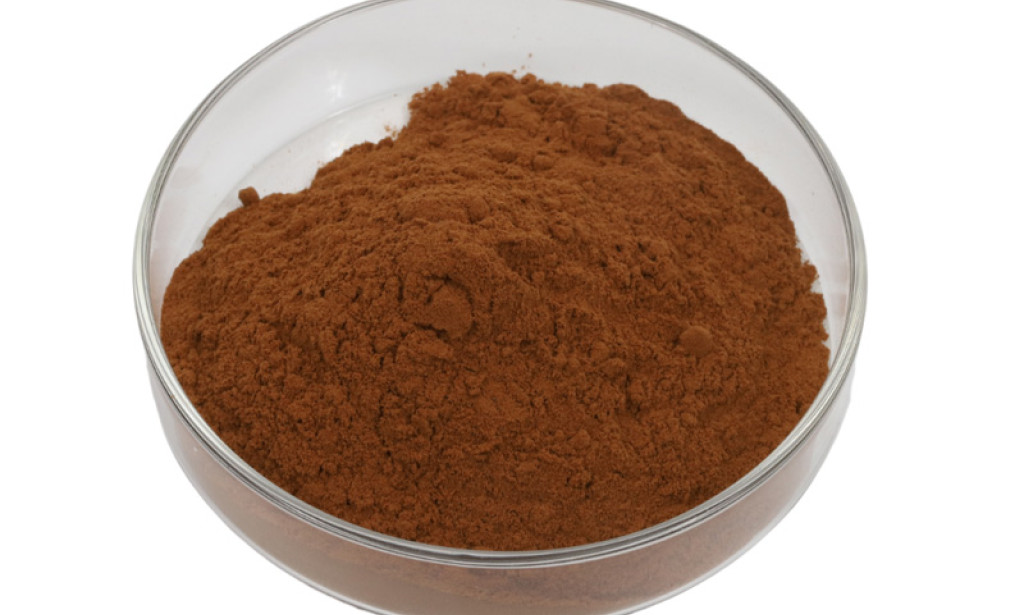
In the world of standardized botanical extracts, few specifications are as widely recognized as “24% flavone glycosides and 6% terpene lactones.” For B2B buyers sourcing ginkgo biloba extract from China, that combination—often abbreviated simply as “24/6”—appears on quotation sheets, manufacturer catalogs, and quality documents across the supply chain. But when the specification includes “CP2020,” the conversation shifts. That three-character code references the Chinese Pharmacopoeia 2020 edition, and for buyers who know what to look for, it signals a meaningful quality threshold.
What the Numbers Actually Mean
Ginkgo biloba extract contains two primary groups of bioactive compounds. The first is flavone glycosides, a class of polyphenolic compounds that function as antioxidants, protecting cells from oxidative stress. The second is terpene lactones, which include ginkgolides A, B, C, and bilobalide, known for their anti-inflammatory properties and their role in supporting circulation. A 2020 edition of the Chinese Pharmacopoeia specifies that qualified ginkgo biloba extract must contain total flavonol glycosides no less than 24.0 percent and terpene lactones no less than 6.0 percent—measured by high-performance liquid chromatography (HPLC).
The CP2020 standard goes beyond simple potency thresholds. It also enforces a ginkgolic acid limit of 5 parts per million (ppm) , down from 10ppm in earlier editions. Ginkgolic acid is a naturally occurring alkylphenol compound found in ginkgo leaves, and its reduction to trace levels is a critical safety consideration for finished products. Additionally, the pharmacopoeia specifies peak area ratios for three flavonol aglycones—quercetin to kaempferol between 0.8 and 1.2, and isorhamnetin to quercetin no less than 0.15—which serve as authenticity and processing consistency checks. Other CP2020 requirements include loss on drying below 5.0 percent, heavy metals below 10ppm, total plate count within 1000 cfu/g, and yeast and mold under 100 cfu/g.
Why Buyers Are Paying Attention
The demand for CP2020-compliant ginkgo biloba extract is not arbitrary. In 2025, the global and Chinese ginkgo biloba extract markets reached 12.974 billion yuan and 3.037 billion yuan respectively, with projections to 17.128 billion yuan globally by 2032 at a compound annual growth rate of 4.05 percent. Major players in the space include Ipsen, CONBA Pharmaceutical, Schwabe, and Tokiwa among others. Chinese manufacturers such as Shaanxi Yangling Lihua Pharmaceutical have built export channels spanning Europe, the United States, Japan, and Australia, holding certifications including ISO9000, ISO22000, HALAL, cGMP, and traditional Chinese medicine extract production备案. In November 2025, CONBA Pharmaceutical announced that its ginkgo biloba extract had obtained a Certificate of Suitability from the European Directorate for the Quality of Medicines and started export sales.
For buyers, the CP2020 standard offers something more direct: consistency. Regulatory bodies in target markets increasingly expect documented compliance with recognized pharmacopoeias. A CP2020 certificate of analysis provides a common reference point that simplifies cross-border transactions.
China Supply Landscape and Price Reality
China’s plant extract export market reached 2.98billionin2025,withexportvolumehitting138,000tons.However,averageexportunitpriceshavedeclinedfroma2022peakof2.98billionin2025,withexportvolumehitting138,000tons.However,averageexportunitpriceshavedeclinedfroma2022peakof32.7 per kilogram to $21.6 per kilogram, reflecting a broad “volume-for-price” dynamic across the industry. The top five export destinations for Chinese plant extracts are the United States, Japan, India, Spain, and Korea, collectively accounting for nearly 50 percent of total export value.
For ginkgo biloba extract specifically, wholesale prices for CP2020-grade material vary by supplier and order volume. Current B2B listings show prices ranging from approximately ¥50 per kilogram for large-volume orders to ¥800–960 per kilogram for smaller or premium batches. Some suppliers also offer additional specifications such as water-soluble grades, low-acid grades with ginkgolic acid below 1ppm, and grades aligned with USP, EP, or EGb761 standards.
The Takeaway for Sourcing
For buyers evaluating ginkgo biloba extract from Chinese suppliers, the CP2020 24/6 specification offers a practical benchmark. The key documents to request include batch-specific COAs confirming flavone glycosides at or above 24 percent, terpene lactones at or above 6 percent, ginkgolic acid below 5ppm, and the required flavonol peak area ratios. Reputable suppliers also provide data on heavy metals, pesticide residues, and microbial contaminants.
Unlike some botanical extracts where specifications vary widely by manufacturer, the CP2020 standard provides a common language for quality. When a supplier lists “Ginkgo Biloba Extract 24/6 CP2020” on a quotation, that combination of numbers and letters carries real weight. It tells buyers that the product meets a recognized pharmacopoeial threshold—not just a number pulled from a marketing sheet. In a market where price pressure is real and differentiation matters, that consistency is worth paying attention to.

You must be logged in to post a comment.