

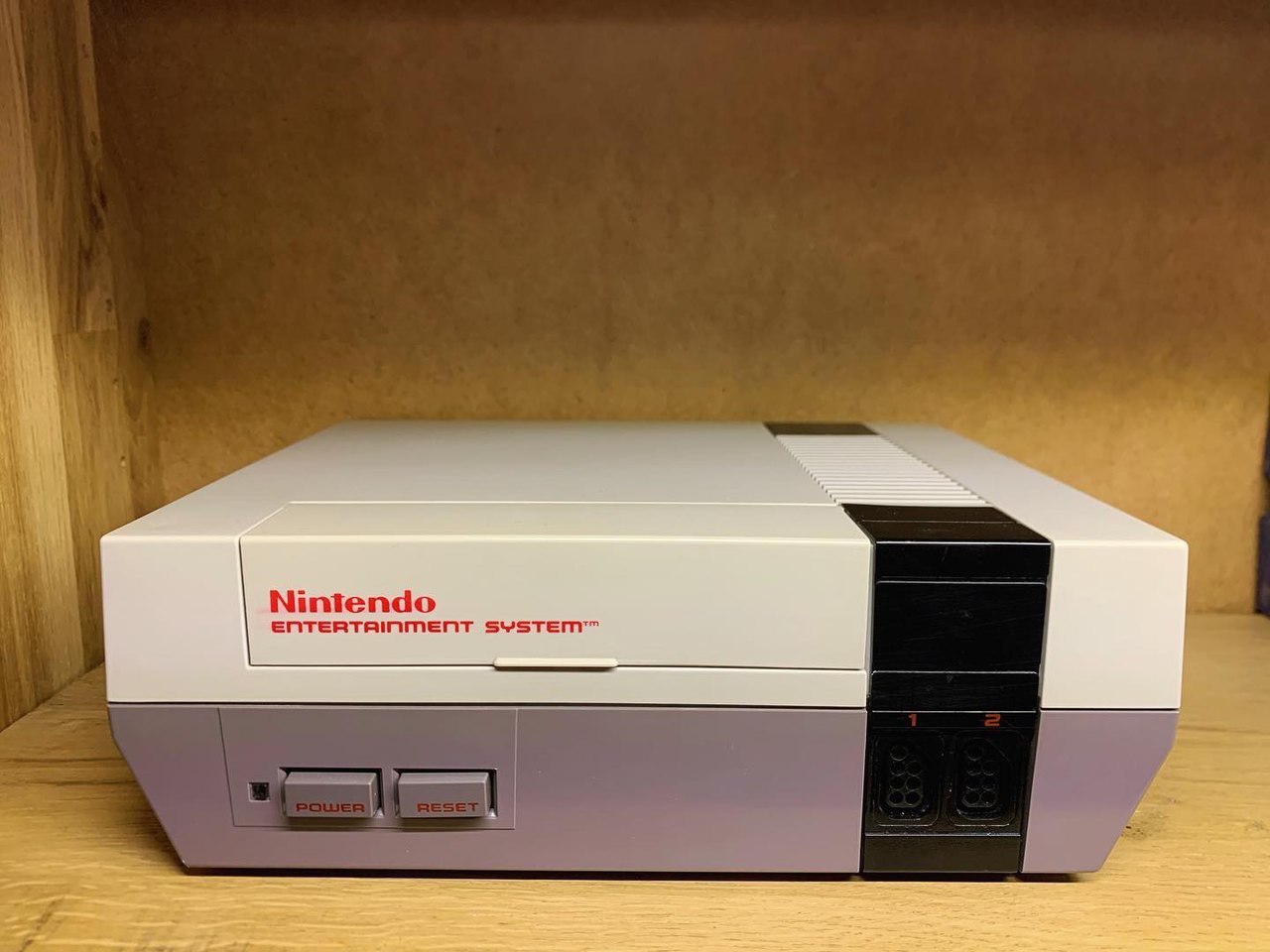
When psychologist Brandon Ashinoff was seven years old, his parents got him a Nintendo Entertainment System. The NE S, as the console quickly became known after its 1983 release, took video games to the next level with its intuitive design and impressive hardware. It also upset parents, who feared this increasingly popular pastime would damage the psychological development of their children.
Ashinoff’s parents referred to the NE S as the “The Idiot Box.” Even at a young age, Ashinoff grasped the underlying meaning of this snidely but seemingly harmless comment. “There was an implicit assumption,” he recounts in an article published by the journal Frontiers in psychology, “that video games were simply a toy and nothing of real substance could be gained from them.”
Video games have been accused of many things over the years. For a long time, people feared they made us lazy, antisocial, depressed and even violent. While these suspicions have since been dispelled by the latest in game-related research, the assumption that gaming diminishes cognitive ability — especially within young children — has stayed with the public to this day.
There are many reasons for this, one being that the link between video games and intelligence — a highly complicated variable — is difficult to study, let alone delineate in a convincing manner. Still, Ashinoff, who now works as a postdoctoral research fellow at Columbia University’s Department of Psychiatry, can name several studies that demonstrate how gaming helps rather than hurts the human brain.
Video games and child intelligence
The link between video games and intelligence is back in the news thanks to a study published recently in Scientific Reports. This study, co-authored by researchers from Germany, Sweden, and the Netherlands, looked at how various forms of screen time, from watching television to playing games, impacted cognition in children between the ages of nine and ten over a period of two years.
To make sure that the results reflected the impact of screen time and screen time alone, the researchers controlled for other variables that might influence intelligence. These included genetic effects as well as household income, parental education, and neighborhood quality — hugely influential factors for which, according to the authors, no study had previously accounted.
At the start of the two-year period, watching videos and socializing online seemed to be “linked to below-average intelligence” while gaming wasn’t linked with intelligence at all. When the researchers checked back in with their subjects two years later, however, they found that gaming had a positive and meaningful effect on intelligence. The study concludes that children who played more video games at ten years were on average no more intelligent than children who didn’t game and showed the most gains in intelligence after two years, in both boys and girls. For example, a child who was in the top 17% in terms of hours spent gaming increased their IQ about 2.5 points more than the average child over two years.
How games impact the human brain
The study from Scientific Reports is interesting, but inconclusive. First and foremost, the researchers only looked at games in general and did not make a distinction between individual types of games. We do not know, for instance, if first-person shooters impact intelligence in the same way as platformers, puzzle games, or other genres.
What’s more, the study only investigates whether playing video games impacts intelligence, not how. If games are to be recognized as having substance in the form of educational value, researchers should be able to readily demonstrate the various ways in which they influence the brain and improve our cognitive skills. This, conveniently, is where writers like Ashinoff come in.
Distrustful parents and political activists crusading against video games tend to forget that, at their core, games are puzzles which (like actual, non-digital puzzles) require cognitive skills to solve. “Today’s games,” one academic survey reads, “demand advanced analytical, visuospatial, and problem-solving capacities and tap several other facets of cognitive resources.”
Video games also help with memorization. This has been observed anecdotally by middle school teachers when they see students with learning difficulties recite the names of more than a hundred Pokémon. But it has also been found in research, with one study showing popular games like Mario and Angry Birds can vastly improve recognition memory in adults over a short period of time.

Research in mice as well as people has shown that confrontation with visually-rich environments can help boost memory. Operating under the assumption that there is no difference between digital environments and real ones, the article cited above discusses using video games in memory training for individuals who — whether because of illness or pandemic restrictions — are forced to stay indoors.

You must be logged in to post a comment.