

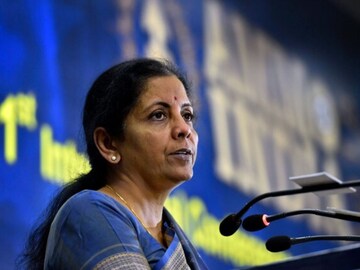
As the Union Budget 2025 approaches, voices from the education sector have expressed high expectations for government initiatives that can reshape the future of learning in India. From fostering entrepreneurship and advancing digital literacy to harnessing the power of Artificial Intelligence (AI), experts emphasize the need for bold reforms and investments to empower India’s youth.
-
As the nation waits for Finance Minister Nirmala Sitharaman’s announcements, the education sector remains hopeful that Budget 2025 will reflect a strategic, forward-thinking approach to transforming India’s learning ecosystem.
Union finance minister Nirmala Sitaraman is set to present the Union Budget 2025 on February 1. Unrelentingly, experts have yet again called for an increase in the allocation for education in this year’s budget while also seeking a significant investment in new-age technologies as the country is at the cusp of a change in the educational landscape and implementation of the NEP 2020 is underway.
Here are some expectations that experts have put forth as the Modi government is set to present its budget with debates on education, middle class lifestyle and market investments are rife on social media platforms.
 The budget should prioritize substantial investments in upgrading digital literacy among educators and fostering innovative teaching practices, ultimately enhancing educational outcomes nationwide. A higher allocation would support the establishment of new K-12 schools, enhance educational infrastructure to balance the urban-rural gap in education and improve overall educational outcomes across the country. We also look forward to support for structured skilling programs, vocational training, application-based learning opportunities, and digital upskilling to align the workforce with emerging market demands. The reduction of interest rates on education loans will also help alleviate financial strain, enabling better access to education. We must strive to ensure that the learning experience remains meaningful and enriching. Overall, addressing these issues and the need for increased investment in education are crucial in achieving equitable and inclusive education for all. – Shweta Sastri, Managing Director, Canadian International School, Bangalore
“The total budgeted expenditure on education as one % of the GDP is less than 4% and this needs to increase to 6% especially because the centre bears only one fourth of the total government spending on education, whereas the rest three-fourth of the spending comes from the States.
This increase in budgetary outlay must be geared towards increased spending on R&D as well as incentivizing the private sector to increase the spending on R&D. India’s current spend on R&D is 0.65 % of the GDP; this is lower than our peers in the BRICS and also well below the global average of 1.5%. We are at the cusp of an epoch where disruptive technologies like AI, quantum computing, CRISPR and similar radical disruptors will change the global economic order. The only way that India will retain its competitiveness is by an increased budgetary outlay in the education system.” – Praneet Mungali, Trustee and Educationist Sanskriti Group of Schools, Pune.
“The Union Budget should address the challenges of educational loans to make education more accessible and affordable for students, especially those from weaker economic backgrounds. Despite the considerable allocation to the education sector, more investment should be considered to meet workforce requirements as per global standards. This also includes funding for STEM (Science, Technology, Engineering, and Mathematics) research, digital learning, and industry-focused skills like AI and IoT. Public-Private Partnerships (PPP) and subsidies for international students can further improve India’s educational ecosystem, with the aim of making it a global education hub in the coming years.” – Kuldip Sarma, Pro-Chancellor and Co-Founder, Medhavi Skills University.
 “The budget should prioritize investments in AI infrastructure for education, grants for research in EdTech, and initiatives that encourage collaboration between academic institutions and technology innovators. Building on last year’s allocation of Rs 47,619 crore to higher education, it’s important that resources this year go beyond infrastructure and address the integration of emerging technologies. By aligning funding with a forward-looking vision, the Union Budget 2025 can empower India’s education sector to set a global benchmark for innovation and accessibility.” –Rohan Rai, Co-Founder, Edupull
In the upcoming year, the education sector in India is poised for significant growth and development, driven by the implementation of NEP 2020 and the increasing adoption of online and digital education. NEP stresses the importance of foundational literacy and numeracy, hence there will be more impetus. Collaboration between educational institutions and edtech entities can extend digital education to the masses, offering programs, upskilling courses, and employment opportunities. The use of AI in education is expected to transform the learning experience, making it more personalized, interactive, and effective. Therefore, it’s essential to harness the potential of AI to improve student outcomes, enhance the teaching experience, and prepare students for success in an AI-driven world.” – Anish Shah, Chief Financial Officer, Zee Learn Limited
“As India aspires to establish itself as a global leader in education, sports, and innovation, the forthcoming Union Budget represents a pivotal opportunity to accelerate transformative progress across these critical sectors. Foremost, a significant allocation toward the development of world-class sporting infrastructure at universities is essential. This strategic investment will not only enhance India’s preparedness to host the Youth Olympics 2030 and the Olympics 2036 but also foster a culture of fitness and athletic excellence among the nation’s youth. By enabling students to pursue sports alongside academics, such initiatives align seamlessly with the vision of a healthier, more competitive India. Furthermore, augmented funding through the Department of Science and Technology (DST) is indispensable for establishing Centers of Excellence in advanced domains such as Artificial Intelligence, Aerospace, and Innovation. These centers will serve as catalysts for groundbreaking research, stimulate an ecosystem conducive to start-up growth, and cement India’s leadership in technological innovation on the global stage. Equally vital is the introduction of incentives for existing universities and educational institutions to create Distinguished Skill Universities. These institutions will address the critical skill gap by equipping the next generation with industry-relevant expertise, thereby driving employment opportunities and enhancing India’s competitiveness in the international arena. A visionary budget that prioritizes these initiatives will serve as a cornerstone for India’s emergence as an economic and educational superpower in the 21st century.” – Abhay G Chebbi, Pro-Chancellor, Alliance University
“India’s education landscape stands at a critical juncture. The Budget 2025 should not only bridge existing funding gaps but also propel us into the future by integrating next-generation technologies like AI, IoT, and robotics into mainstream curricula. By substantially increasing public spending on education and fostering robust industry-academia partnerships, we can build a globally competitive, job-ready workforce—one that will drive inclusive growth and bolster India’s standing as a leading knowledge economy.” – Pravesh Dudani, Founder and Chancellor, Medhavi Skills University.
“As we approach the Union Budget, key focus areas must include steps to empower education and bridge digital gaps. A reduction in GST on education services is essential to make quality learning more affordable and accessible, especially for middle-class families. Additionally, targeted investments in rural internet infrastructure are critical to bringing underserved communities into the digital economy, enabling them to participate in new-age learning and employment opportunities. To address India’s growing skills gap, the government should provide incentives for vocational training platforms to foster job-ready talent across sectors. Skilling initiatives, particularly in areas like digital literacy, green energy, and logistics, will drive employability and long-term economic growth. A future-ready economy requires a workforce equipped with both education and skills. By focusing on reducing education costs, expanding connectivity, and supporting skill-building platforms, the Budget can ensure that India’s youth are prepared for emerging opportunities in a rapidly evolving job market.” Anthony Fernandes, Founder – Shaalaa.com
The education sector has high hopes from the upcoming budget. Increased focus on skill development, research, and innovation is crucial to address future workforce demands. We expect more investments in digital education, rural connectivity, and infrastructure upgrades for tier 2 and 3 cities. Additionally, introducing tax benefits for education expenses would ease the financial burden on students and families. These measures can ensure a more inclusive, equitable, and future-ready education system. – Indu Kansal, Co-Founder, Crack Academy.
“As our Finance Minister prepares to present Budget 2025, it’s important to remember that our journey towards a $5 trillion economy in the next three years relies heavily on India’s young demographic. It’s laudable how the government has invested heavily in skill development and the pioneering One Nation One Subscription initiative, emphasising on the need to bridge skill-employability gap and democratise access to research, respectively. We believe strategic investments and robust public-private partnerships in skill development, will further bridge the gaps and meet the demands of future workforce. The demand for 6 per cent GDP allocation to education under NEP is another step that the government needs to consider for an educational revolution, particularly with the need for teacher training, enhanced learning resources to impart future skills and the development of future-ready learners.”- Arun Rajamani, Managing Director of Cambridge University Press & Assessment, South Asia.
 “India’s education ecosystem stands at a critical juncture, with an unprecedented opportunity to empower the nation’s youth for success in a rapidly evolving global economy. With Gen Z comprising 377 million individuals and already influencing $860 billion in consumer spending, the country is poised to experience significant demographic and economic shifts. As the workforce grows and 78 million new job opportunities are projected by 2030, it becomes increasingly important to focus on upskilling students and preparing them for emerging roles. In the next decade, every second Gen Z individual will enter the workforce, with their economic impact expected to exceed $2 trillion in consumer spending. To harness this potential, there is a need for deeper industry-academia collaborations and specialized programs in high-demand fields such as AI, digital technologies, and renewable energy. We remain optimistic that the forthcoming budget will prioritise investments in higher education and vocational training, aligning educational outcomes with global workforce requirements. The success of the PM Internship Scheme highlights the growing demand for hands-on, real-world experience, and we anticipate further expansion of such opportunities. As Gen Z continues to shape consumer behaviour across industries, it is crucial to ensure that the education system evolves to meet their expectations and future needs. Additionally, the emphasis on greater access to quality education, mental health support within schools, and enhanced digital infrastructure for hybrid learning will be key to creating a more inclusive education ecosystem. By balancing academic rigour with practical skills development, the 2025 budget can foster innovation, nurture talent, and position India’s next generation of leaders for success on the global stage”. – Sri Charan Lakkaraju, Founder & CEO, Student Tribe.
 As we look ahead to the Union Budget 2025, it is essential that we move beyond incremental measures and take transformative steps to bridge the widening gap between education, skilling, and employability. While last year’s focus on employment-linked skilling schemes and financial support for education loans was encouraging, the true challenge lies in driving systemic change that integrates skilling into the DNA of higher education. We urge the government to strengthen the Model Skilling Loan Scheme, ensuring it includes targeted funding for industry-aligned, short-term certifications that enhance employability in dynamic sectors like marketing, technology, and digital innovation. Additionally, the salary eligibility cap for employment incentives should be revised upwards to reflect the rising aspirations and realities of India’s knowledge economy. Educational institutions must be incentivized—and held accountable—to embed experiential learning, internships, and mentorships as a core part of their programmes. The burden of making students workforce-ready cannot rest solely on companies. At the same time, investments in AI hubs, EdTech regulatory frameworks, and a nationwide push toward digital-first classrooms are non-negotiable if we want to future-proof our workforce. We hope this budget delivers not just on numbers but also on systems and accountability. India’s youth need more than degrees; they need a cohesive ecosystem that empowers them to become industry leaders from day one. – Varun Satia, Founder & CEO, Kraftshala.
 As education is a key development sector, we have immense expectations from the upcoming budget. While new educational policies have brought promising reforms, the upcoming budget should focus on increasing access to education and technology, especially in rural and underserved areas. Building a blended ecosystem of digital tools, physical infrastructure, and practical learning environments will be essential for improving learning efficacy. Although education has seen an increase in funds allocated towards increasing outreach, skill development, and improving its quality, still there are hurdles in effectively supporting learning in the current context and overall student development in an increasingly challenging world. The country will need skilled personnel at different levels, and this demand will be met only by training students at the school level. The foundation and vision set by the government through the NEP will be vital in achieving these objectives of an effective and inclusive education system. This commitment will stand as a testament to India’s dedication to fostering a generation equipped with the knowledge and skills crucial for global competitiveness. It is important to increase women’s participation in STEM fields, which would be an important step toward building an inclusive workforce. We also believe that a further push to the PPP model approach in education can leverage the strengths and resources of both sectors to improve the quality, accessibility, and efficiency of education in the country. The education sector remains a cornerstone of a nation’s economic growth and development. By embracing these elements, the education system can transform to meet the aspirations of a globalized and rapidly evolving world. Overall, the budget must give the education sector a significant boost to address the challenges of the day and build a dynamic, future-ready education system. – Niru Agarwal, Managing Trustee, Greenwood High International School, Bangalore.
“In the upcoming Union Budget, priority can be given to research and intellectual property in the higher education sector. These two categories should be included as part of Corporate CSR fund deployment to accelerate India’s research journey. Education and research capital expenditure could be classified under priority lending, with a focus on 25-year long-term financing for universities as national assets and subsidized lending rates. These initiatives could accelerate private investment in the sector. Allowing education to operate under a for-profit model can enhance capital infusion into the sector and make it globally competitive. Additionally, collateral-free education loans for students could enable higher enrollment numbers in a young nation like ours, which currently struggles with sub-30% levels.” — Vishal Anand, Founder & Pro Chancellor, Shoolini University
“As we approach Budget 2025, the education sector eagerly anticipates a renewed emphasis on higher education after the government’s commendable steps last year. The need of the hour is greater fiscal allocation towards innovation-driven research, skill-based learning, and global partnerships to enhance the competitiveness of Indian universities on a global scale. While primary and secondary education have rightfully received significant focus in the past, it’s imperative now to strengthen higher education to meet the demands of a rapidly evolving global economy. We hope the government will prioritize policies that foster industry-academia collaboration, promote technological adoption, and ensure equitable access to quality higher education for students across all strata.” – Praveen K. Pula, President & Chancellor, Woxsen University– President & Chancellor, Woxsen University
As India approaches its upcoming budget, there is a critical opportunity to drive job creation and provide relief to the middle class by fostering a supportive environment for startups and entrepreneurship. The Startup India initiative has already recognized over 1.17 lakh startups, creating more than 15.53 lakh direct jobs by December 2023, and this momentum can be amplified by streamlining regulations, enhancing tax incentives, and improving access to finance. Addressing skill gaps in emerging sectors such as AI, IoT, and green technology through initiatives like the Pradhan Mantri Kaushal Vikas Yojana, which trained over 1.10 crore candidates between 2016 and 2020, is essential to equip the workforce for evolving demands. At the same time, inflation at around 5.5% annually necessitates revisiting tax policies to offer greater deductions on essentials or direct support for startup employees to alleviate middle-class pressures. A comprehensive strategy integrating policy reforms, financial incentives, and skill development will not only strengthen India’s entrepreneurial ecosystem but also address economic challenges faced by the middle class, fostering sustainable growth and inclusive prosperity. – Prof. Swapnil Sahoo, Assistant Professor-Strategy and Entrepreneurship, Great Lakes Institute of Management, Gurgaon
The upcoming Union Budget 2025 presents a significant opportunity for the government to advance its dual objectives of enhancing disposable income and stimulating economic consumption. Measures such as revising personal income tax slabs or increasing exemption limits could provide essential relief to middle-income households, which form the cornerstone of India’s economic framework. Simultaneously, introducing targeted tax incentives for investments in transformative sectors like green energy, skilling initiatives, and AI-driven startups would not only encourage individual engagement in these high-potential areas but also align with the nation’s broader strategic priorities for sustainable growth. While the perennial call for tax simplification persists, this budget must also address the imperative of equitable tax distribution. By implementing policies that enhance compliance through greater transparency and streamlined filing processes, policymakers can expand the tax base while fostering trust among taxpayers. – Dr. Suresh Ramanathan, Dean, Great Lakes Institute of Management, Chennai
Given the NEP’s targeting a Gross Enrolment Ratio (GER) of 50% by 2035 in higher education, including vocational education and the increased focus on Education 4.0, the education sector continues to aim for a 6% GDP allocation to education. We expect the government to increase collaboration with industry on internships, skill-based training, and investments in technology-driven solutions. The introduction of the PM Vidyalakshmi scheme to provide financial support to meritorious students would improve access to education and help achieve GER targets. Additionally, there is a need to establish a fast-track process for patent applications and grants for educational institutions. – Arti Dawar, Deputy CEO, Shiv Nadar School

You must be logged in to post a comment.