

“There is no chance of the welfare of the world unless the condition of women is improved. It is not possible for a bird to fly on one wing”
-Swami Vivekananda
The status of women in India has evolved significantly over the years, marked by progress in certain areas and persistent challenges in others. While there have been notable advancements in women's education but still political representation, and workforce participation, gender inequality and discrimination remain prevalent in various aspects of Indian society.
Women empowerment is a critical aspect of achieving gender equality and creating a more just and inclusive society. It encompasses a range of efforts aimed at enhancing women's social, economic, political, and cultural status. Over the years, women empowerment has gained momentum as a transformative movement, challenging gender norms and advocating for equal rights and opportunities.
Status of women in various areas
1. Social rights
“I measure the progress of the community with the degree of progress women have achieved.”
- DR. B . R Ambedkar.
(a) Ancient India - Rig Vedic society recognized women's rights to education, property ownership, and participation in religious rituals. Women held high positions in society, such as queens, scholars, and warriors, as depicted in ancient texts like the Mahabharata and Ramayana.
- Later Vedic age, women become subordinate to men. She was denied to learn Vedic texts, child marriage prevalent, no more political role.
- In Medieval India, women position further decreased. Evidence of sati, no widow marriage in Hinduism, female infanticide & denied education, dowry system, Purdah system, Polygyny (man have more than one wife), domestic violence prevalent.
(b) In British India - For some reason, all women in India want to be gratitude to British rulers. For their present condition. With the help of British R.R. Mohan Roy abolished sati 1829, later Windows remarriage act, 1856, Age of consent act in 1891 which increases marriage age of women to 12! From 10, Right to property act, 1937 which gives property rights to Hindu women.
(c) Present India-The Indian Constitution, adopted in 1950, guarantees gender equality and fundamental rights to all citizens. The government implemented affirmative action policies, such as reservations for women in local government and educational institutions. The Dowry Prohibition Act (1961) aimed to combat dowry-related issues and protect women from harassment. Laws were enacted to address issues like domestic violence (Protection of Women from Domestic Violence Act, 2005) .
Varies actions taken by government to improve social status of women in India
1. Laws
Hindu Marriage act, 1955
Hindu Succession act, 1956
Immoral Trafficking prevention act, 1956
Dowry Prohibition act, 1961
Equal remuneration act, 1976
Indecent representation of women prohibition act, 1986
2. Schemes
PM Matru Vandana Yojana
KIRAN scheme
Operation Mahila Suraksha
2. Political rights
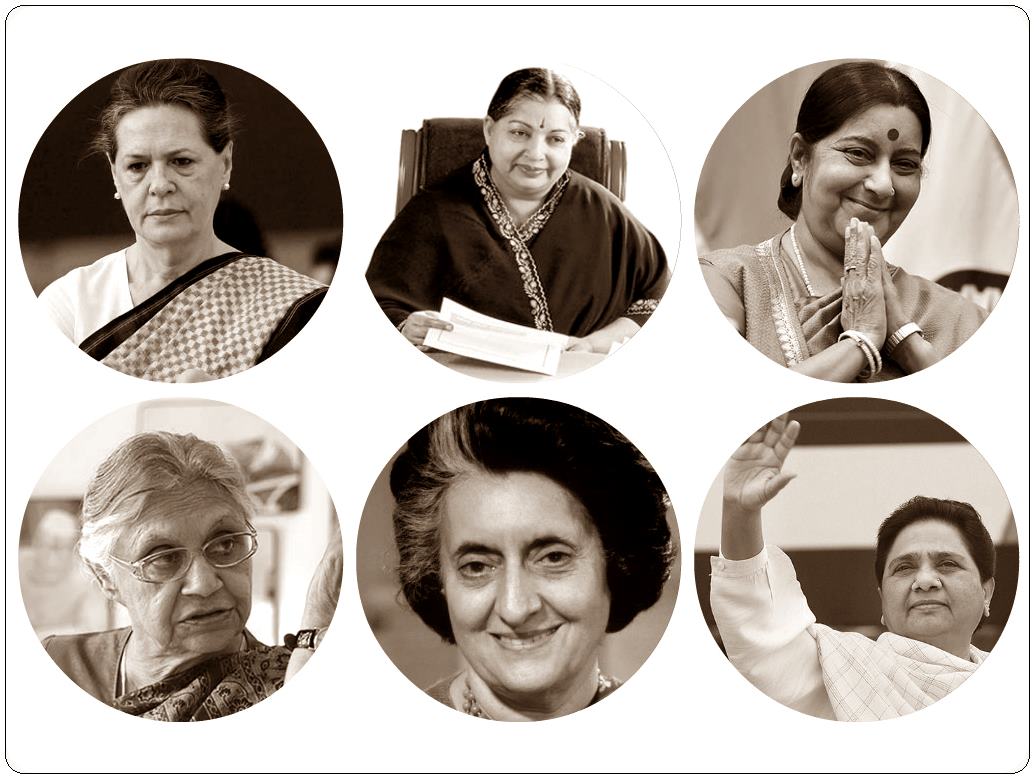
Women represent almost 50% of the population of India. But their representation in public life is low. As per data compiled by the Inter-Parliamentary Union, in India, women make up 14.44% of the 17th lower house. Women make up roughly 11% of the RS. For all the state assemblies, female MLA representation stands at an average of 9%.
India’s ranking in this regard has fallen over the last few years. It is currently behind Pakistan, Bangladesh, and Nepal. According to Global Gender Gap Report 2022, India ranks 48th out of 146 in Political Empowerment. According to 73rd constitutional amendment out of the total number of seats to be filled by the direct elections for local self-governing bodies, 1/3rd have to be reserved for women.
Reason for low representation
1. Patriarchy: Women although hold the power but they do not experience it as the decisions are influenced by male partners or other family members.
2. Lack of Political Education
3. Work-life balance: They must ensure domestic tasks like rearing of children. This impacts their political careers.
4. Unfriendly Environment: Overall political parties’ environment too is not women-friendly, they must struggle hard and face multidimensional issues to create space for them in the party.
The Women’s Reservation Bill proposes to reserve 33% of seats in the lower house and State Legislative Assemblies for women. The upper house passed the Women's Reservation Bill on 9 March 2010. However, the lower house never voted on the bill. The bill lapsed since it was pending in lower house. While women constitute about a half of society, giving them 1/3 seats should be viewed as a moral step as the true empowerment can be endowed by political representation not necessarily by financial schemes and policy measures. Reservation are redistributive tools meant to ameliorate centuries of continued oppression faced by women.
3. Economic rights
Women in India represent 29 percent of the labour force, Women are 52% workforce in healthcare sector,44% in educational institution,41% in financial service sectors and 36% in IT/BPO sector.
But, according to the World Bank, Indian women’s participation in the formal economy is among the lowest in the world—only parts of the Arab world fare worse. It is therefore unsurprising that at 17 percent, India has a lower share of women’s contribution to the GDP than the global average of 37 percent.
More than half of the work done by women in India is unpaid, and almost all of it is informal and unprotected.
But still our country tries to improve these conditions by various ways,
e. g: Co-operative empowerment
According to the latest data, there are more than 1,90,000 dairy cooperative societies across the country. Approximately 6 million of their members are women members.
A study conducted on Women Dairy Cooperative Society (WDCS) members in Rajasthan shows certain striking development among women. Such as, 31% of the women dairy farmers in Rajasthan converted their mud houses to cement structures.
“It is estimated that the Indian economy could grow by an additional 60 percent by 2025, adding $2.9 trillion, if women were represented in the formal economy at the same rate as men.”
4. Judicial representation Rights
The CJI said women constituted only about 30% of the subordinate judiciary.
● In High Courts, women judges constitute 11.5%, and in the Supreme Court, there are currently just four women Justices out of the sitting 33 (i.e., 12%).
● Of the 1.7 million advocates, only 15% are women.
● Only 2% of the elected representatives in the State Bar Councils are women. At present, there is no woman member in the Bar Council of India.
● The situation of women lawyers in the country is not any better. Out of 1.7 million advocates registered, only 15% are women.
Reasons for low women representation
Eligibility criteria: Lawyers need to have seven years of continuous legal practice and be in the age bracket of 35-45.This is a disadvantage for women as many are married by this age.
Familial Responsibilities : Factors of age and family responsibilities also affect the elevation of women judges from the subordinate judicial services to the higher courts.
Work Culture : The long and inflexible work hours in law, combined with familial responsibilities, force many women to drop out of practice and they fail to meet the requirement of continuous practice.
Opaque Collegium System Functioning: The higher judiciary has a collegium system, which has tended to be more opaque and, therefore, more likely to reflect bias.
No Women Reservation: Many states have a reservation policy for women in the lower judiciary, which is missing in the High Courts and Supreme Court. States such as Assam, Andhra Pradesh, Telangana, Odisha and Rajasthan have benefited from such reservation as they now have 40-50% women judicial officers.
Judicial Infrastructure: Judicial infrastructure, or the lack of it, is another barrier to women in the profession. Small courtrooms which are crowded and cramped, absence of restrooms, and childcare facilities are all barriers.
A gender diverse bench reflects a bias-free judiciary. Changing the long-established demographics of a court can make the institution more amenable to consider itself in a new light, and potentially lead to further modernization and reform.

5. Military rights
All branches of the Indian Armed Forces have women in combat roles. Women are allowed in combat services and supervisory roles (as officers).
The Indian Air Force had 13.09% (2018) and 8.50% (2014) women; the Indian Navy 6% (2018) and 3% (2014); the Indian Army 3.80% (2018) and 3% (2014).
Recently, the government has also informed that the National Defense Academy (NDA) has begun inducting women cadets from the Autumn 2022 term, with 19 vacancies being allotted to women. The Navy has further started 12 branches, cadres, and specializations for women officers. Women are serving in all arms and services as officers in the IAF, like their male counterparts.
BENEFITS OF WOMEN IN ARMED FORCES
Removing structural gender discrimination.
Increased job security.
In response to a question in upper house in December 2021, the Minister of State for Defense said the Army has a shortage of 7,476 officers. Permanent Commission to women can help bridge the gap.
Arguments against
Motherhood, childcare, psychological limitations
Family separation, career prospects of spouses, education of children, prolonged absence due to pregnancy, motherhood were a greater challenge for women to meet the exigencies of service.
Physical limitations: Soldiers will be asked to work in difficult terrains, isolated posts, and adverse climate conditions. Officers must lead from the front. They should be in prime physical condition to undertake combat tasks. The Government said women were not fit to serve in ground combat roles.
Behavioural and Psychological Challenges: Army units were a “unique all-male environment”. The presence of women officers would require “moderated behavior”. The male troop predominantly comes from a rural background and may not be able to accept commands from a female leader.
Practical Problems: Military’s universal perception is that it would lead to “operational, practical and cultural problems". Officers in combat branches must fight together & there is no privacy, which could be an issue for a female. It is tough to maintain proper living conditions for women in combat situations, especially given social norms in India.
“To call women the weaker is a libel; it is man’s injustice to women. If by strength is meant moral power, then women are immeasurably man’s superior.”-M K Gandhi

You must be logged in to post a comment.