
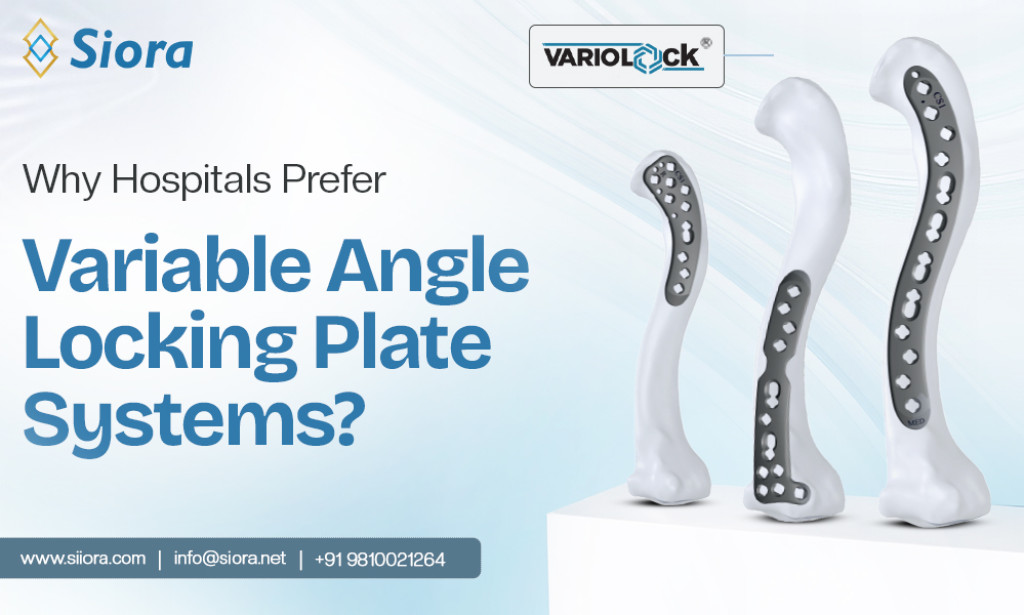
Advancements in orthopedic surgery have significantly improved the way fractures are treated. Among the many innovations introduced over the years, variable angle locking plate systems have emerged as a preferred choice for hospitals worldwide. These systems offer surgeons greater flexibility during fracture fixation while ensuring enhanced stability and improved patient outcomes. As healthcare institutions continue to prioritize precision, efficiency, and long-term results, the adoption of variable angle locking plate systems has steadily increased.
This article explores the key reasons why hospitals are increasingly favoring these advanced fixation solutions.
Enhanced Surgical Flexibility
One of the primary reasons hospitals prefer variable angle locking plate systems is the flexibility they provide during surgery. Unlike conventional locking plates, which require screws to be inserted at predetermined angles, variable angle systems allow surgeons to place screws within a defined angular range.
This flexibility becomes particularly valuable when dealing with complex fractures, periarticular injuries, or patients with unique anatomical considerations. Surgeons can adjust screw trajectories to avoid existing implants, fracture lines, or compromised bone areas while still achieving secure fixation.
As a result, surgical teams can customize the fixation strategy according to the patient's anatomy rather than adapting the patient to the implant.
Better Management of Complex Fractures
Modern trauma centers frequently encounter highly complicated fractures resulting from road accidents, sports injuries, and high-energy trauma. Such fractures often involve multiple fragments and irregular bone patterns that demand precise fixation.
Variable angle locking systems are especially beneficial in these challenging cases. The ability to direct screws toward specific bone fragments helps surgeons capture and stabilize difficult fracture segments more effectively.
This enhanced control contributes to better reduction, improved alignment, and increased construct stability, all of which are essential for successful healing.
Improved Fixation in Osteoporotic Bone
An aging population has led to a growing number of osteoporotic fractures worldwide. Osteoporotic bones often present fixation challenges due to reduced bone density and poor screw purchase.
Variable angle locking addresses this issue by creating a fixed-angle construct between the plate and screw while allowing optimal screw placement. Surgeons can direct screws toward stronger regions of bone, maximizing fixation strength even in compromised bone quality.
For hospitals treating a large number of elderly patients, this capability translates into improved clinical outcomes and reduced rates of fixation failure.
Reduced Need for Revision Surgeries
Revision surgeries place additional financial and logistical burdens on healthcare institutions. They also increase patient discomfort and prolong recovery.
Hospitals prefer implant systems that minimize complications and lower the likelihood of secondary procedures. Variable angle locking plate systems contribute to this objective by providing stable fixation and allowing surgeons to optimize screw positioning based on individual fracture characteristics.
Better initial fixation often leads to fewer cases of implant loosening, loss of reduction, or nonunion, thereby reducing the overall revision rate.
Streamlined Inventory Management
From an administrative perspective, inventory optimization is another significant advantage. Since variable angle plates can accommodate a range of screw trajectories, hospitals may require fewer specialized implants for different fracture patterns.
This versatility helps reduce inventory complexity while ensuring that surgeons have access to suitable fixation options during surgery. Lower inventory requirements can also contribute to cost savings and improved operational efficiency.
Support for Minimally Invasive Techniques
Many hospitals are increasingly adopting minimally invasive orthopedic procedures to reduce soft tissue damage and accelerate patient recovery.
Variable angle locking plate systems complement minimally invasive plate osteosynthesis (MIPO) techniques by allowing surgeons to achieve stable fixation through smaller incisions. Preservation of blood supply and surrounding soft tissues often results in faster healing, reduced postoperative pain, and shorter hospital stays.
These advantages align well with modern healthcare goals focused on enhancing patient satisfaction and improving resource utilization.
Conclusion
Variable angle locking plate systems have become an integral part of contemporary orthopedic practice due to their versatility, stability, and clinical effectiveness. Their ability to manage complex fractures, improve fixation in osteoporotic bone, support minimally invasive surgery, and reduce revision rates makes them highly valuable for hospitals.
As orthopedic care continues to evolve, hospitals are expected to further increase their reliance on these advanced orthopedic implant plating systems to deliver better surgical outcomes and improve overall patient care.

You must be logged in to post a comment.