

Urbanized regions with higher temperatures than surrounding areas are known as heat islands. More heat is absorbed and re-emitted by man-made structures like roads, buildings, and other infrastructure than by naturally occurring environments like forests and bodies of water.
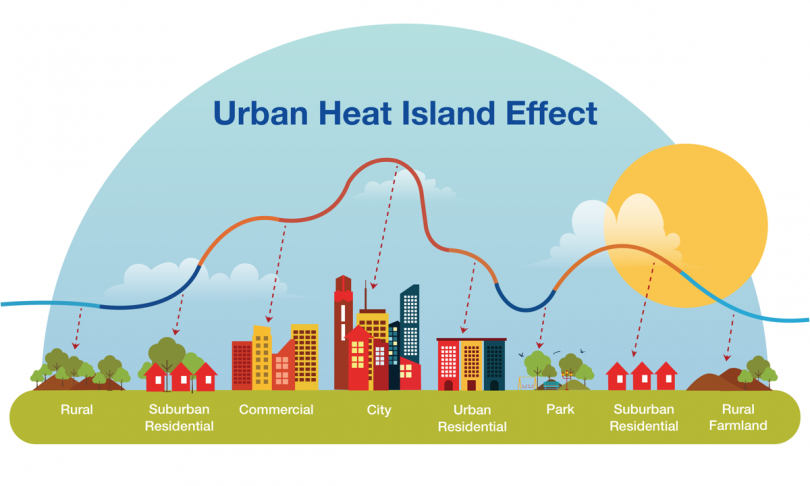
These kinds of locations—places with a high volume of people and activity—create urban heat islands.
A city is an urban region and other is the rural area of the country. Both the country and the city receive heat and light from the sun in the same way. The ability of surfaces in different environments to absorb and retain heat accounts for the temperature differential between urban and less developed rural areas.
You will likely discover that the majority of a rural area is covered in vegetation. As far as the eye can see, there is nothing but grass, trees, and crop-covered farmland.
Water is absorbed by plants through their roots. They then use their leaves and stems to store the water. Water gets released into the air called transpiration which acts a natural air conditioner.
Urban heat island (UHI) effects result from the replacement of natural land cover by structures, pavement, and other heat-absorbing materials. The way that urban materials absorb and release solar energy is also influenced by the size and spacing of buildings within a city.
The UHI reduces water quality and air quality by increasing the production of pollutants like ozone.The ecosystem also gets disturbed.Increased air pollution, fewer cooling nights, and higher daytime temperatures are all caused by heat islands. Thus, they exacerbate heat-related illnesses and deaths, including non-fatal heat stroke, cramps, respiratory problems, general discomfort, and heat exhaustion.
The EPA advises towns to make the following investments to lessen the effects of urban heat islands:
- Increase the amount of vegetation and plant trees.
- Put in cool or green roofs.
- Use cool pavement in place of regular pavement.
- Consider using a smart growth strategy.
- Use energy-efficient appliances and equipments.

You must be logged in to post a comment.