

“Live as if you were to die tomorrow. Learn as if you were to live forever.”
― Mahatma Gandhi
Education is the cornerstone of a society that promotes economic growth, social prosperity, and political stability. People now have the ability to express their opinions and demonstrate their true potential. By giving people the means to take part in the political process, it improves democracy. It serves as an integrating factor to promote social cohesiveness and national identity.

In India, every citizen has a fundamental right to an education. Therefore, education is open to all age groups, religions, castes, creeds, and geographical regions. Everywhere you go, people respect and treat you nicely if you're educated. Everyone has childhood aspirations of being a doctor, attorney, engineer, actress, athlete, etc. Through education, these goals are attainable. So, the best return on investment is in education. People with greater education have more options to find better employment, which makes them happier.
Provisions in the Indian Constitution related to Education
The government is required to provide free and mandatory education for all children up to the age of 14 according to DPSP's Article 45.
The 86th Constitutional Amendment Act of 2002 created Article 21A as a result of this not being accomplished, turning basic education into a fundamental right rather than a directive principle. Additionally, Article 45 was changed to include provisions for early childhood care and education for kids under six years old.
India's educational history
India has a long history of teaching people new things.
In the 'gurukula' educational system of old India, the guru and the students shared a home. The world's first university system was located in Nalanda (Bihar). Indian knowledge systems drew students from around the world.
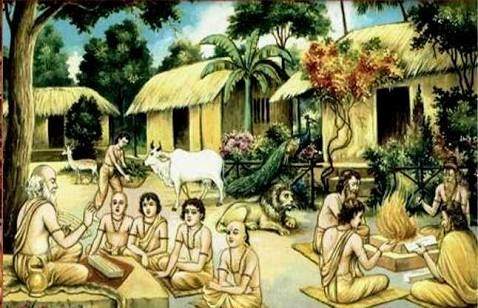
India gave birth to many branches of the knowledge system. In ancient India, education was valued more highly than other virtues.
“We owe a lot to the Indians, who taught us how to count, without which no worthwhile scientific discovery could have been made.”
-Albert Einstein
However, at that time, India was not experiencing the Renaissance or scientific thought as they were in Europe.
By that point, the British had taken over leadership of Indian affairs, and they had different priorities. At first, education in British India lagged far behind.
But afterward, the British created the contemporary educational framework that is still used in India. English methods were used to supplant the country's traditional educational institutions.
However, India's educational system still requires significant adjustments.
Present Education Situation in India
74% of Indians are literate, according to the 2011 Census.
Male literacy is 82.1%; female literacy is 65.5%.
The rankings are headed by Kerala, with Delhi, Maharashtra, and Tamil Nadu following.
State-wise, Bihar ranks last, followed by Arunachal Pradesh, Rajasthan, Jharkhand, etc., albeit they are making progress.
The literacy rate in Bihar is 63.8%, and the rate for women is 53.3%.
Literacy rates for both adults and youths have increased, still, the absolute number of illiterates in India is as much as India’s population was at the time of independence.
The gender gap in terms of literacy began to narrow first in 1991 and the pace has accelerated, however still lags far behind the global female literacy rate of 7% (UNESCO 2015).
However, during 2001 – 2011, the male literacy rate increased by 6 percentage points but female literacy increased by nearly 12 percentage points. Achievement in female literacy in Bihar is noteworthy: from 33% in 2001 to 53% in 2011.
“You educate a man; you educate a man. You educate a woman; you educate a generation.”
― Brigham Young
Indian Education System: The Present Pyramidal Structure
The Indian education system can broadly be considered a pyramidal structure:
Pre-primary level: 5 to 6 years of age.
Primary (elementary) level: 6 to 14 years of age. Elementary-level education is guaranteed by our constitution under Article 21 A. For this level, the government has introduced Sarva Shiksha Abhiyan (SSA) under the Right to Education (RTE) Act.
Secondary level: Age group between 14 to 18. For this level, the government has extended SSA to secondary education in the form of the Rashtriya Madhyamik Shiksha Abhiyan.
Higher education: generally, of three levels: UG→ PG→ M Phil/Ph.D. To cater to the requirements of higher education, the government has introduced Rashtriya Uchhattar Shiksha Abhiyan (RUSA).
The government of India is getting ready to implement a New Education Policy, which will utilize the demographic dividend of the country to meet the demands of India in the Fourth Industrial Revolution. On May 31, 2019, the Committee for Draft New National Education Policy (led by Dr. K. Kasturirangan) turned in its report.

Issues with Education in Schools
- Limited accessibility,
- The curriculum falls short of children's developmental needs,
- Lack of skilled and qualified educators,
- Teacher shortage,
- Inadequate pedagogy.
- Current board examinations: (a) Force students to concentrate only on a few subjects. (b) Do not test learning in a formative manner. (c) Cause stress among students.
Reforms to be taken in the following areas
Survey: State Census Examinations should be developed for classes three, five, and eight in order to monitor pupils' development over the course of their academic careers.
Infrastructure for schools: Although opening elementary schools in every settlement has boosted access to education, it has also resulted in the growth of relatively small schools, which makes them difficult to operate. As a result, a school complex made up of all the public schools should be created. One secondary school (for grades nine through twelve) and all the neighborhood public schools that provide instruction from pre-primary through class eight will make up a complex.
Teacher guidance: Teachers ought to be assigned to a certain complex of schools for at least five to seven years. They won't be permitted to engage in any non-teaching activities while classes are in session.
Regulation of schools: Separating the control of schools from elements like policymaking, school administration, and academic growth. Each state will have an independent state school regulatory agency that will set basic common criteria for both public and private schools. The state's Department of Education will create policies and carry out oversight and monitoring.
Restructuring higher education institutions: Eliminating the current convoluted method of designating HEIs as "deemed to be universities," "affiliating universities," "unitary universities," etc.
HEIs will be restructured into three types:
1. Research universities focus equally on research and teaching.
2. Universities focus primarily on teaching.
3. Colleges focus only on teaching at undergraduate levels.
All such institutions will gradually move towards full autonomy.

You must be logged in to post a comment.