

An enabling ecosystem at work and home along with knowledge, skills, competence and attitude are important ingredients for a successful and fulfilling professional career.
There are many books, articles, self-help guides, and courses for enabling career progression, and building effective professional partnerships. Many progressive organizations have structured programs for skill building, networking, career progression, mentoring and coaching. Employee Resource Groups (ERGs), and Allyships are also made available to employees for enhancing career progression.
What are partnerships
Partnerships are arrangements between two or more people who agree to share responsibilities, and ownership, take an active interest in the other, and combine resources and skills for shared success. It requires commitment and investment from each party to ensure partnerships are long-lasting, impactful, satisfying, and fun.
Partnerships are not just an issue of fairness and equality, but one of efficiency.
Identifying key partnerships
The first step in creating successful and mutually beneficial partnerships is to converge on the primary aim. The obvious one is to enable a healthy, supportive, and harmonious environment that brings out the best in each member.
This requires intent, commitment, skill, self-awareness, and awareness about the importance of others in the ecosystem.
Quite often, we end up putting all our expectations for support among only a few. The fact is that there are several partnerships with different sets who meaningfully contribute and enable our personal & professional lives. Therefore, it is important to identify these.
At home
From important roles around domestic chores, child/ elder care, repair, and maintenance, managing finances, bill payments, and planning and organizing social and leisure activities, there are a host of stakeholders that form partnerships at home.
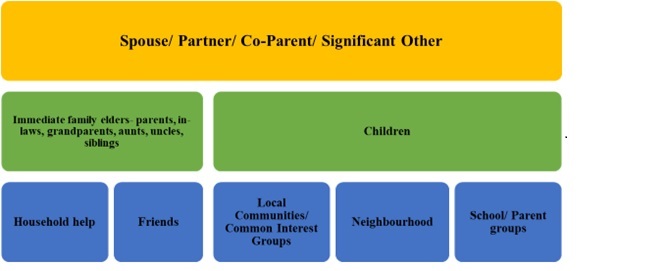
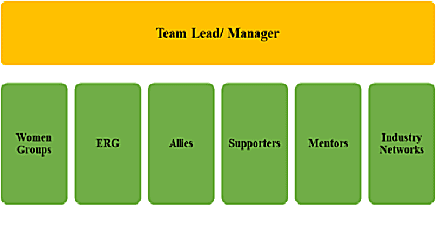
At work
At the workplace, there are again different stakeholders whether to perform one’s current role effectively, be impactful, grow successfully in the career, establish credibility with personal branding, or have a good network for professional visibility.
Building Partnerships,
Building successful partnerships, requires a level of commitment and persistence to keep at it even if the positive outcomes are not immediate or tangible. The level of transparency & trust between partners is essential for sustained mutual respect that allows honest and authentic communication. This also requires each partner to drop the “I, me, myself” to co-create a collective “we” that fosters collaboration for achieving shared goals. And notably, it can be fun, enlivening, and immensely creative that allows each partner to grow and be their best version.
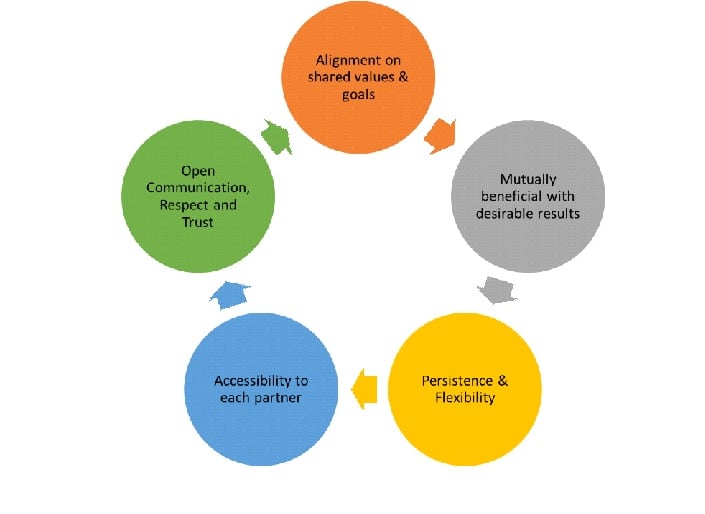
Key ingredients of successful partnership
When is a partnership considered equal between spouse/ partner/ co-parent/ significant other?
For the purpose of majoritarian, this article focuses on the key partnership that is usually with a Spouse/ Partner/ Co-Parent/ Significant Other. For singles, key partnerships could be with their immediate families, friend, neighborhood, and household help.
It begins with removing norms around gender and relationships. This helps in being able to discuss power and control, hopes and fears, and expectations about the roles partners should play in each other’s lives. The likely positive outcomes:
- Roles get fulfilled based on individual strengths and interests & not based on individual genders. Being able to negotiate a fair share of responsibilities and discuss aspirations
- Dual-career partners split up paid work and unpaid household work., The most important ones are parenting and managing domestic chores. It requires navigating the pressures of social expectations that are barriers in forging important partnerships at home.
- Creating a safe environment that allows non-judgemental, non-competitive discussions around expectations about the roles partners should play in each other’s lives.
- Career choices (joint not individual ones)- an intentional shift from having parallel, independent careers and lives to having interdependent ones. Being able to negotiate and discuss respective aspirations and fair shares in collective responsibilities.
- Thriving together at home and individually at work by discussing psychological and social issues & reaching mutually beneficial agreements.
Leveraging partnerships at home
Domestic chores, parenting, managing finances, care giving, leisure & self-care are usually the most important areas that have the potential to become roadblocks in relationships and in careers. Expectations around these aspects need to get negotiated and managed for mutually satisfying outcomes between partners.
Where to begin
- Having an honest and open conversation.
- Identifying the components of the partnership (eg for parenting and domestic chores).
- Recognising each partner’s strengths and weaknesses.
- Outlining individual and shared roles.
- Creating an atmosphere of utmost support and trust.
- Building consensus to focus on the commonly shared outcome.
Various Partnership Activities at Home
Sharing Responsibilities
While some tasks around the home are enjoyable and taken up cheerfully by partners, routine chores can cause friction between partners. Like at the workplace, the essential management principles (planning, organizing, time management, delegation, decision making, prioritising etc.) are equally applicable at home.
Here are a few pointers to navigate towards better outcomes and reduced stress in relationships.
- Including the family: Making chores a family activity. This helps in building a positive association around chores among family members including children.
- Setting clear expectations: Talking about expectations can help divide responsibilities, and assigning tasks clearly.
- Breaking chores into chunks: Picking specific days to complete household chores, grocery shopping, scheduling routine maintenance, etc. This also helps release time for important activities around self-care, leisure, health and hobbies.
- Refraining from criticising how a partner/ member chooses to accomplish the assigned chores: Everyone has a way to tackle a task and it is important to respect that.
- Prioritising: A critical requirement to work with what is immediate, and important versus what can be let go.
How & when to have conversations: a few pointers
- Choosing an appropriate time: Discussing issues when any one of the partners is preoccupied will only increase frustrations. Picking the appropriate time when both partners are calm and open to hearing each other in a non-judgmental and safe ambience can make discussions productive.
- The intent and attitude during the conversations: Instead of assigning blame and using “You” words – it is advisable to use “I” words to describe issues. Moving past the “Right/Wrong” mentality, dealing with the present, and not dredging up the past is more likely to get desired outcomes.
- Being able to share and laugh about the irritants, being tolerant to mistakes, being able to share vulnerabilities with each other helps create a stronger bond and commitment towards the partnership.
- It is also equally important for both partners to accept that disagreements will occur. If there is an understanding & mutual respect at the core, the chances of disagreements turning into blazing fights, one-up man ship or a complete breakdowns in the communication process will reduce.
Bringing out the best in each other
Here are some simple tips that can help both partners find time and space together and separately.
- Be honest with yourself and your partner with what are the individual boundaries that need to be respected.
- Continue to take an interest in one another (growth goals, checking in good and bad days, follows up)
Schedule space and time with each other (dates for movies, dinners, spirituality, meeting friends, community service, short breaks if possible.)
- Self-Care: Give yourself space to grow together, and separately. Take time for hobbies, physical fitness, interests, meeting personal buddies/ friends, office colleagues, shopping, beauty parlor visits etc.
- Investing in paid support/ outsourcing help (nanny, domestic help, buying rather than making at home etc) based on the funds available. Treating such expenses as SIP for high ROI in the long term with respect to better career progression, quality of relationships is worth considering.
- Invest in cultivating reliable friends in neighborhood and local community. Extend an offer to help so that they reciprocate in case of an emergency.
The aim of partnerships is to enable mutually beneficial & shared success. Each of the partner should strive to add value to each other, upgrade the ways they interact with others.
Partnerships are great for fostering harmony, building strong relationships that help all the concerned people to lead a fulfilling personal & professional life. There are many benefits that go beyond just the dimensions of work and home. They nurture and help build strong positive families and societies. It is a win-win for everyone.
- By reducing the rigid stereotyping around genders, partners sharing housework and child care responsibilities increases the physical, psychological well-being of the entire family unit. It challenges societal stereotypes, systemic barriers, and personal mindsets.
- It encourages personal growth from using wider array of skills, as equal partners.
- Children and all family members learn democratic family values leading to well-rounded and confident individuals.
- Partners sharing housework and child care responsibilities are healthier - physically and psychologically.
- Lowering of violence across families and society.
- Mutually supportive partners have higher self-esteem and lower levels of depression.

You must be logged in to post a comment.