
Introduction
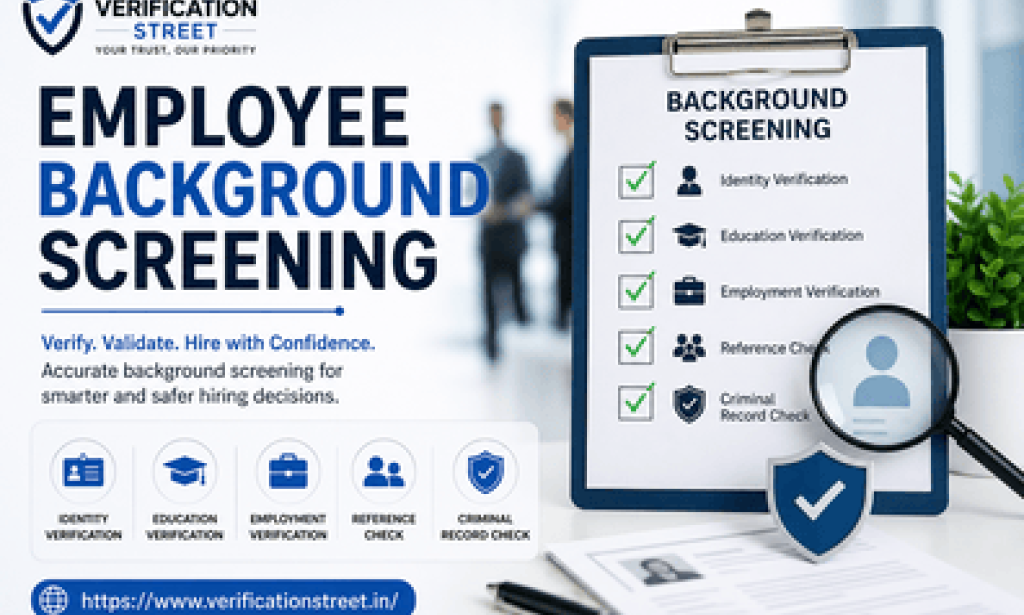
Employee background screening has become an important part of corporate hiring. Companies invest significant time and money in recruiting new employees, so hiring the right person is essential for business success. An effective employee background screening process helps employers verify important information about candidates before making a final hiring decision.
Today, organizations use background screening to confirm identity, education, employment records, and professional references. A proper Employee Background Check can help reduce hiring risks, improve workplace safety, and support informed hiring decisions. For businesses that want to build a trustworthy workforce, employee screening is no longer optional—it is an important step in the recruitment process.
In this guide, we will explain what employee background screening is, why it matters, and how the complete screening process works in corporate hiring.
What Is Employee Background Screening?
Employee background screening is the process of verifying the information provided by a job candidate before employment. The purpose is to ensure that the candidate's details are accurate and genuine.
Background screening may include checking:
- Identity documents
- Educational qualifications
- Previous employment records
- Residential address
- Professional references
- Criminal records (where legally applicable)
These checks help employers make better hiring decisions and reduce the chances of hiring someone based on incorrect or misleading information.
Why Is Employee Background Screening Important?
Hiring mistakes can be costly for businesses. If a candidate provides false information or hides important details, it can affect productivity, workplace culture, and company reputation.
Employee background screening helps organizations:
-
Verify candidate information
-
Reduce hiring risks
-
Improve workplace safety
-
Protect company reputation
-
Support compliance requirements
-
Build trust in the hiring process
For companies that handle sensitive information, financial data, or customer records, proper verification is especially important.
What Is the Employee Background Screening Process?
The employee background screening process involves several verification steps that help employers confirm the authenticity of candidate information.
1. Candidate Consent and Document Collection
The process begins with obtaining consent from the candidate. Employers collect the required documents and information needed for verification.
Common documents include:
- Aadhaar Card
- PAN Card
- Passport
- Educational certificates
- Previous employment documents
- Address proof
Candidate consent is an important part of ethical and compliant screening practices.
2. ID Verification Check
An ID Verification Check helps confirm that the candidate is who they claim to be.
During this stage, organizations verify government-issued identity documents such as:
- Aadhaar Card
- PAN Card
- Passport
- Driving License
This step helps reduce identity fraud and improves the accuracy of employee records.
3. Employee Identity Verification
Employee Identity Verification is a key part of employee screening. It confirms personal details and ensures that the candidate's identity information matches official records.
Benefits of identity verification include:
- Improved workplace security
- Accurate employee records
- Reduced fraud risks
- Better compliance support
Many organizations use professional Identity Verification Services to ensure accuracy and efficiency.
4. Address Verification
Address verification confirms the residential address provided by the candidate.
This verification helps employers:
- Maintain accurate records
- Confirm candidate information
- Improve employee traceability
Address verification may involve document review or other approved verification methods.
5. Education Verification
Education verification checks whether the educational qualifications listed by the candidate are genuine.
This process may include:
- Degree verification
- Diploma verification
- Institution confirmation
- Course completion verification
Education verification helps employers ensure that candidates meet the qualification requirements for the role.
6. Employment History Verification
Employment History Verification is one of the most important stages of employee screening.
This verification confirms:
- Previous employer details
- Employment duration
- Job designation
- Reporting structure
- Reason for leaving
Employment verification helps employers identify discrepancies and gain a better understanding of a candidate's professional experience.
Businesses often work with professional Background Verification Services providers to conduct accurate employment checks.
7. Pre Employment Background Verification
Pre Employment Background Verification combines multiple checks before the final hiring decision.
These checks may include:
- Identity verification
- Education verification
- Employment verification
- Reference verification
- Criminal record checks where appropriate
This process helps employers gain a complete picture of a candidate's background before onboarding.
8. Professional Reference Check
A Professional Reference Check helps employers understand a candidate's work behavior and professional performance.
References may provide insights about:
- Work quality
- Team collaboration
- Communication skills
- Reliability
- Professional conduct
Reference checks can support better hiring decisions by providing information that may not appear on a resume.
9. Criminal Record Verification
Depending on the role and applicable laws, some employers may conduct criminal record checks.
The purpose of this verification is to:
- Improve workplace safety
- Reduce organizational risks
- Protect company assets
- Support responsible hiring practices
Employers should always follow applicable legal and privacy requirements when conducting such checks.
How Background Verification Services Support Corporate Hiring
Many organizations choose professional Background Verification Services to manage employee screening efficiently.
Benefits include:
- Faster verification process
- Improved accuracy
- Reduced hiring risk
- Professional reporting
- Better compliance support
A reliable verification partner can help HR teams save time while ensuring that screening is conducted thoroughly.
Why Employment Verification Matters
Among all screening checks, employment verification is one of the most valuable. It helps employers confirm whether a candidate's work history is accurate.
Employment verification can reveal:
- Incorrect employment dates
- False job titles
- Misrepresented experience
- Gaps in employment history
Companies looking for reliable employment verification solutions often choose specialized service providers such as Verification Street to support their hiring process.
Best Practices for Employee Background Screening
To improve the effectiveness of screening, employers should:
- Obtain candidate consent before verification
- Use reliable verification methods
- Maintain data privacy and confidentiality
- Follow applicable laws and regulations
- Partner with experienced verification providers
- Verify information before making hiring decisions
These practices help organizations maintain trust and fairness throughout the recruitment process.
Frequently Asked Questions (FAQs)
1. What is employee background screening?
Employee background screening is the process of verifying a candidate's identity, education, employment history, and other important details before hiring.
2. Why is an Employee Background Check important?
An Employee Background Check helps employers verify candidate information, reduce hiring risks, and make informed hiring decisions.
3. What is included in employee background screening?
Employee background screening may include identity verification, address verification, education verification, employment verification, reference checks, and other relevant checks.
4. What is pre employment background verification?
Pre Employment Background Verification is the process of conducting multiple verification checks before a candidate joins an organization.
5. What is employment history verification?
Employment history verification confirms details about a candidate's previous jobs, including employer names, job titles, and employment duration.
5. Why do companies use background verification services?
Companies use Background Verification Services to improve verification accuracy, reduce hiring risks, and support better hiring decisions.
Conclusion
Employee background screening is an essential part of responsible corporate hiring. It helps organizations verify candidate information, reduce recruitment risks, and create a safer workplace.
From ID Verification Checks and Employee Identity Verification to Employment History Verification and Professional Reference Checks, every stage plays an important role in building a reliable workforce. A structured screening process allows employers to make informed hiring decisions while protecting their business interests.
Organizations that invest in proper verification practices are better positioned to hire qualified and trustworthy employees. By working with experienced Background Verification Services providers such as Verification Street, businesses can strengthen their hiring process and improve long-term recruitment outcomes.

You must be logged in to post a comment.