
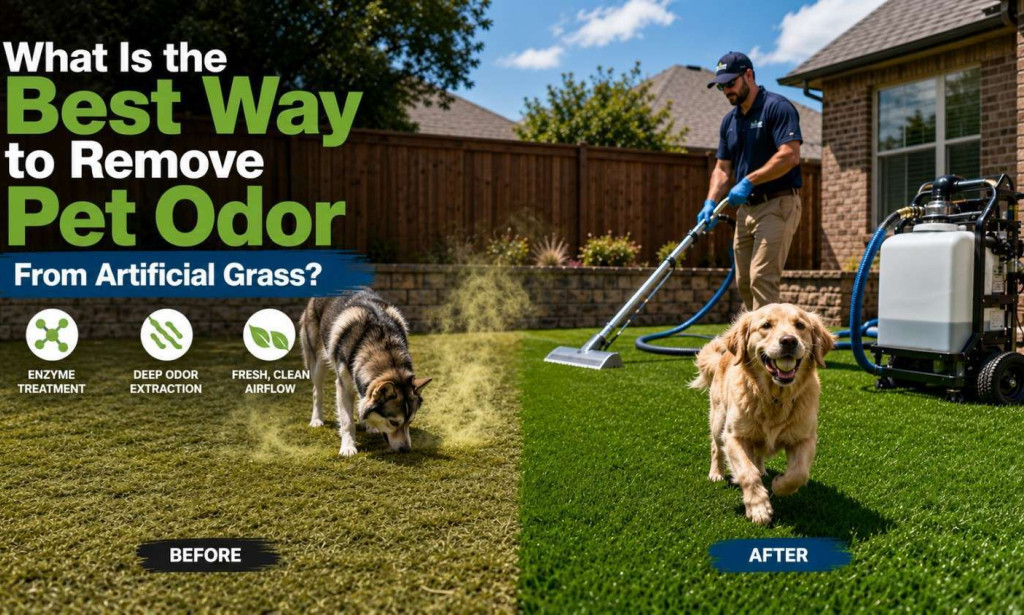
Pet odor on artificial grass is one of the most common complaints among homeowners with dogs and cats. If you have tried hosing down the turf, spraying store-bought deodorizers, or applying baking soda and the smell keeps coming back, there is a specific reason for that. The odor is not coming from the surface of the turf. It is coming from deep inside the system, and surface treatments cannot reach it.
This article explains exactly where pet odor comes from in artificial grass, why most DIY methods fail, and what actually works to remove it and keep it from returning.
Why Pet Odor Is So Persistent on Artificial Grass
To understand why pet odor is hard to remove, you need to understand where it goes when your dog or cat uses the turf.
When a pet urinates on artificial grass, the liquid moves through the fiber layer and into the infill below. Infill is the granular material packed between the turf fibers. It provides cushioning, supports fiber posture, and assists with drainage. It is also where the majority of pet waste ends up.
Once in the infill, urine is broken down by bacteria. The bacterial activity produces ammonia and other volatile compounds, which are what you smell. In mild conditions, this process is slow and manageable. In hot climates like Dallas, Fort Worth, and Las Vegas, where summer temperatures exceed 100 degrees Fahrenheit, bacterial activity accelerates dramatically. The heat essentially cooks the compounds deeper into the infill and backing material, intensifying the odor and making it harder to neutralize.
The result is a smell that returns within hours of hosing down the turf because the source of the odor was never reached by the water in the first place.
Why Most DIY Methods Do Not Work
Hosing Down the Turf
Water moves bacteria and dissolved waste lower into the infill and into the backing material beneath. It does not remove bacteria. It relocates it. After hosing, the turf smells better briefly because the concentration of odor at the surface has been diluted. But once the infill dries and temperatures rise, the odor returns at full strength, often from an even deeper location in the turf system.
Store-Bought Pet Odor Sprays
Most consumer odor sprays contain masking agents or light enzyme formulas. They are designed for hard floors and carpet, not for porous infill systems that absorb and retain liquid. The spray reaches only the top layer of fibers and the uppermost layer of infill. The bacteria living in the mid and lower infill, and in the backing, remain completely untreated. The smell returns as soon as the masking agent dissipates, usually within a day or two.
Baking Soda and Vinegar
Both are natural deodorizers that work on surface smells. They are entirely ineffective at penetrating through infill to reach bacteria living at depth. Baking soda also compacts when wet and can contribute to infill clogging over time when used repeatedly.
Pressure Washing
A consumer pressure washer can move surface debris and dilute odors temporarily, but it cannot extract bacteria from infill. At high pressure, it can also damage turf fibers, weaken the backing stitching, and push contamination deeper into the drainage layer below the turf.
The Best Way to Remove Pet Odor From Artificial Grass
Genuine pet odor removal from artificial grass requires three things working together: bacterial elimination, physical extraction of contaminated material, and treatment that reaches the depth where the problem actually exists.
Step 1: Professional Deep Extraction
The first step in effective pet odor removal is extracting the contaminated material from the infill. Professional turf cleaning equipment uses suction-based extraction to physically pull debris, bacteria-saturated particles, and organic matter out of the infill layer. This is the step that no consumer product or garden hose can replicate.
Step 2: Enzyme-Based Bacterial Treatment
Enzyme-based treatments are the most effective method for eliminating pet odor at its source. Enzymes work by breaking down the biological compounds that bacteria feed on, including urea, proteins, and organic waste. When the food source is eliminated, the bacteria cannot survive, and the odor-producing process stops.
Professional-grade enzyme treatments are formulated to penetrate through infill material to reach the mid and lower layers where bacteria is most concentrated. They are also heat-stable, meaning they remain effective at the high temperatures typical in Dallas and Las Vegas summers.
Step 3: Antibacterial Treatment on the Backing
The turf backing is the layer that anchors the fibers to the base of the installation. In turf that has been used by pets for months or years without professional treatment, bacteria penetrates through the infill and colonizes the backing as well. An antibacterial treatment applied to the backing eliminates residual bacteria that the enzyme treatment did not reach.
Step 4: Infill Assessment and Replacement if Needed
In cases where pet odor has been building for an extended period, the infill itself may be so saturated with bacteria that cleaning alone is not sufficient. When infill material has degraded to the point where it cannot be restored, replacement is the most effective solution. Antimicrobial infill inhibits bacterial growth between professional cleaning appointments, reducing odor recurrence significantly.
Step 5: Power Brooming and Drying
Once treatments are applied and rinsed, power brooming lifts the fibers back to an upright position and promotes even drying. Proper airflow through the fiber layer speeds the drying of any residual moisture in the infill. In Dallas summer heat, most treated turf surfaces are dry within 45 to 60 minutes of service completion.
How to Maintain Odor Control Between Professional Cleanings
• Rinse high-use areas regularly: A light rinse two to three times per week dilutes fresh waste before it penetrates deep into the infill.
• Remove solid waste immediately: The longer solid waste sits on the turf, the more bacteria it introduces into the fiber and infill system.
• Use a pet-safe enzymatic rinse between cleanings: Light enzymatic treatments applied between professional appointments help manage odor in high-use zones.
• Ensure adequate drainage: Drainage problems cause liquid to sit in the infill longer, which intensifies bacterial activity.
• Schedule professional cleaning every 3 to 4 months: In Texas climates, a quarterly professional cleaning schedule is the most effective way to stay ahead of odor development.
Pet Odor on Artificial Grass in Dallas and DFW: A Special Note
Dallas pet owners face compounding challenges that make odor management harder than in cooler or wetter climates. The combination of sustained summer heat above 100 degrees Fahrenheit, clay-heavy soil that slows natural drainage, and the absence of rainfall to dilute accumulation during dry periods means that pet odor in DFW can develop and intensify faster than in most other cities.
Pet owners in Plano, Frisco, Garland, Arlington, and the surrounding DFW area should expect to schedule professional cleanings more frequently than the national average, particularly during summer months. A cleaning every 3 months through the hottest part of the year is not excessive for Dallas households with dogs. It is the schedule that keeps odor manageable and prevents the deeper contamination that requires infill replacement rather than a standard clean.
Frequently Asked Questions: Pet Odor Removal From Artificial Grass
What causes the persistent smell on artificial grass with pets?
The smell comes from bacteria living in the infill and backing material, where they break down pet urine and produce ammonia and other odor compounds. Surface sprays and rinsing do not reach this depth, which is why the smell returns quickly after DIY treatment.
How long does pet odor removal take?
A professional pet odor treatment for a typical residential turf area takes 1 to 2 hours. Drying time in warm climates is usually 30 to 60 minutes after the service is complete.
Will the odor come back after professional treatment?
After a thorough professional treatment that includes extraction, enzyme treatment, and antibacterial application, odor should not return for several months under normal pet use. Returning odor within a few days of treatment usually indicates that the infill is significantly saturated and may need replacement rather than cleaning.
Is pet odor treatment safe for my dogs and cats?
Yes. Professional-grade enzyme and antibacterial treatments used by turf cleaning services are pet-safe once dry. Most products are fully cured within 30 to 60 minutes in typical outdoor temperatures.
Can I use white vinegar to remove pet odor from artificial turf?
White vinegar neutralizes some surface odors temporarily, but it does not penetrate infill or eliminate bacteria at depth. It can provide brief odor relief between professional cleanings but is not an effective standalone treatment for established pet odor.
How do I know if I need odor treatment or full infill replacement?
If professional odor treatment reduces the smell significantly but odor returns within a week or two, the infill is likely too saturated to be fully restored through cleaning alone. A turf specialist can assess infill condition and recommend whether replacement is more cost-effective than repeated treatment.
Does artificial turf with pet odor need to be replaced?
Rarely. In most cases, even significantly neglected turf with established pet odor can be treated successfully with professional extraction, enzyme treatment, and if needed, infill replacement. Full turf replacement is only necessary when the backing material itself has been damaged by prolonged bacterial exposure.
Summary: What Actually Works for Pet Odor Removal
The best way to remove pet odor from artificial grass is a professional service that combines extraction, enzyme-based bacterial treatment, antibacterial backing treatment, and fiber restoration. DIY methods address only the surface and provide temporary relief at best.
For pet owners in Dallas, Las Vegas, Salt Lake City, and across the service areas where heat accelerates bacterial activity, a quarterly professional cleaning schedule is the most effective way to keep artificial grass fresh, hygienic, and genuinely odor-free.
Dealing with pet odor on your artificial turf in Dallas or the DFW area? Artificial Turf Maintenance specializes in professional pet odor removal for synthetic grass.

You must be logged in to post a comment.