

What is Nitrogen Cycle? 🌀🌀
It constitutes nearly 16% by weight of all the proteins.
-
The nitrogen cycle is the biogeochemical cycle by which nitrogen is converted into multiple chemical forms as it circulates among the atmosphere, terrestrial, and marine ecosystems.
-
The conversion of nitrogen can be carried out through both biological and physical processes. Important processes in the nitrogen cycle include fixation, ammonification, nitrification, and denitrification.
-
The majority of Earth's atmosphere (78%) is atmospheric nitrogen, making it the largest source of nitrogen. However, atmospheric nitrogen has limited availability for biological use, leading to a scarcity of usable nitrogen in many types of ecosystems.
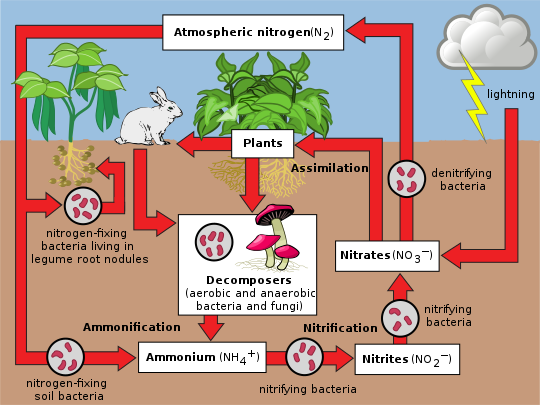
- This is an inexhaustible supply of nitrogen in the atmosphere but the element form cannot be used directly by the living organism.
- It needs to be 'fixed' that is converted into ammonia, nitrates, or nitrites.
- Nitrogen fixation on Earth is accomplished in the 3 different ways:
1. by certain free-living bacteria & Bluegreen algae (e.g. Anabaena, Spirulina).
2. by a human being using industrial processes (fertilizer factories).
3. to a limited extent by atmospheric phenomena such as thunder and lightning.

WHY IS NITROGEN IMPORTANT?
The delicate balance of substances that is important for maintaining life is an important area of research, and the balance of nitrogen in the environment is no exception. When plants lack nitrogen, they become yellowed, with stunted growth, and produce smaller fruits and flowers.
Farmers may add fertilizers containing nitrogen to their crops, to increase crop growth. Without nitrogen fertilizers, scientists estimate that we would lose up to one-third of the crops we rely on for food and other types of agriculture. But we need to know how much nitrogen is necessary for plant growth, because too much can pollute waterways, hurting aquatic life.
✌✌ Do you know? ✌✌
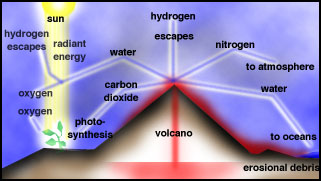
Volcanoes are an important source of nitrogen. They have been emitting small amounts of nitrogen for centuries and contribute significantly to the nitrogen reservoir of the atmosphere.
How does Nitrogen Cycle work?
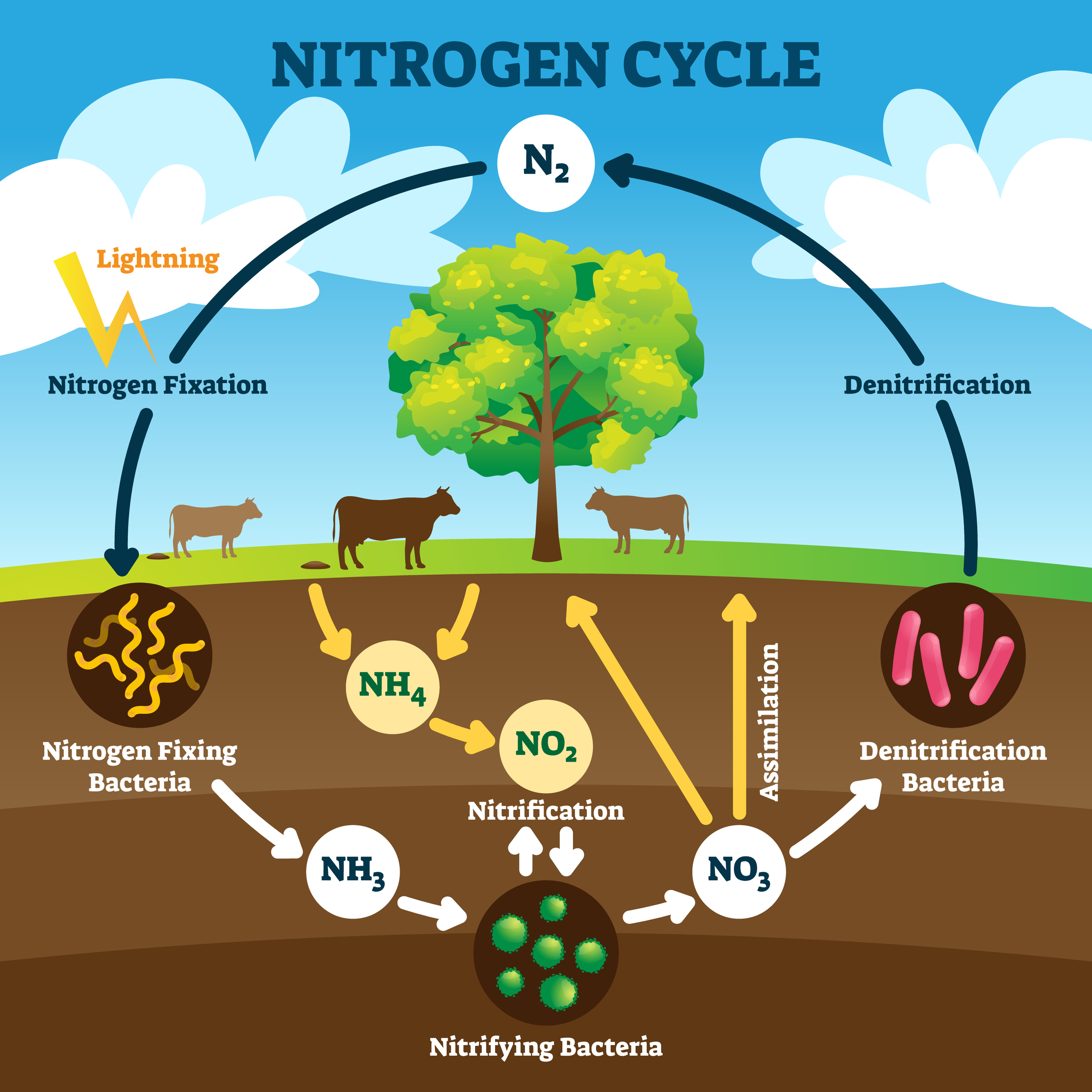
Nitrogen at any time is tied up in different 'compartments or 'pools' - the atmosphere, soil, and water, and living organisms.
- The periodic thunderstorms convert the gaseous nitrogen in the atmosphere to ammonia and nitrates which eventually reach the earth's surface through precipitation and then into the soil to be utilized by plants.
- However, are certain microorganisms capable of fixing atmospheric nitrogen into ammonium ions (NH4+)
- These include free-living nitrifying bacteria living in association with the root nodules present in the leguminous plants as well as blue-green algae.
- Ammonium ions can be directly taken up as a source of nitrogen by some plants, or oxidized to nitrates by two groups of specialized bacteria: Nitrosomonas bacteria which promotes the transformation of ammonia into nitrate.
- Nitrate is then further transformed into nitrate by the bacteria Nitrobacter.
- The nitrates synthesized by bacteria in the soil are taken up by plants and converted into amino acids, which are the building blocks of proteins.
- These then go through higher trophic levels of the ecosystem.
- During the excretion and upon the death of all organisms nitrogen is returned to the soil in the form of ammonia.
- In the soil as well as oceans there are special denitrifying bacteria that convert the nitrates/nitrites to elemental nitrogen.
- This nitrogen escapes into the atmosphere, thus completing the cycle.
Nitrogen has become a pollutant because of human intrusion into the natural cycle and this can disrupt the balance of nitrogen in the air.
/Aquaponics_Nitrogen_Cycle-5920b7383df78cf5fa089af8.jpg)

Helpful article 🙂
You must be logged in to post a comment.