
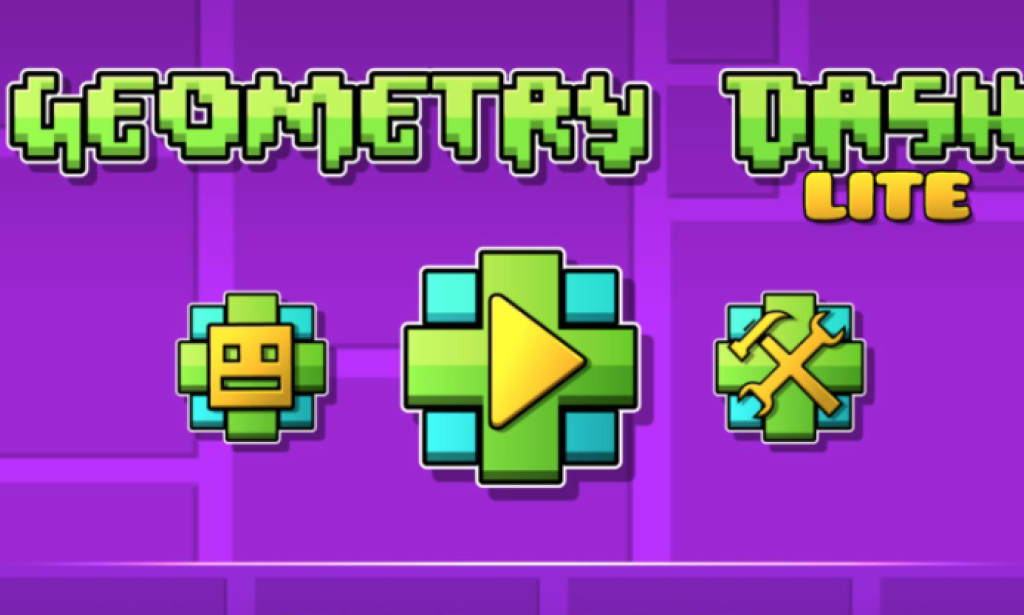
Geometry Dash Lite is a game built on movement, music, and precision. At first glance, it may seem simple: a tiny geometric icon travels automatically across a dangerous path while the player taps the screen to jump. However, after only a few moments, the true nature of the game becomes clear. Behind its minimalist controls lies an intense experience that challenges reflexes, concentration, memory, and patience all at once.
Unlike many modern games that rely on complicated systems or detailed storytelling, Geometry Dash Lite focuses entirely on gameplay. It wastes no time with introductions. The action begins immediately. A cube slides forward at high speed through a glowing environment filled with spikes, gaps, and moving hazards. The player must react instantly, because even the smallest mistake causes an immediate crash.
This instant-failure mechanic defines the game’s identity. There are no extra lives or mid-level saves to soften the challenge. If the player touches an obstacle, the level restarts from the beginning. At first, this can feel frustrating. However, it also creates an unusual sense of fairness. Every mistake is visible, every obstacle predictable, and every successful attempt earned through improvement rather than luck.
One of the most fascinating aspects of geometry dash lite is the relationship between gameplay and music. Every level is carefully synchronized with an energetic electronic soundtrack. The rhythm is not simply background entertainment—it is deeply connected to the structure of the stage itself.
Platforms appear in time with the beat. Obstacles rise and fall alongside melodies. Speed changes often occur during dramatic moments in the music. Because of this synchronization, players eventually stop reacting only with their eyes. They begin listening to the rhythm and using it as a guide.
This transforms the experience into something unique. Instead of feeling like a traditional platform game, Geometry Dash Lite begins to feel almost musical, as if the player is participating in a performance. Every jump becomes part of the soundtrack. Every successful movement feels connected to the flow of the song.
The visual design strengthens this effect. Bright neon colors dominate the screen, while geometric shapes pulse and shift in sync with the music. Backgrounds move dynamically, creating the illusion that the entire world is alive. Even though the environments are abstract, they feel energetic and immersive.

You must be logged in to post a comment.