
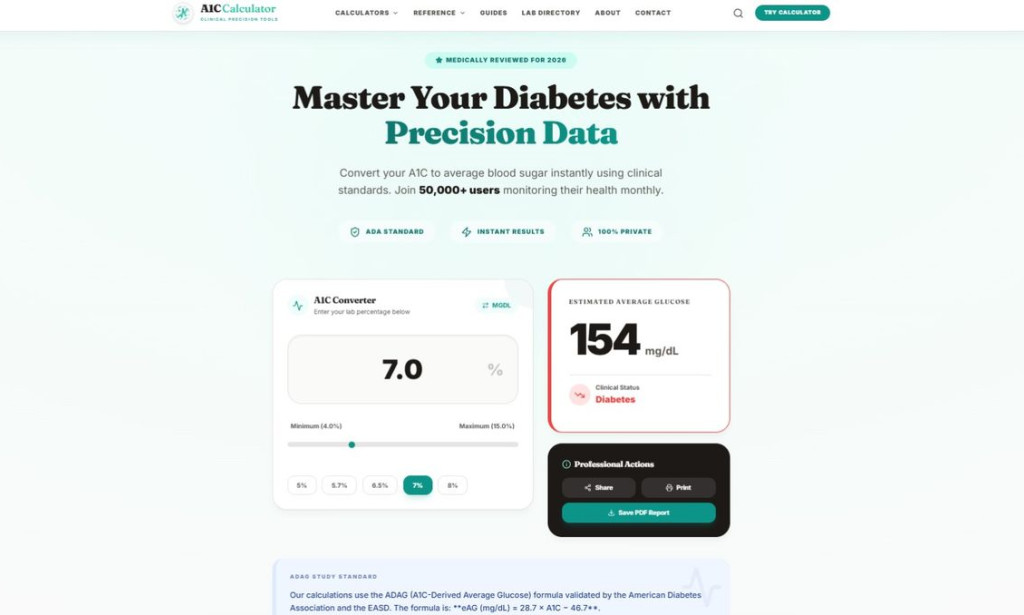
Understanding blood sugar levels is an important part of diabetes management, and one of the most widely used measurements is the Hemoglobin A1C (HbA1c) test. While laboratory test results provide valuable information, many people find it difficult to understand what their A1C percentage means in terms of everyday blood glucose levels. This is where an A1C Calculator becomes useful.
What Is an A1C Calculator?
An A1C Calculator is an online tool that converts A1C percentages into Estimated Average Glucose (eAG) values and vice versa. It helps users understand how their average blood sugar levels over the past two to three months relate to their A1C test results.
Healthcare professionals often use A1C values to monitor long-term glucose control. By converting A1C into average glucose levels, users can better understand how daily blood sugar readings contribute to their overall diabetes management.
Why Is A1C Important?
The A1C test measures the percentage of hemoglobin in the blood that has glucose attached to it. Because red blood cells typically live for about 120 days, the test reflects average blood sugar levels over the previous two to three months.
A1C testing is commonly used to:
- Diagnose prediabetes and diabetes.
- Monitor diabetes treatment plans.
- Evaluate long-term blood sugar control.
- Assess the risk of diabetes-related complications.
Unlike a single blood glucose reading, A1C provides a broader view of glucose management over time.
How Does an A1C Calculator Work?
An A1C Calculator uses established medical formulas to convert between A1C percentages and average blood glucose levels. Users simply enter either their A1C value or average glucose reading and receive an instant estimate.
This helps bridge the gap between laboratory results and daily glucose monitoring, making diabetes data easier to understand.
Benefits of Using an A1C Calculator
Easy-to-Understand Results
Many people are more familiar with blood glucose readings than percentages. An A1C Calculator converts laboratory values into practical information that is easier to interpret.
Better Diabetes Tracking
Users can compare their daily glucose readings with estimated A1C values and monitor trends over time.
Fast and Convenient
Online calculators provide instant results without requiring manual calculations or medical expertise.
Educational Value
An A1C Calculator helps users understand the relationship between average blood sugar levels and long-term glucose control.
Who Should Use an A1C Calculator?
An A1C Calculator can be beneficial for:
- Individuals living with diabetes.
- People diagnosed with prediabetes.
- Caregivers and family members.
- Healthcare professionals.
- Anyone interested in understanding blood sugar health.
The calculator serves as an educational resource that complements professional medical care.
Understanding A1C Ranges
Generally, A1C results are interpreted as follows:
- Below 5.7%: Normal range
- 5.7% to 6.4%: Prediabetes range
- 6.5% or higher: Diabetes range
These values are general guidelines and should always be discussed with a healthcare provider for proper interpretation.
Limitations of A1C Calculators
While A1C calculators are useful, they do not replace laboratory testing or professional medical advice. Certain health conditions, medications, and individual biological differences may affect A1C results.
For the most accurate assessment of diabetes management, users should combine calculator results with regular medical checkups and professional guidance.
Conclusion
An A1C Calculator is a valuable tool for understanding the connection between HbA1c percentages and average blood glucose levels. By providing quick, accurate conversions, it helps users gain greater insight into their long-term blood sugar control. Whether you are managing diabetes, monitoring prediabetes, or simply learning about glucose health, an A1C Calculator can make complex health information easier to understand and apply in everyday life.

You must be logged in to post a comment.