
Introduction
Whether you enter any current-day hospital or not, a picture of an advanced medical equipment, digital patient records and healthcare professionals rushing on every second, come to the mind. What most do not see is the immense documentation behind every single patient interaction.
Every diagnosis, treatment regime as well as consultative and followup communication ought to be documented in the right way. These records form the basis for providing patient care, legal compliance, insurance processing, and even healthcare continuity. This is where medical transcriptionists come in.
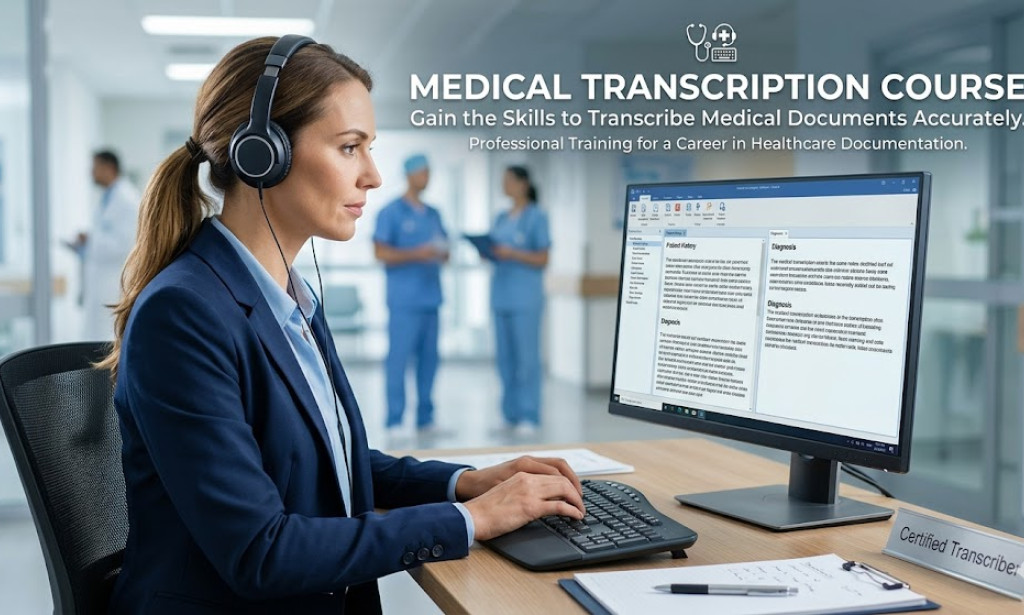
Even in a world dominated by technology, Healthcare providers still need trained experts that can take the doctor dictation and create correct medical documents. This has led to a sustained interest in Medical Transcription Course among students, graduates and healthcare career aspirants.
Institutes like IHIMC have also recognized this demand and offer industry-designed training programs for aspiring documentation specialists to be possibly placed in healthcare environments.
In this article, we will discuss:
- What is a Medical Transcription Course
- The skills it builds
- Its relevance in present-day healthcare
- How it still results in fruitful career paths
Understanding the Hidden Importance of Medical Documentation
Information is the basis of healthcare.
An accurate record is vital when a physician relies on the information presented in a patient history. Complete records are needed for a specialist providing treatment. All insurance companies ask for thorough reports before processing any claim.
Without reliable documentation:
- Patient histories become incomplete
- Treatment continuity suffers
- Billing processes become complicated
- Compliance risks increase
- Healthcare efficiency decreases
Medical transcription specialists assist in the precise and professional documentation of critical medical information.
This is the reason the Medical Transcription Course continues to be relevant even in more digitized health care authorities.
What Is a Medical Transcription Course?
A Medical Transcription Course is a specialized training program that teaches students how to convert physician voice recordings and medical dictations into structured healthcare documents.
The objective is not simply typing.
Students learn how to:
- Interpret medical terminology
- Understand healthcare documentation standards
- Produce accurate clinical reports
- Maintain confidentiality
- Follow industry formatting guidelines
The role requires attention to detail, medical knowledge, and strong language skills.
A quality medical transcription course prepares learners for these responsibilities through structured training and practical exercises.
Why Medical Transcription Still Matters in the Digital Era
Many people assume that speech recognition technology has replaced medical transcription.
The reality is more nuanced.
Voice recognition systems can generate drafts, but they frequently produce:
- Medical terminology errors
- Contextual inaccuracies
- Formatting inconsistencies
- Missing information
Healthcare organizations cannot rely entirely on automated systems when patient safety is involved.
Human expertise remains essential for reviewing, correcting, and finalizing medical documentation.
This is one reason why trained professionals who complete a Medical Transcription Course continue to find opportunities in healthcare.
The Skills You Learn During Training
One of the strengths of a Medical Transcription Course is its focus on practical workplace skills.
Medical Terminology
Students learn the language used throughout healthcare environments.
Anatomy and Physiology
Understanding body systems helps improve documentation accuracy.
Clinical Documentation
Learners gain familiarity with medical reports and healthcare records.
Listening and Interpretation Skills
Professionals must accurately understand physician dictations.
Grammar and Language Accuracy
Clear communication is essential in medical documentation.
Healthcare Compliance
Students learn confidentiality standards and healthcare regulations.
These skills collectively prepare learners for professional healthcare documentation roles.
Real-World Applications of Medical Transcription
Consider a physician who completes consultations with dozens of patients every day.
Recording every detail manually would consume valuable time.
Instead, the physician may dictate notes regarding:
- Symptoms
- Diagnoses
- Treatment recommendations
- Medication instructions
- Follow-up plans
Medical transcription professionals transform these recordings into organized documents.
This allows physicians to focus more on patient care while maintaining accurate medical records.
A Medical Transcription Course teaches students how to perform this function efficiently and accurately.
Why Students Are Choosing Medical Transcription Careers
Many healthcare careers require direct patient interaction.
Medical transcription offers a different path.
It allows individuals to contribute to healthcare systems without performing clinical duties.
Benefits include:
Healthcare Industry Exposure
Professionals gain experience within healthcare environments.
Skill-Based Career Development
Success depends on expertise rather than physical tasks.
Flexible Work Opportunities
Some positions offer remote or hybrid work arrangements.
Professional Growth
Experience can lead to broader healthcare documentation roles.
Stable Demand
Accurate medical records remain a healthcare necessity.
These advantages continue to attract learners to the Medical Transcription Course.
How Medical Transcription Supports Healthcare Efficiency
Medical transcription contributes to healthcare in ways that are often overlooked.
Improved Documentation Quality
Professionals ensure records are accurate and complete.
Faster Information Access
Well-organized reports support efficient clinical decision-making.
Better Patient Care
Healthcare providers can review comprehensive patient histories.
Reduced Administrative Burden
Physicians spend less time on documentation tasks.
Stronger Compliance Standards
Accurate records support regulatory requirements.
The value of these contributions helps explain the ongoing relevance of the Medical Transcription Course.
Career Opportunities After a Medical Transcription Course
Completing a Medical Transcription Course can open several career pathways.
Common Job Roles
- Medical Transcriptionist
- Healthcare Documentation Specialist
- Clinical Documentation Executive
- Medical Records Coordinator
- Medical Editor
Industries Hiring Professionals
- Hospitals
- Clinics
- Healthcare service providers
- Medical documentation companies
- Telehealth organizations
- Healthcare BPOs
The healthcare industry's ongoing need for accurate documentation creates opportunities across multiple settings.
Why Training Matters
Medical transcription is more complex than general typing.
Professionals must understand:
- Medical terminology
- Clinical language
- Physician dictation styles
- Healthcare documentation standards
Formal education helps learners build these competencies systematically.
Institutions such as IHIMC emphasize practical training designed to align with workplace expectations and healthcare industry requirements.
A structured Medical Transcription Course provides the foundation necessary for professional success.
Future Scope of Medical Transcription
Healthcare systems continue to generate increasing amounts of information.
Electronic health records, telemedicine consultations, and digital healthcare services all require documentation support.
Emerging opportunities include:
Telehealth Documentation
Remote consultations require accurate record creation.
Clinical Documentation Improvement
Organizations focus on improving documentation quality.
Healthcare Information Management
Accurate records support broader healthcare operations.
Medical Editing and Review
Documentation quality control remains essential.
These trends suggest that documentation professionals will continue to play important roles in healthcare systems.
Conclusion
The healthcare industry depends on accurate, reliable, and accessible medical records. Behind every patient encounter, diagnosis, and treatment plan lies a documentation process that supports continuity of care and operational efficiency.
A Medical Transcription Course equips learners with the specialized skills required to transform physician dictations into professional healthcare records. Through training in medical terminology, documentation standards, and healthcare communication, students gain valuable expertise that remains relevant in modern healthcare environments.
For individuals seeking a healthcare career that combines technical knowledge, language skills, and professional growth opportunities, institutions such as IHIMC provide industry-focused training that helps learners develop practical competencies and prepare for long-term success in healthcare documentation.
FAQs
1. What is a Medical Transcription Course?
A Medical Transcription Course trains students to convert physician voice recordings into accurate healthcare documents and medical records.
2. Who can enroll in a Medical Transcription Course?
Students, graduates, healthcare professionals, and individuals interested in healthcare documentation careers can enroll.
3. What skills are taught in a Medical Transcription Course?
Students learn medical terminology, anatomy, clinical documentation, listening skills, grammar, and healthcare compliance standards.
4. Is medical transcription still relevant today?
Yes. Healthcare organizations continue to require accurate documentation, and human review remains important even with speech recognition technology.
5. What career opportunities are available after a Medical Transcription Course?
Graduates may work as Medical Transcriptionists, Documentation Specialists, Medical Editors, and Healthcare Records Coordinators.

You must be logged in to post a comment.