
Introduction to Human Primary Endothelial Cells
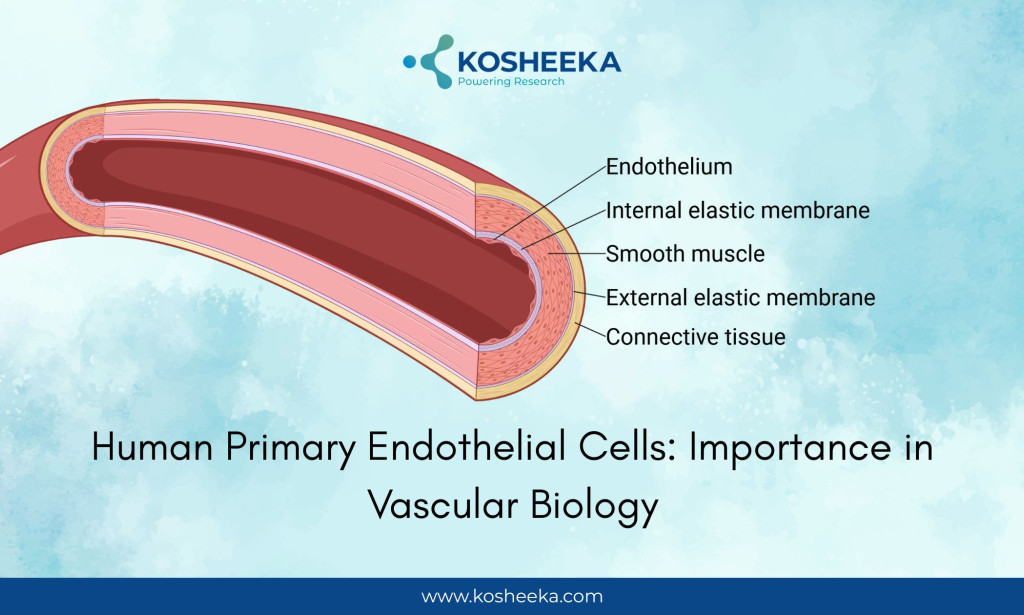
Human primary endothelial cells have a pivotal role in forming the inner lining of blood vessels and tissue homeostasis, and regulating key physiological processes. They play a crucial role in maintaining vascular biology. The key physiological processes that are under influence include angiogenesis, inflammation, and vascular permeability. In the Human Primary Endothelial Cells culture technique, the cells are isolated directly from human tissues. They share physiological relevance with humans in comparison with immortalized cell lines. Thus, they act as an invaluable model in translational and biomedical research.
What Are Human Primary Vascular Endothelial Cells?
Human primary vascular endothelial cells are known as non-transformed cells that are directly isolated from the blood vessels of mammals. They hold native phenotype and functional characteristics of the cells. The responsiveness to biochemical stimuli, vascular structures and response to the external stimuli remains relative. Unlike immortalized cell lines, these cells better mimic in vivo conditions. Various biomedical research, including cancer research, cell signalling studies, wound healing, angiogenesis, burn therapy, high-throughput screening, gene expression profiling, tissue engineering, and regenerative Medicine, can be performed.
Sources of Human Primary Endothelial Cells
There are various sources of primary human endothelial cell isolation. This includes:
- Human Umbilical Vein Endothelial Cells (HUVECs): Ease of access and robust growth.
- Microvascular Endothelial Cells (HMVECs): Derived from skin, lung, or cardiac tissue, ideal for studying tissue-specific responses.
- Arterial and Venous Endothelial Cells: Useful for investigating hemodynamic and functional differences.
The source selection depends on specific study type, research objective, endothelial heterogeneity, study designs, etc. These play a crucial role in research outcomes.
Primary Human Endothelial Cells Isolation Methods
The process of isolating primary human endothelial cells is crucial for obtaining high-quality cultures. The technique applied depends on the culture type and isolation:
1. Enzymatic Digestion: The tissues or vessels isolated are subjected to enzymatic digestion. The commonly used enzymes include collagenase or trypsin that detach the endothelial cells. The method offers high yield and effectively isolates cells from larger vessels like umbilical cord veins.
2. Mechanical Dissociation: This involves physical scraping, chopping, crushing and cell agitation for obtaining single cell isolation. The application of this method enables cell isolation with high viability.
3. Explant Culture: The technique involves placing small tissue fragments in culture dishes. This enables endothelial cells to migrate out. This technique preserves cell integrity, but the process is time-consuming.
The selection of adequate isolation processes is crucial in obtaining an adequate cell type. Besides, critical factors that influence cell quality include source, enzyme concentration, handling techniques, processing time, etc. Besides, the whole process must be performed in sterile conditions to prevent potential contamination.
Primary Human Endothelial Cells Culture Techniques
The optimization of Primary Human Endothelial Cells Culture conditions is key to maintaining cell viability and function. The key techniques include:
- Isolation process: Depends on cell type. For instance, for HUVECs cells, the umbilical veins are cannulated, washed, and incubated in 0.1 – 0.25% collagenase for cell detachment. In microvascular cells physical dissociation method is used.
- Culture Media: Specialized endothelial growth media + 10% FBS + 1% antibiotic. This consists of essential growth factors such as VEGF, FGF, EGF, etc. that support cell adherence, proliferation and migration.
- Substrates: Coating the surface of the culture flask with ECM proteins such as gelatin, fibronectin, or collagen enhances cell attachment. ECM coated flask used for cell seeding and culture.
- Environmental Conditions: CO2 incubator at 37°C with 5% CO₂ and controlled humidity.
It is crucial to monitor and change media at regular time intervals. This is crucial to prevent outgrowth and maintain cellular health.
Characterization of Human Primary Endothelial Cells
The cell characterization enables the identification of cellular health. This involves determining:
- Morphological Relevance, the cells are thin, elongated and polarized, often known to form a ‘cobblestone’ monolayer.
- Surface Markers expression, e.g., CD31 (PECAM-1), VE-cadherin, and von Willebrand factor (vWF)
- Functional Assays, tube formation assays, acetylated LDL uptake, and nitric oxide production confirm endothelial behavior.
What are the Research Applications?
Human primary endothelial cell have a wide range of applications across multiple biomedical research domains, including:
- Vascular Disease Modeling (atherosclerosis, hypertension, thrombosis)
- Angiogenesis (cancer research, regenerative research, wound healing)
- Drug Screening and toxicological profiling (vascular toxicity, therapeutic efficacy)
- Regenerative Medicine (stem cell therapy, extracellular vesicle application, vascular grafts, tissue-engineered constructs)
What are the Existing Challenges?
- Limited Proliferative Capacity, defined life span
- Donor Variability reflects the genetic and environmental background
- High Contamination Risks
- A slight change in the culture conditions can introduce a genetic mutation
- Must be used within early passages (2-5 passage)
Conclusion
Human primary endothelial cell in biomedical research remain a gold standard choice in vascular biology. This is because of their physiological relevance and functional integrity. Primary Human Endothelial Cells Isolation and culture techniques advancement has created the possibility of their wide range application. However, the challenge remains in the limited lifespan and donor variability. It is crucial to strictly maintain the culture conditions for maintaining the accuracy and reproducibility of results

You must be logged in to post a comment.