
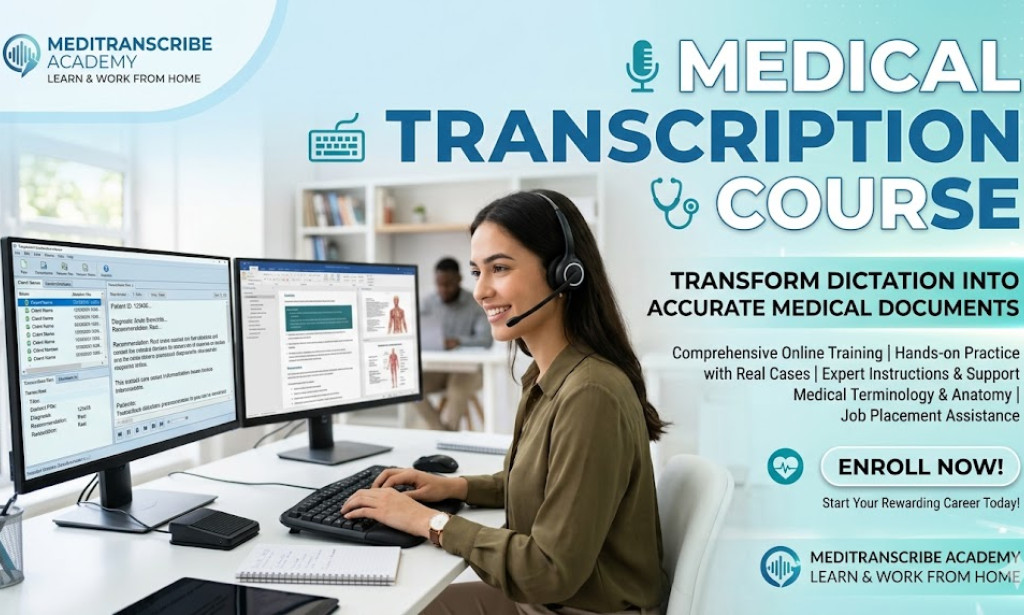
Introduction
Healthcare is often associated with patient care, advanced equipment, and medical treatments. However, behind every successful diagnosis, consultation, and treatment plan lies something equally important—accurate medical documentation.
Imagine a specialist reviewing a patient’s history before performing a procedure. The quality of care they provide often depends on how accurately previous consultations have been recorded. This invisible but critical responsibility belongs to healthcare documentation professionals.
As healthcare systems continue to become more data-driven, the demand for skilled documentation specialists remains steady. This has increased interest in the medical transcription course, especially among life science graduates, healthcare professionals, and students seeking non-clinical healthcare careers.
Many aspiring professionals also look toward industry-oriented IHIMC training programs because they provide practical exposure that aligns with modern healthcare requirements.
This article explores what learners can expect from a medical transcription course, the skills they develop, and how these skills contribute to long-term healthcare career growth.
Understanding Medical Transcription Beyond Typing
One common misconception is that medical transcription is simply typing what doctors say.
In reality, the profession is far more sophisticated.
Medical transcription professionals must:
- Understand medical language
- Interpret physician dictation
- Identify inconsistencies
- Apply documentation standards
- Maintain confidentiality
- Produce accurate patient records
The ability to combine healthcare knowledge with language precision makes this profession highly specialized.
A professional medical transcription course teaches learners how to perform these responsibilities effectively.
Why Accurate Medical Documentation Is Essential
Every patient interaction generates information.
Healthcare organizations rely on documentation to support:
- Patient treatment continuity
- Insurance processing
- Regulatory compliance
- Medical research
- Hospital operations
Without accurate records:
- Patient histories become incomplete
- Billing processes may fail
- Compliance risks increase
- Treatment decisions become difficult
This explains why healthcare employers continue investing in documentation professionals.
Core Subjects Covered in a Medical Transcription Course
A structured medical transcription course usually includes several important learning modules.
Medical Terminology
Students learn healthcare vocabulary used across multiple specialties.
Topics may include:
- Cardiovascular terminology
- Orthopedic terminology
- Neurology terminology
- Gastroenterology terminology
Strong terminology knowledge improves transcription accuracy.
Anatomy and Physiology
Students develop an understanding of body systems.
Common areas include:
- Skeletal system
- Respiratory system
- Digestive system
- Nervous system
This knowledge helps professionals understand physician reports more effectively.
Listening and Interpretation Skills
Physicians may speak quickly and use different accents.
Students learn how to:
- Identify spoken medical terms
- Interpret dictations accurately
- Recognize context clues
- Reduce transcription errors
Listening becomes one of the most important skills in the profession.
Healthcare Documentation Standards
Healthcare documentation follows specific guidelines.
Students learn:
- Formatting standards
- Report organization
- Medical abbreviations
- Documentation protocols
These standards ensure consistency across healthcare systems.
A practical medical transcription course emphasizes these professional requirements.
Confidentiality and Ethical Responsibilities
Patient privacy is critical.
Medical transcription professionals handle sensitive information daily.
Training often includes:
Data Security Awareness
Protecting healthcare records.
Privacy Regulations
Understanding confidentiality principles.
Professional Ethics
Maintaining integrity and responsibility.
These skills strengthen workplace professionalism.
Why Digital Healthcare Knowledge Is Important
Modern healthcare relies heavily on technology.
Students become familiar with:
- Electronic Health Records (EHR)
- Healthcare software systems
- Digital documentation workflows
- Online healthcare platforms
Technology exposure prepares students for modern healthcare workplaces.
Practical Skills Students Develop
Healthcare employers increasingly prioritize practical competencies.
A quality medical transcription course helps learners develop:
Attention to Detail
Accuracy becomes a professional habit.
Time Management
Healthcare environments often involve deadlines.
Problem Solving
Students learn to identify inconsistencies.
Communication Skills
Documentation supports healthcare collaboration.
These abilities remain valuable throughout a healthcare career.
How IHIMC Supports Career-Focused Learning
Industry-focused institutions have become increasingly important.
Leading IHIMC programs emphasize practical exposure rather than theory alone.
Students may benefit from:
- Industry-relevant curriculum
- Documentation exercises
- Professional development
- Workplace readiness
This approach helps bridge education and employment.
Healthcare organizations increasingly value practical competence over memorization.
Why Students Choose Medical Transcription Careers
Not every healthcare professional wants direct patient interaction.
Medical transcription offers alternative pathways.
Benefits include:
Healthcare Industry Exposure
Students gain healthcare knowledge.
Administrative Career Opportunities
Documentation supports organizational operations.
Skill-Based Progression
Performance drives growth.
Flexible Work Opportunities
Certain roles may support remote work.
These advantages continue attracting learners.
Career Opportunities After Training
A medical transcription course can lead to multiple positions.
Medical Transcriptionist
Converts physician dictation into records.
Healthcare Documentation Specialist
Supports clinical documentation quality.
Medical Records Coordinator
Maintains patient information systems.
Clinical Documentation Executive
Supports healthcare workflows.
Healthcare Administrative Professional
Assists operational processes.
The skillset developed often supports various healthcare functions.
Why Healthcare Employers Value Documentation Experts
Healthcare systems produce enormous amounts of data.
Organizations need professionals who can:
- Maintain accuracy
- Improve efficiency
- Support compliance
- Organize information
Documentation professionals indirectly improve patient outcomes by ensuring information reliability.
This makes transcription an important part of healthcare operations.
Future Opportunities in Healthcare Documentation
Healthcare continues evolving rapidly.
Emerging opportunities include:
Telehealth Documentation
Supporting virtual healthcare services.
Clinical Documentation Improvement
Enhancing record quality.
Healthcare Data Management
Supporting organizational decisions.
Healthcare Information Management
Managing digital systems.
Students with strong foundational training can adapt more easily to future roles.
Questions Students Should Ask Before Joining a Program
Before enrolling, learners should evaluate:
Is the Curriculum Updated?
Healthcare evolves continuously.
Is Practical Training Included?
Hands-on exposure matters.
Are Trainers Experienced?
Industry expertise improves learning quality.
Is Career Support Available?
Guidance often improves employability.
These factors help students choose stronger programs.
Conclusion
Modern healthcare depends on accurate information, and accurate information depends on skilled documentation professionals. A medical transcription course provides learners with technical knowledge, practical skills, and healthcare exposure that remain highly valuable in today's healthcare environment.
Students learn far more than typing. They develop medical knowledge, listening skills, documentation expertise, and professional confidence that support long-term career growth.
Institutions such as industry-focused IHIMC continue preparing learners for healthcare careers by emphasizing practical learning and workplace readiness. For students seeking meaningful healthcare careers without direct patient care responsibilities, medical transcription remains a strong and relevant option.
FAQs
1. What is a medical transcription course?
A medical transcription course trains learners to convert physician dictations into accurate healthcare documents.
2. Who can join a medical transcription course?
Students, graduates, healthcare professionals, and life science learners can pursue this training.
3. Is medical transcription still relevant today?
Yes. Healthcare organizations continue requiring accurate documentation professionals despite technological advancements.
4. What jobs are available after completing a medical transcription course?
Graduates may work as Medical Transcriptionists, Documentation Specialists, Medical Records Coordinators, and Healthcare Administrators.
5. How does IHIMC support healthcare career development?
IHIMC provides industry-focused training that emphasizes practical skills, documentation expertise, and professional readiness.

You must be logged in to post a comment.