

What are the types of ultrasound scans to be performed during the pregnancy?
Most pregnant women get confused about the types of ultrasound scans to be taken during the journey of their pregnancy, and some of the women may forget their scan at the exact time when the scan must be performed.
Here you are going to know about the different types of ultrasound scans and their respective weeks, and also you will know the results of those scans.
These are the most common ultrasound scans during the pregnancy:
Before the following scans, some of the routine follow-up ultrasound scans to be taken by your health care professional every time you visit
NT ( Nuchal Translucency ) scan:
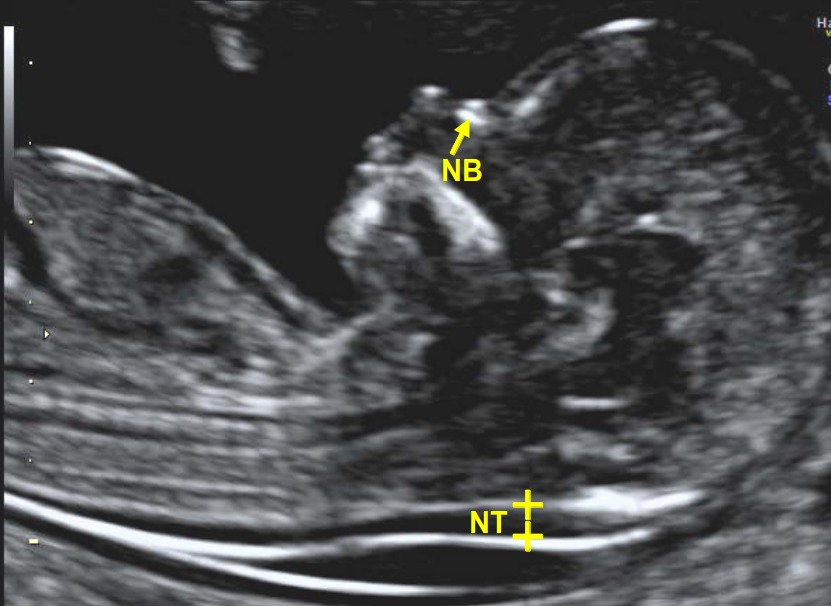
The NT scan must be taken from the 11 to 13 weeks of pregnancy. If you have decided to take the NT scan, the health care professional performing the NT scan to measure your baby's nuchal translucency means a fluid-filled space at the back of your baby's neck.
Result of NT Scan: The results of the NT scan may tell you if your baby has a high or low risk of a chromosomal abnormality.
The following are the chromosomal abnormalities:
Trisomy 21 (Down Syndrome), trisomy 18 (Edwards Syndrome) or trisomy 13 (Patau syndrome).
Let us see each abnormality in detail:
Trisomy 21 (Down Syndrome): Down syndrome is one of the chromosomal disorders that causes lifelong intellectual disability and developmental delays, and also it causes health problems in some people
Trisomy 18 (Edwards Syndrome): In this type of chromosomal disorder, there will be severe developmental delays and abnormalities in the structure of the body, and trisomy 18 often leads to fatal by age 1.
Trisomy 13 (Patau syndrome): This type of chromosomal abnormalities causes severe intellectual disability and physical abnormalities in many parts of the body it mean heart defects, brain or spinal cord abnormalities, etc...
In case if you missed the NT scan for any reason, the doctor may refer quadruple test, and it is a prenatal test that measures levels of four substances in pregnant women's blood which is done by taking a
a small amount of your blood in the laboratory, and the result may take weekdays to come
this test also checks if there are any chromosomal abnormalities, as we see above, but the Quad screen test cost is more than an NT scan.
TIFFA (Targeted Imaging for Fetal Anomalies) Scan:
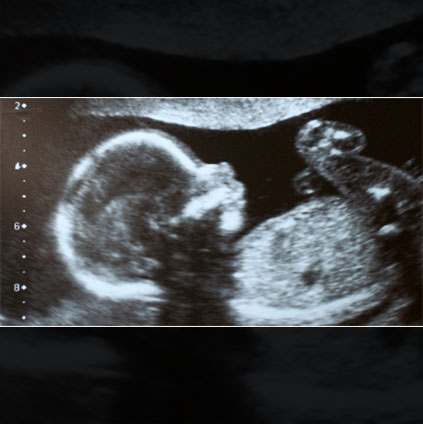
This scan is performed to know the baby is growing fine or not. The health care professional usually performs this scan in the 18th week of pregnancy, and this test measures and reports several things like The internal organs of the baby, The external organs of the baby, the Position of your placenta, and other factors like the amount of amniotic fluid, the length of the birth canal, the position of the umbilical cord and the blood flow to the womb. It can also detect and pick up specific chromosomal abnormalities in the unborn baby and give them a more precise diagnosis.
Seeing your baby on a screen can be exciting, and you can take your husband or a family member to share the experience with you
An interval growth scan is similar to a growth scan; an interval growth scan is usually performed between 28 and 32 weeks of pregnancy. This scan studies the biophysical profile of the baby, which includes movement of arms and legs, stretches and flexes breathing exercises, and opening and closing of hands. Motherhood’s extremely qualified team of professionals is well experienced at performing such tests and diagnosing and treating irregularities, if any.
Term scan: This scan is performed at around 36 weeks of pregnancy, and this is a final test to ensure that the baby is in good health. this scan helps the doctors to check for the exact location of the baby and the position of the placenta. Other parameters relating to the baby’s health, like amniotic fluid, etc., are also checked up. If everything looks good, the baby is all set for delivery.

You must be logged in to post a comment.