

HUMAN CELLS AND TISSUES
DUST MOP
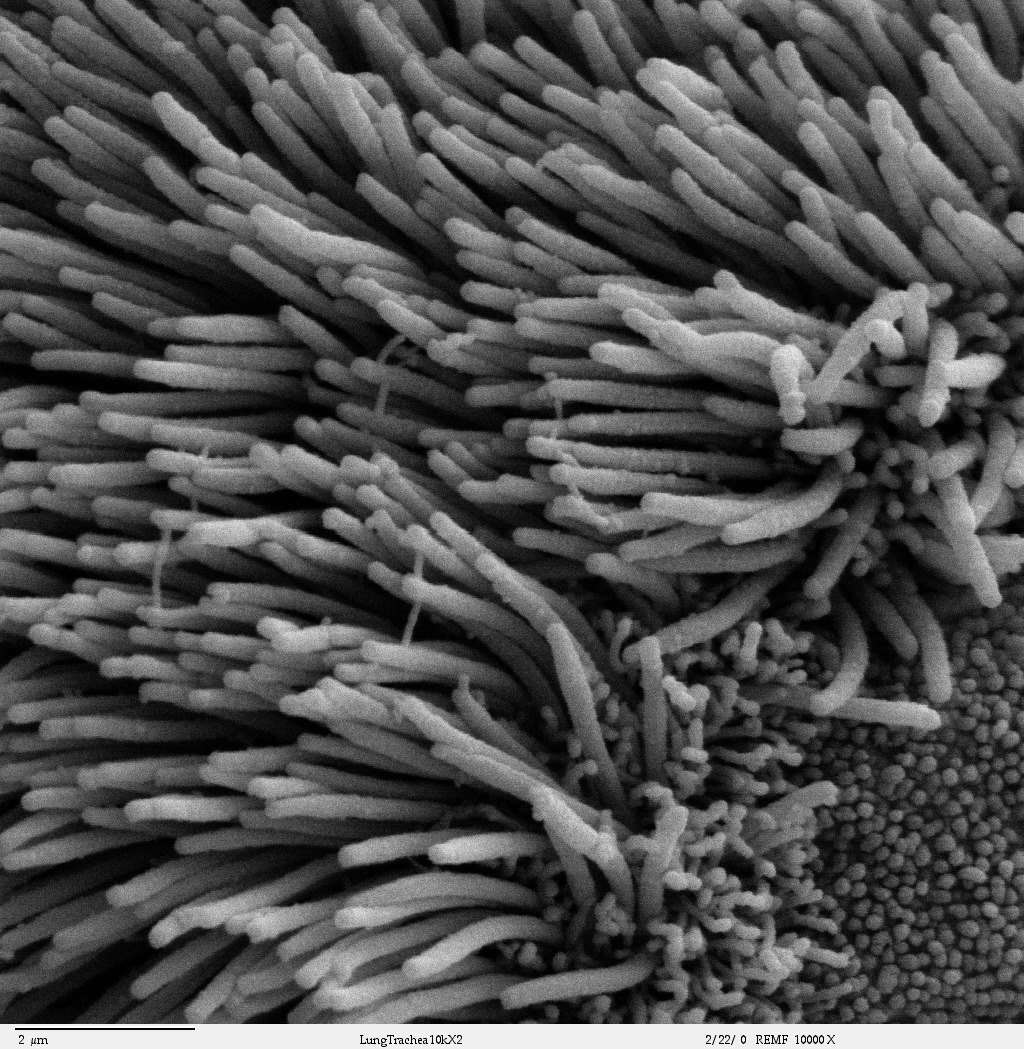
This photo (Figure 7.3.1) looks like a close-up of an old-fashioned dust mop, and the object it shows has a somewhat similar function. The object, however, is greatly enlarged in the photo. Can you guess what it is? The answer may surprise you.
It is a scanning-electron micrograph of human epithelial cells that line the bronchial passages. The floppy, dust-mop-like extensions are actually microscopic structures called cilia projecting from the outer surface of the epithelial cells. The function of the cilia is to trap dust, pathogens, and other particles in the air before it enters the lungs. The cilia also sway back and forth to sweep the trapped particles upward toward the throat, from which they can be expelled from the body.
Human Cells
Like the ciliated bronchial cells in the micrograph above, many other cells in the human body are very distinctive and well-suited for special functions. To perform their special functions, cells may vary in a number of ways.
Variation in human body
Some cells act as individual cells and are not attached to one another. Red blood cells are a good example. Their main function is to transport oxygen to other cells throughout the body, so they must be able to move freely through the circulatory system. Many other cells, in contrast, act together with other similar cells as part of the same tissue, so they are attached to one another and cannot move freely. For example, epithelial cells lining the respiratory tract are attached to each other to form a continuous surface that protects the respiratory system from particles and other hazards in the air.
Many cells can divide readily and form new cells. Skin cells are constantly dying and being shed from the body and replaced by new skin cells, and bone cells can divide to form new bone for growth or repair. On the other hand, some other cells — like certain nerve cells — can divide and form new cells only under exceptional circumstances. Nervous system injuries (such as a severed spinal cord) generally cannot heal by the production of new cells, which results in a permanent loss of function.
Many human cells have the primary job of producing and secreting a particular substance, such as a hormone or an enzyme. For example, special cells in the pancreas produce and secrete the hormone insulin, which regulates the level of glucose in the blood. Some of the epithelial cells that line the bronchial passages produce mucus, a sticky substance that helps trap particles in the air before it passes into the lungs.
The difference, but identical
All the different cell types within an individual human organism are genetically identical, so no matter how different the cells are, they all have the same genes. How can such different types of cells arise? The answer is differential regulation of genes. Cells with the same genes can be very different because different genes are expressed depending on the cell type.
Example of human cell types
Many common types of human cells — such as bone cells and white blood cells — actually consist of several subtypes of cells. Each subtype, in turn, has a special structure and function. A closer look at these cell types will give you a better appreciation for the diversity of structures and functions of human cells.
Bone cells
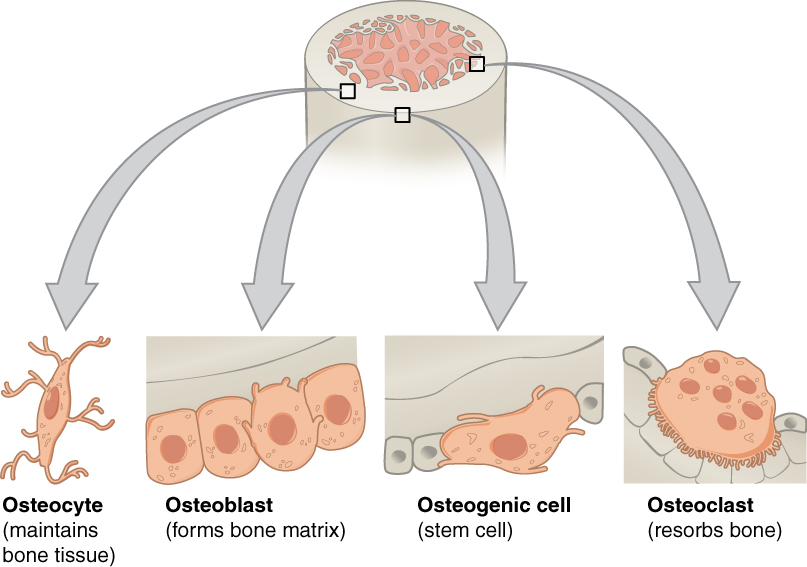
- Estrogenic cells are undifferentiated stem cells that differentiate to form osteoblasts in the tissue that covers the outside of bone.
- Osteoblasts are immature bone cells that are involved in synthesizing new bone. They develop into osteocytes, or mature bone cells.
- Osteocytes are star-shaped bone cells that make up the majority of bone tissue. They are the most common cells in mature bone.
-
Osteoclasts are very large, multinucleated cells responsible for the breakdown of bones through resorption. The breakdown of bone is very important in bone health, because it allows for bone remodeling
-
 White Blood cells
White blood cells (also called leukocytes) are even more variable than bone cells. Five subtypes of white blood cells are shown in Figure 7.3.3. All of them are immune system cells involved in defending the body, but each subtype has a different function. They also differ in the normal proportion of all leukocytes they make up.
- Monocytes make up about five percent of leukocytes. They engulf and destroy (phagocytize) pathogens in tissues.
- Eosinophils compose about two percent of leukocytes. They attack larger parasites and set off allergic responses.
- Basophils make up less than one percent of leukocytes. They release proteins called histamines that are involved in inflammation.
- Lymphocytes make up about 30 percent of leukocytes. They include B cells and T cells. B cells produce antibodies against self antigens, and T cells destroy virus-infected cells and cancer cells.
- Neutrophils are the most numerous white blood cells, making up about 62 percent of leukocytes. They phagocytize single-celled bacteria and fungi in the blood.
Groups of connected cells form tissues. The cells in a tissue may all be the same type, or they may be of multiple types. In either case, the cells in the tissue work together to carry out a specific function. There are four main types of human tissues: connective, epithelial, muscle, and nervous tissues. We will be learning about each of the four tissue types in more detail in the next few sections, but here is a summary: Epithelial Tissue, Such as the skin and the inner surface of the digestive tract. Epithelial tissue that lines inner body surfaces and body openings is called mucous membrane. This type of epithelial tissue produces mucus, a slimy substance that coats mucous membranes and traps pathogens, particles, and debris. Epithelial tissue protects the body and its internal organs, secretes substances (such as hormones) in addition to mucus, and absorbs substances (such as nutrients).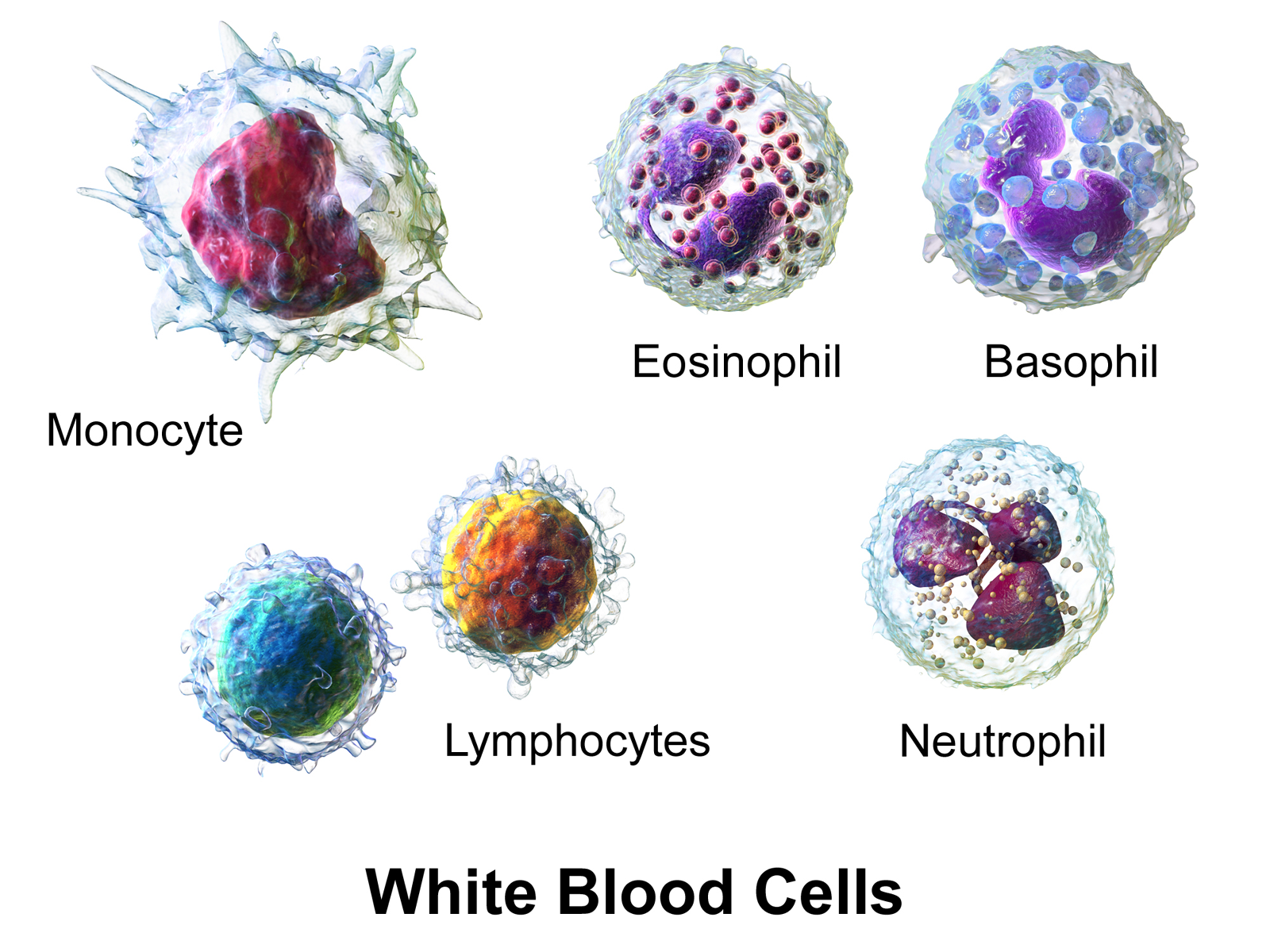 Tissues
Connective Tissue
- Bone and blood are examples of connective tissue. Connective tissue is very diverse. In general, it forms a framework and support structure for body tissues and organs. It’s made up of living cells separated by non-living material, called an extracellular matrix, which can be solid or liquid. The extracellular matrix of bone, for example, is a rigid mineral framework. The extracellular matrix of blood is liquid plasma. Connective tissues such as bone and cartilage generally form the body’s structure.

nice to meet you
good
You must be logged in to post a comment.