
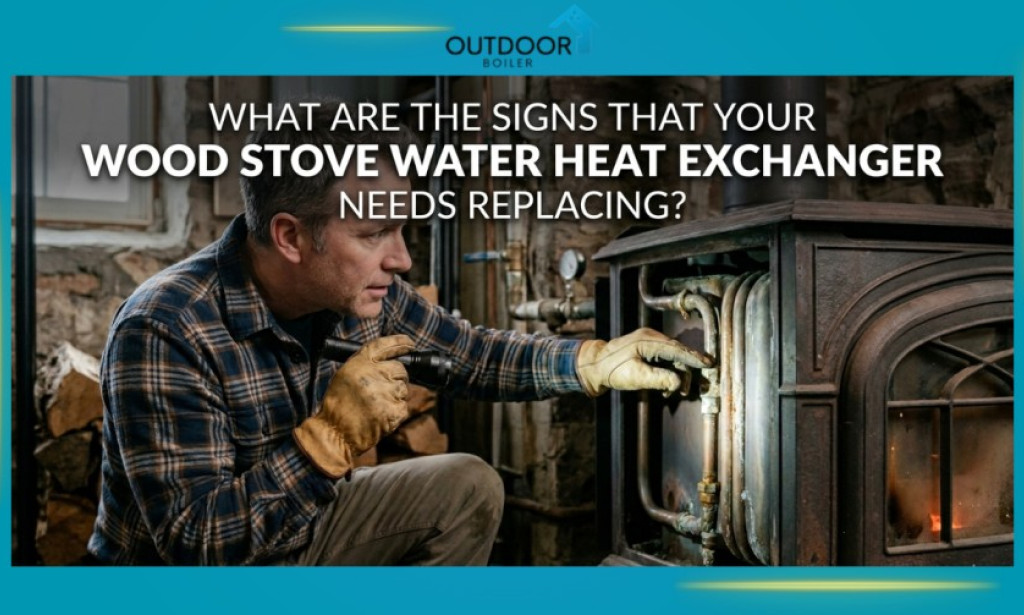
Your wood stove water heat exchanger is showing signs that it needs replacing when you notice rust-colored water, a sudden drop in heating efficiency, visible corrosion on the unit, or persistent leaks that won't stop, and the sooner you catch these, the better.
If you heat your home with a wood stove system that connects to a water-based heating network, the heat exchanger performs significantly more heavy lifting behind the scenes. It’s the story of how your fire’s energy becomes warm water flowing through your radiators (or floors, or taps). As with all hard-working parts, it eventually wears out, and knowing when to swap one helps avoid a larger (and costlier) headache down the line.
I’ve put together this guide to walk you through the most common warning signs, what causes them, and what you can do about them. Whether you’re a wood stove veteran or a relative novice to the setup, it’s one worth reading before your next heating season.
What Does a Wood Stove Water Heat Exchanger Actually Do?
Before we get into the warning signs, it’s useful to understand what this component does. A wood stove water heat exchanger is installed inside or around your firebox, transferring the burning wood’s heat into the circulating hot water for your home’s heating system. You can think of it like the translator between your fire and your hot water if it isn’t working properly, that heat doesn’t get where it needs to go.”
So, What Are the Warning Signs You Shouldn't Ignore?
1. Rusty or Discolored Water
The first and most obvious sign is when water that comes out of your taps or flows through your system appears brownish, orange, or just plain dirty. This is a classic sign of internal corrosion. As the metal within your heat exchanger begins to deteriorate, rust debris coats the water source. If you’re getting this consistently, rather than after a long period of inactivity and all is well, that’s a red flag.
2. Visible Leaks or Moisture Around the Unit
Take a flashlight and look around your heat exchanger. Is water dripping from, staining, or pooling by the unit? Even small leaks can indicate that the metal has corroded to the point where it is cracking or creating pinholes. These tend to worsen, not improve, so don’t wait it out in the hope that it'll seal itself.
3. Unexplained Drop in Heating Efficiency
Heating your home is taking a little longer than it used to, despite using the same amount of wood. Or are you inexplicably consuming increased amounts of firewood? Due to malfunctions in its internal components, a malfunctioning heat exchanger will no longer efficiently transfer heat. The heat that’s supposed to go into your water is going somewhere else, or the scaling and deposits that build up are acting as an insulator in a bad way.
4. Unusual Noises from the System
Sounds like banging, popping, or kettling from your water heating system should not be ignored. These noises may be a sign that steam is forming inside the heat exchanger, something that occurs when the unit doesn’t properly transfer heat, creating localized hotspots. Scaling or mineral buildup and internal damage are often to blame.
5. Soot or Combustion Residue in the Water
If you ever experience a fuel-like odor or dark flecks in your water, that’s a huge red flag.” It can mean that the heat exchanger has cracked and is leaking combustion gases or soot into the water circuit. This is not only an efficiency problem it’s a safety issue.
6. Frequent Pressure Fluctuations
If the pressure gauge for your system is all over the map racing up high, dropping low or just being whacky, the heat exchanger may be at fault. It can lead to inconsistent pressure throughout the loop if there are cracks or partial blockage. It also stresses it out on other components like pumps and valves.
7. Age of the Unit
This one isn’t exactly a symptom, but is worth discussing. The average service life of most heat exchangers is around 10–20 years, dependent on water quality, usage frequency and maintenance. If yours is getting up there in years, and you've noticed any of the aforementioned symptoms along with it, replacing your unit will probably be more cost-effective than continually repairing it.
What Causes a Heat Exchanger to Fail?
Knowing the root cause allows you to make a more informed decision about replacement and enables you to prolong the life of your next unit.
Corrosion is the number one culprit. Water with high mineral content, low pH or high pH levels and dissolved oxygen accelerates the decay of metal over time. If your water has not been treated or tested, this can occur quicker than you realize.
Scale buildup from hard water creates a layer of calcium and magnesium deposits on the interior walls. This acts as an insulator, reducing heat transfer efficiency and causing hotspots that can crack the metal.
Thermal stress is another factor. The metal expands and contracts through repeated heating and cooling. Over many years, this mechanical fatigue can create micro-cracks that develop into leaks.
Neglected maintenance, such as forgoing annual inspections or not flushing the system, speeds all of the above considerably. Routine maintenance of your home heating system can boost efficiency 15–25% and greatly lengthen the life of the equipment, according to theU.S. Department of Energy.
Can You Repair a Heat Exchanger Instead of Replacing It?
Actually, it depends on how bad the damage is. Chemicals used in descaling treatments or a professional flush may help if the scaling is minor or light corrosion. But if you’re facing cracks, ongoing leaks, or a deeply degraded unit, repairs tend to just be a patch-up. The metal only weakens, and you would probably find yourself in this same situation again within a season or two.
In most cases, replacing the heat exchanger is the more intelligent long-term investment particularly if the unit is already several years old.
How Do You Extend the Life of Your New Heat Exchanger?
If you’ve installed a new unit, here are a few good habits that will pay off:
Test your water quality. If you have high mineral content in your water or hard water, opt for a water softener or treatment system. This by itself can practically triple the lifespan of your heat exchanger.
Flush the system annually. Over time, sediment and scale will accumulate. Flushes regularly keep the insides clean and heat transfer efficient.
Maintain proper pH levels. Slightly alkaline water (between pH 7 and pH 8) is less harmful to metal components. Water that’s excessively acidic becomes corrosive.
Get annual inspections. Having a professional inspect your system once a year at least before heating season catches little problems before they become big ones.
Use quality components. Choose a heat exchanger tailored to your specific system and application when it comes time for replacement.
FAQs
How long does a wood stove heat exchanger typically last? No heat exchangers should really last for longer than 10 or even better 20 years if the water is good and maintained. Where equipment are exposed to hard water, acids or cyclic high heat without touch maintenance, unit failure can occur at an accelerated rate.
Can a failing heat exchanger affect my home's safety? Yes, in some cases. If indeed the exchanger is cracked, and there is a leaky water circuit, this may cause carbon monoxide or other harmful compounds penetrates your catalyst system. If you think this is the case, turn off your stove and call a professional immediately.
Is it hard to replace a wood stove heat exchanger yourself?It depends on your situation and comfort level with plumbing and heating systems. Whether you are comfortable with this is something some veteran DIYers will do, but for the majority of homeowners, that peace of mind can make it worth having a pro do the replacement, especially when faulty installation can cause leaks or pressure problems down the line.
How do I know what size or type of heat exchanger I need? The best approach is to review your stove’s specs and then see if you can find an exchanger that supports both the BTU output of your system and the water flow rate required. If in doubt, read the heat exchanger range at OutdoorBoiler to find what's compatible with your system needs, or ask an expert.
What's the difference between an internal and external heat exchanger? An internal heat exchange element resides in the firebox, making contact with the fire. One that operates outside the flue, which surrounds the firebox, or is connected to it. While internal units, in general, are better at transferring heat and are more effective, they are also prone to extreme temperatures and thermal stress.
Does water treatment really make a difference for heat exchanger lifespan? Absolutely. Hard and acidic water are two of the leading causes for premature heat exchanger failure. Treating your water is one of the most affordable actions you can take to protect your investment.
Conclusion
A wood stove water heat exchanger often works silently in the background, providing your home with heat and hot water, and when it has a problem, you usually get warning signs before things go too far downhill. Rusty water, decreased efficiency, leaks, weird noises, and pressure issues are all ways your system is letting you know that it’s in need of repair.
The trick is not to ignore those signals. Catching a failing heat exchanger early allows you to schedule the replacement on your terms, rather than when there’s been a cold snap and you find yourself in desperate need of heat.
If you are in doubt whether your heat exchanger needs to be replaced or only a maintenance, it is better to either get an expert to look at it at a very early stage. And when you're ready to research the right replacement options, contact the Outdoor Boiler Team. We're always glad to help you decide on what works best for your system and ensure that your setup is running as it should be throughout the season.

You must be logged in to post a comment.