
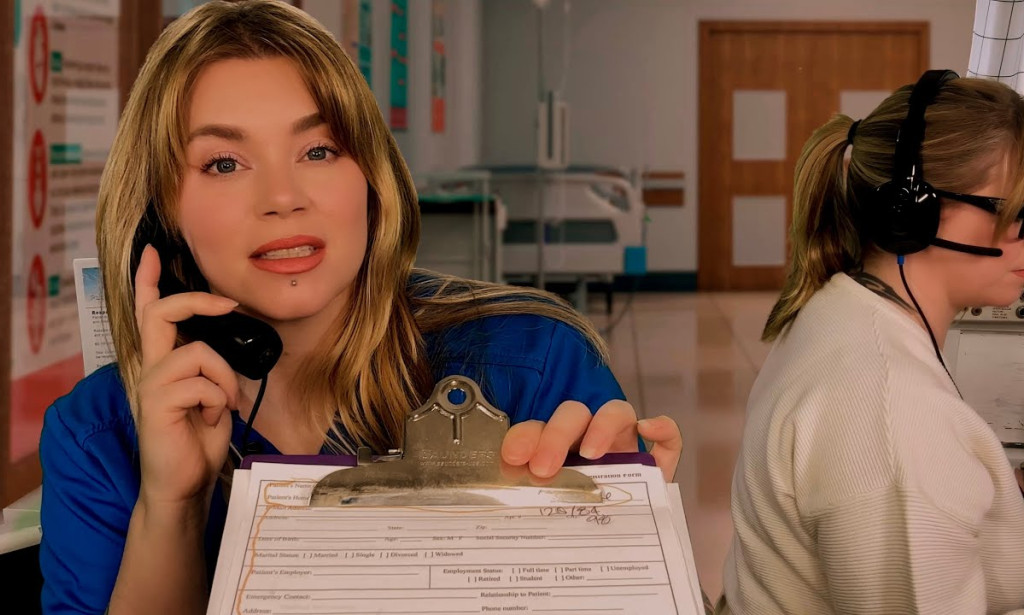
The medical receptionist is often the first person a patient sees — and sometimes the last. That position carries more operational weight than most people outside of healthcare administration fully appreciate. A strong front desk keeps schedules tight, data clean, patients calm, and revenue flowing. A weak one creates downstream problems that show up in billing errors, compliance gaps, and patient attrition.
This guide breaks down the 10 core responsibilities of a medical receptionist, written for practice managers, healthcare administrators, and anyone evaluating or building a front desk team.
Why the Medical Receptionist Role Is More Critical Than Most Practices Realize
Medical receptionists sit at the intersection of patient experience, clinical operations, and revenue cycle management. They are simultaneously a patient's first point of contact and a practice's first line of administrative defense.
When this role is filled well, workflows run smoothly. When it isn't — appointments get double-booked, insurance verifications are missed, patient records contain errors, and compliance risks accumulate quietly until they become expensive.
Understanding what this role actually requires is the starting point for hiring, training, and retaining the right people.
Responsibility 1: Patient Scheduling and Appointment Management
Patient scheduling is the most visible of all medical receptionist duties — and it's far more complex than it looks. A medical receptionist must manage appointment slots across multiple providers, account for visit types (new patient vs. follow-up, telehealth vs. in-person), handle rescheduling, and minimize no-shows.
Effective scheduling requires familiarity with the practice's practice management software, an understanding of provider availability rules, and the ability to prioritize urgent visits without disrupting the overall day.
Reducing no-show rates through appointment reminder calls and texts is often part of this responsibility. Some practices automate this with patient communication tools, but it still requires the receptionist to monitor confirmations and fill gaps quickly.
Responsibility 2: Patient Registration and Intake
Every patient visit begins with a patient intake process. The receptionist collects and verifies demographic information, emergency contacts, insurance details, photo ID, and consent forms — usually before the patient is seen.
Accuracy here matters enormously. Errors in patient registration create billing problems, affect EHR data integrity, and can even create safety risks if clinical staff are working from incorrect patient records.
For new patients especially, the receptionist sets the tone. A disorganized or slow intake process creates anxiety. A smooth one builds trust before the patient ever enters an exam room.
Responsibility 3: Insurance Verification
Insurance verification is one of the most financially consequential tasks the front desk handles. Before a patient is seen, the receptionist must confirm:
- Active insurance coverage
- The practice's in-network status with that plan
- Patient deductible and out-of-pocket amounts
- Any requirements for referrals or prior authorization
- Co-pay obligations
Failing to verify insurance before a visit is a leading cause of claim denials and unbillable services. Many practices integrate eligibility verification tools directly into their EHR or use services that automate real-time benefit checks — but interpreting results and communicating them accurately to patients is still a human function.
Practices that invest in strong insurance verification processes protect their revenue cycle from the very first step.

Responsibility 4: HIPAA Compliance and Patient Confidentiality
Every medical receptionist handles protected health information (PHI) constantly — in conversation, in documentation, and on-screen. HIPAA compliance at the front desk is non-negotiable and requires ongoing attention.
Practical HIPAA responsibilities include:
- Never discussing patient information in audible public spaces
- Confirming patient identity before sharing appointment details or records
- Following proper procedures for faxing, emailing, or releasing medical records
- Maintaining screen privacy in patient-visible areas
- Reporting potential breaches according to practice policy
HIPAA training should be refreshed at least annually for front desk staff. Non-compliance isn't just a legal risk — it directly damages patient trust.
Responsibility 5: Copay and Payment Collection
Copay collection at the point of service is a standard front desk responsibility that directly affects a practice's revenue. Receptionists are responsible for knowing which patients owe copays, collecting payment before or after visits, issuing receipts, and logging transactions accurately.
Beyond copays, many practices now collect outstanding balances at check-in. This requires the receptionist to communicate clearly about financial obligations without being confrontational — a skill that requires training and situational judgment.
Point-of-service collections consistently outperform post-visit billing in terms of recovery rates. The front desk team plays a measurable role in a practice's medical billing performance.
Responsibility 6: EHR Data Entry and Records Management
Medical receptionists don't just greet patients — they're active contributors to the accuracy of electronic health records. Registration data, insurance updates, consent forms, referral documentation, and appointment notes all flow through the front desk.
Accurate EHR data entry requires attention to detail, familiarity with the practice's EMR system, and an understanding of how intake data connects to downstream clinical and billing workflows.
Many practices also task receptionists with scanning and uploading paper documents, updating patient demographics, and ensuring records are properly filed or forwarded when patients transfer care.
Responsibility 7: Handling Patient Communication
The front desk is the primary communication hub for most medical practices. Receptionists manage:
- Inbound phone calls and triage to appropriate staff
- Patient messages routed through patient portals
- Test result notifications (non-clinical, directing patients to speak with providers)
- Appointment reminders via phone, text, or email
- Requests for medical records releases
- General patient inquiries about office hours, directions, and services
Strong patient communication skills — clarity, empathy, and calm under pressure — define the difference between a receptionist who de-escalates difficult interactions and one who inadvertently escalates them.
Responsibility 8: Coordinating Referrals and Prior Authorizations
Referral coordination is often an underappreciated complexity of the front desk role. When a provider orders a referral or a service requiring prior authorization, the receptionist may be responsible for:
- Contacting the specialist's office to schedule the referral appointment
- Gathering necessary documentation from the patient's chart
- Submitting prior authorization requests to the payer
- Following up on pending authorizations
- Communicating status updates to patients and providers
This process involves working across multiple systems, payers, and offices simultaneously. Delays in prior authorization can postpone patient care and delay revenue recognition — making this one of the higher-stakes administrative functions.
Platforms like Provma are built to reduce friction in exactly these kinds of multi-step administrative workflows, helping front desk teams track authorizations and referrals without letting anything fall through the cracks.
Responsibility 9: Supporting Telehealth and Virtual Visit Coordination
Telehealth coordination has become a standard front desk responsibility in most practices. Receptionists now routinely handle:
- Sending telehealth links and access instructions to patients before visits
- Confirming patients have the necessary technology and connectivity
- Registering patients in telehealth platforms
- Collecting virtual consent forms
- Troubleshooting common patient access issues before the provider joins
As telemedicine has grown into a permanent fixture of healthcare administration, receptionists who are comfortable with virtual visit workflows give practices a real operational edge. Patients who have a smooth telehealth onboarding experience are significantly more likely to complete their visit and return.
Responsibility 10: Managing Front Desk Operations and Workflow
Beyond patient-specific tasks, the medical receptionist is responsible for the daily function of the front desk itself. This includes:
- Opening and closing the office
- Managing waiting room experience and flow
- Coordinating with clinical staff on delays, room availability, and urgent changes
- Ordering office supplies and tracking front desk inventory
- Handling incoming mail, faxes, and delivery coordination
- Maintaining a clean and organized reception area
In practices without a dedicated office manager, the senior receptionist often takes on a broader healthcare administrative coordination role, serving as the operational backbone of the front office.
Quick Comparison: Core vs. Extended Receptionist Responsibilities
| Responsibility | Core Duty | Extended in Some Practices |
|---|---|---|
| Patient scheduling | ✅ | ✅ (multi-provider, complex templates) |
| Insurance verification | ✅ | ✅ (real-time eligibility tools) |
| HIPAA compliance | ✅ | ✅ (breach reporting, audit support) |
| Copay collection | ✅ | ✅ (balance collection, payment plans) |
| EHR data entry | ✅ | ✅ (document scanning, record transfers) |
| Referral coordination | Sometimes | ✅ (prior auth, specialist scheduling) |
| Telehealth support | Growing | ✅ (platform training, troubleshooting) |
| Billing support | Rarely | ✅ (charge entry, denial tracking) |
| Office management | Rarely | ✅ (inventory, vendor coordination) |

FAQ
What is the most important skill for a medical receptionist?
Attention to detail and calm communication under pressure are consistently the most valued. Accuracy in patient registration and insurance verification protects both the patient experience and the revenue cycle.
Is HIPAA training required for medical receptionists?
Yes. Any staff member who handles protected health information — including front desk staff — is subject to HIPAA requirements. Training should be completed at hire and refreshed annually.
Do medical receptionists handle billing?
Directly, usually not. But they play a significant indirect role by collecting accurate registration data, verifying insurance, and collecting copays at the point of service — all of which affect billing outcomes.
What software do medical receptionists typically use?
Most practices use an integrated practice management system or EHR/EMR such as Epic, Athenahealth, eClinicalWorks, or Kareo. Front desk staff also commonly use eligibility verification tools, patient communication platforms, and telehealth systems.
How is the receptionist role changing with telehealth growth?
The scope has expanded. Receptionists now routinely handle virtual visit setup, digital consent forms, and basic telehealth troubleshooting — requiring new technical competencies alongside traditional administrative skills.
What's the difference between a medical receptionist and a medical secretary?
The roles overlap significantly. In most practices, "medical receptionist" refers specifically to the patient-facing front desk role, while "medical secretary" may encompass broader administrative tasks like transcription, correspondence, and provider scheduling support.
Key Takeaways
- The medical receptionist role spans patient scheduling, insurance verification, HIPAA compliance, payment collection, EHR accuracy, communication, referral coordination, and telehealth support.
- Front desk performance directly affects patient satisfaction, clinical efficiency, and revenue cycle outcomes.
- Insurance verification and copay collection are two of the most financially impactful functions managed at the front desk.
- HIPAA compliance is a non-negotiable front desk responsibility, not a secondary concern.
- As telehealth becomes standard, virtual visit coordination is now a core — not optional — front desk skill.
- Practices that support their front desk teams with the right tools and workflows reduce administrative burden and improve care delivery.
12. EXTERNAL AUTHORITY REFERENCES
- HHS.gov — HIPAA for Professionals: https://www.hhs.gov/hipaa/for-professionals/index.html
Authoritative source for HIPAA requirements applicable to front desk staff - CMS.gov — Prior Authorization: https://www.cms.gov/priorities/innovation/key-concepts/prior-authorization
CMS guidance on prior authorization processes relevant to Responsibility 8 - HealthIT.gov — EHR Basics: https://www.healthit.gov/faq/what-electronic-health-record-ehr
Explains EHR/EMR concepts relevant to Responsibilities 6 and 7 - MGMA (Medical Group Management Association): https://www.mgma.com
Industry body for healthcare practice management — relevant to front office operations and benchmarking - AHIMA (American Health Information Management Association): https://www.ahima.org
Authoritative resource on health information management, records handling, and coding compliance

You must be logged in to post a comment.