

Products developed in particular geographic areas or locations in India are given GI tags or Geographical Indication tags. The development and execution of the product must account for spatial importance. Products that are industrial, agricultural, or handcrafted can all receive GI certification.
The significance of GI products' traditional and heritage elements sets them apart. These goods, whether they are made, handcrafted, or farmed, are particularly representative of the location in which they are produced. Their association with a specific area, city, or town is what gives them recognition. A product's value is also justified by the significance of the craft and skill being passed down through the generations, especially in the case of handicrafts. Giving such products a GI label helps their markets in numerous ways and recognizes the importance of maintaining and advancing heritage artistic creativity.
GI Toys
The GI label is applied to a variety of goods, including commercial and handcrafted toys. One can question the relevance of toys. However, India's toy industry generates about $50 billion in sales and revenue each year.
Children's best friends have always been their toys. Even adults like my sister, she attains the age of 20 still an enthusiast of toys. And recently, as science and education have come to recognize the value and contribution that toys make to children's creative, emotional, social, and intellectual development, their significance has only grown.
Several GI-tagged toys are produced in India utilizing both conventional and traditional techniques. However, they are also deeply ingrained in the national culture and social environment. Here is a glance at the various toys that have received GI tags in India certification.
Channapatna Toys
The amazing toys made by Channapatna are readily recognizable. These wooden toys come in a variety of sizes and shapes, and you can now buy them at even the largest international toy stores. In 2005, they were given a GI tag. The wood, known as ivory wood, is traditionally used to make these toys in the Karnataka town of Channapatna.
To fit the shapes of the toys, the wood, is first chopped, then trimmed, and last carved. Since children utilize it the most, the final product is polished and painted with natural vegetable dyes.
Children will find these play and learning items appealing since they are safe, vibrant, and strong.

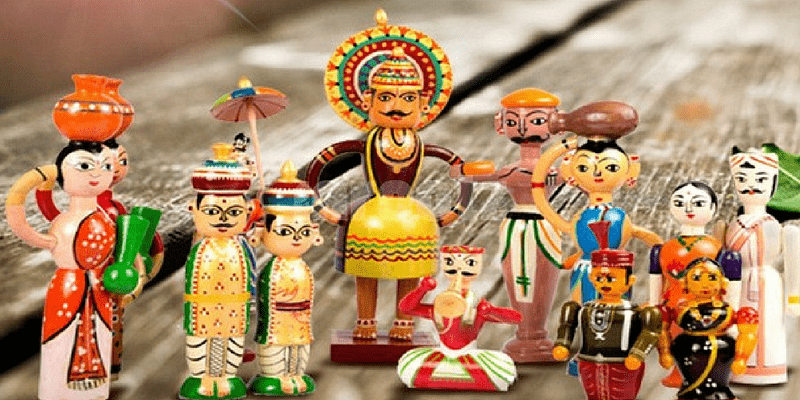
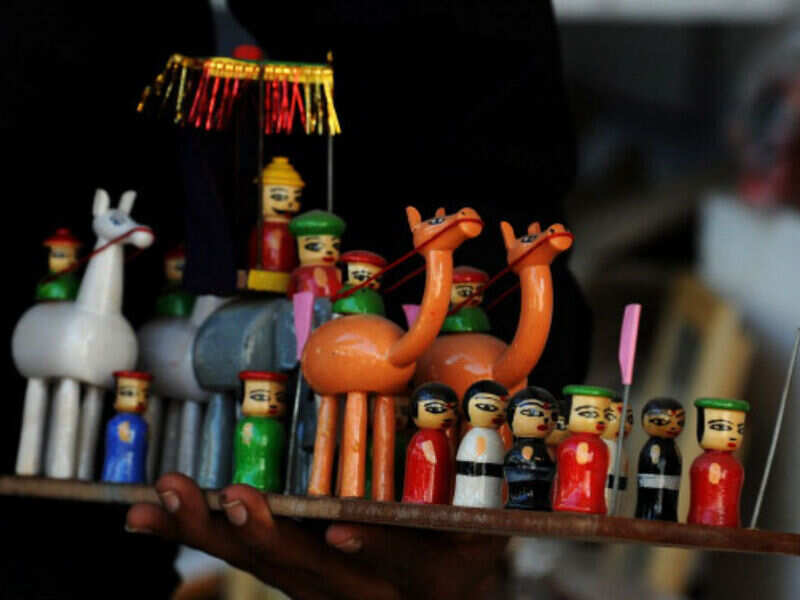
Kondapalli Bommallu
The Krishna district of Andhra Pradesh's Kondapalli town is where these toys are produced. In 1999, these playthings received the GI label.
These toys were not just made for kids. In addition, they are carefully arranged in houses for other holidays, such as Navratri and Sankranti, and have cultural significance.
The soft wood called Tella Poniki that is accessible in the area is used to make the toys. The wood is carved, and makku is used to bind the toy's pieces together. Sawdust and tamarind seed are combined to make a paste.
The finished toy is painted after the pieces have been assembled. The toys include dolls, birds, animals, legendary figures, and more.


Thanjavur Doll
I am from Tamil Nadu, and I well know about this toy, whenever we see the dance of this toy, smiles automatically came to faces. These dolls, which are made of terracotta, are a bobble head or action dolls. Basically, the doll moves or vibrates when pushed because its center of gravity and weight is at the bottom of the toy. As a result, the doll looks to be dancing.
This is named after the Tamil Nadu city of Thanjavur. It has historically been prepared by hand for generations and received the GI tag in 2008–2009.
These dolls are decorated with traditional dresses, cosmetics, and accessories as well as dance costumes. Additionally, they are adorable because of their dance-like movements. The dolls have various bodily parts attached to them. The legs, head, upper body, and lower body are all attached to form the finished structure.


Kathputlis
It is fun to see the Rajasthani puppets. Children enjoy watching puppet shows, and using puppets as toys is an inventive method to get kids interested in telling stories. The first people to use these were Bhat agricultural laborers in Rajasthan's Marwar district.
The puppet is constructed out of wood, metal wire, and fabric. Over the years, the string doll has played a significant role in popularizing folk and historical tales.


Ganjifa Cards
This card game, in contrast to wooden toys and dolls, was given a GI designation in 2008. This card game is thought to have its roots in Persia. However, India became the home of this card game in the 19th century. The game really took off in Mysore under the reign of Krishnaraja Wodeyar III, where various sophisticated games utilizing these cards were created. In the Mughal courts, where lavish sets were created for the royals to play, the game also gained popularity.


Nirmal Toys
Softwood is used to make wooden toys from Nirmal town in Telangana, which were given the GI designation in 2009. White sander and poniki, two types of native wood, are used to make the toys. Depending on the needs of the toy, the wood is chopped into a variety of forms and sizes. An adhesive made from sawdust and tamarind seeds is then used to adhere them together. Toys are coated in white clay, allowed to dry, and then colored or painted. These toys are well known for their artwork and crafts.
Other toys with GI tags include leather toys from Indore, Andhra Pradesh leather puppets, among others, and more recently, wooden Etikoppaka toys from Andhra in 2017.
 Leather toys from Indore
The GI-tagged toys are a great way to support regional artists and traditional production techniques. Additionally, the toys are not just for play, but also serve as a significant window into the local culture.

You must be logged in to post a comment.