

At the most recent COP27 climate summit in Egypt, delegates decided to create a fund to compensate less developed countries damaged by climate change. However, determining how much harm climate change does and to which nations are pushing the boundaries of attribution research, a relatively new discipline.
The goal of the UN loss-and-damage fund is to transfer funds from rich countries to developing countries that are thought to be more vulnerable to the consequences of climate change. African and Asian nations, as well as Pacific and Caribbean island states, are eligible to receive money. By 2030, some researchers predict that the nations' yearly financial requirements would be between $290 billion and $580 billion.
There are still concerns about how the fund will function and its capacity to respond promptly to assist afflicted nations. Scientific uncertainty on the link between certain weather disasters and human-induced climate change could prevent wealthier nations from making financial contributions until officials hash out the details.
Richard Spinrad, head of the National Oceanic and Atmospheric Administration, attribution science is continuously developing. He claimed that rather than identifying the causes of certain weather occurrences, his organization focuses on understanding the effects of climate change, such as the frequency and intensity of tropical cyclones or the extent of sea-level rise.
Dr. Spinrad stated, "I do not see NOAA getting engaged in giving any attribution index for that hurricane or that typhoon."
The Intergovernmental Panel on Climate Change asserts that warming ocean and atmosphere temperatures and increasing sea levels exacerbate some weather phenomena. However, it has not been able to link specific weather occurrences to climate change.
Lisa Graumlich, a professor of environmental and forest sciences at the University of Washington, scientists must now devise methods for estimating loss and damage and determining weather or not specific weather events are caused by climate change.
The American Geophysical Union's president-elect, Dr. Graumlich, stated, "I think we're in some very unknown terrain right now."
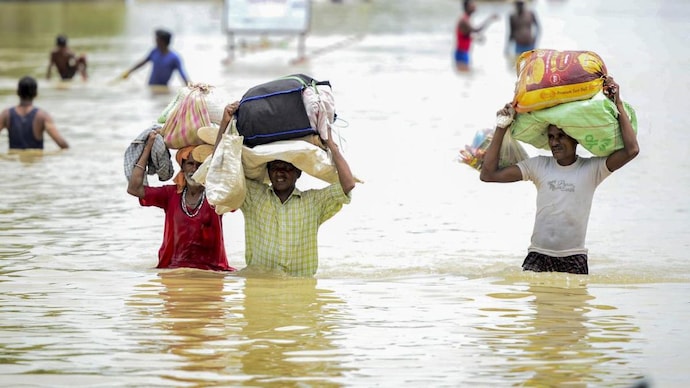
Delegates to COP27 voted to approve the money in response to Pakistan's catastrophic floods, which are thought to have killed 1,700 people and damaged more than $30 billion. The delegation from Pakistan took the lead in pushing for the inclusion of a loss and damage accord on the COP27 agenda.
Recent flood research produced a range of findings. The study, which wasn't published in a journal, revealed that the impacted region's total rainfall this year was more than seven times greater than the historical average and that climate change had exacerbated rainfall in the area over a week in late August. Additionally, computer simulations demonstrated that rainfall intensity during that time was 75% higher due to climate change than it would have been in the absence of climate change.However, during the two-month monsoon season, the researchers found no evidence of a role for climate change. The 50% increase in rainfall intensity during the season could be due to a number of other variables, such as extreme La Nia ocean temperature conditions in the Pacific.
Dr. Rauch, "science cannot offer a kind of legal proof that can be used in court in the legal systems that we have in Western societies." According to him, a variety of factors, such as population expansion in coastal areas, a country's gross domestic product, and existing infrastructure targeted at reducing flood damage, are taken into account when estimating loss and damage from meteorological disasters.
Climate attribution research will advance over time, Dr. Rauch. "But will it be obvious and will it be reduced to a single number and said, 'Well, 25% is climate change?' in about 10 years? I don't think it's true.

You must be logged in to post a comment.