
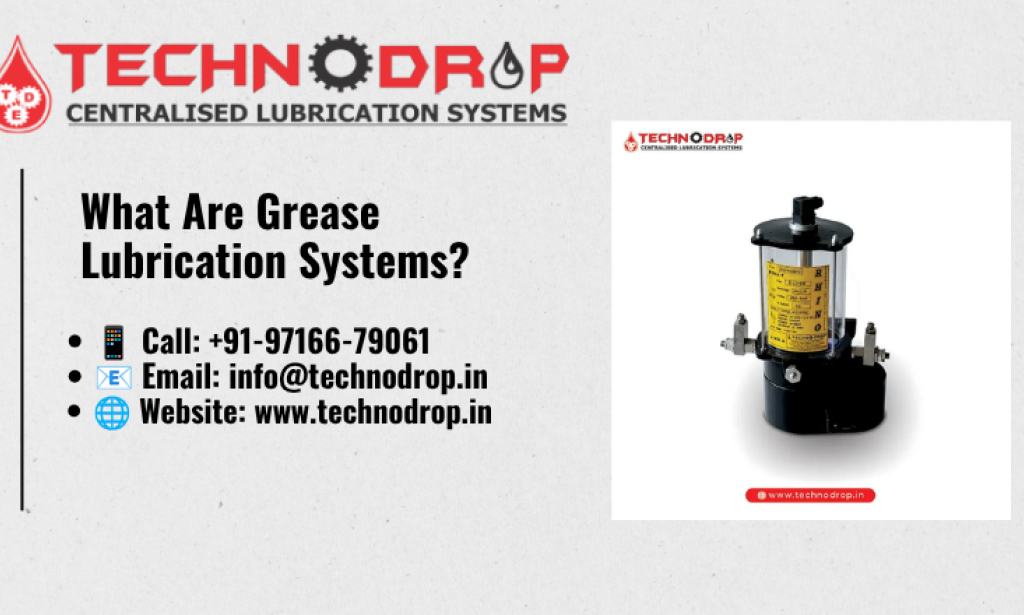
What Are Grease Lubrication Systems?
A machine rarely fails loudly on day one. It usually starts with heat, dry bearings, uneven movement, excess noise… and then one morning, production stops.
That’s where Grease Lubrication Systems become more than a maintenance accessory. They become protection.
Look, if you run machinery-heavy operations, you already know the problem. Manual greasing sounds simple, but it depends on timing, manpower, access, discipline, and honestly, luck. Miss one bearing on a crusher, conveyor, packaging machine, press, or material handling setup, and the repair cost can quickly become bigger than the lubrication system you avoided buying.
Why Grease Lubrication Systems Matter More Than People Think
A grease lubrication system is designed to deliver measured grease to moving parts like bearings, bushes, pins, joints, chains, slides, and rotating assemblies. Not randomly. Not “when someone remembers.” Properly.
The basic idea is simple: grease is stored in a reservoir, pushed through pumps and lines, and delivered through injectors, metering valves, or progressive blocks to the lubrication points. The real value is consistency.
And that’s where most businesses get it wrong.
They think Grease Lubrication Systems is only about reducing friction. It is, yes — but it’s also about heat control, wear reduction, sealing contaminants, resisting water ingress, and keeping equipment predictable during long working hours.
SKF notes that automatic lubrication systems can deliver precise, metered lubricant, while some dual-line systems can serve up to 2,000 lubrication points over long distances. That’s not small workshop stuff; that’s serious plant-level lubrication planning.
How Grease Lubrication Systems Actually Work on the Floor
Here’s the thing — a good system doesn’t just “pump grease.” It controls grease.
In most industrial setups, you’ll see a grease pump, controller, reservoir, feed lines, metering devices, and lubrication points. Depending on the machine layout, the system may be manual, semi-automatic, or fully automatic. Progressive lubrication systems are often used where multiple points need sequential metering, while dual-line systems are preferred in heavy-duty plants where long distances and high back pressure are common.
For example, SKF’s progressive systems are designed for precise metering to multiple points, while dual-line systems are commonly used in heavy industry, mining, cement, steel, pulp and paper, and similar demanding applications.
That matters.
Because a machine running in a dusty cement plant doesn’t behave like a clean packaging line. A steel plant doesn’t treat grease the same way a textile machine does. The environment decides a lot — temperature, dust, vibration, washdown, load, speed, and even how easy it is for a technician to reach the point.
The Real Business Benefit Isn’t Grease. It’s Control.
I’ve seen business owners focus only on grease cost. Fair concern. But honestly? Grease is rarely the expensive part.
Downtime is.
A badly lubricated bearing doesn’t send a polite warning email. It overheats, damages the shaft, stresses the motor, stops the line, and suddenly everyone is standing around discussing “urgent maintenance.” That’s a very expensive meeting.
A properly selected system helps reduce over-greasing and under-greasing. Over-greasing can cause heating, seal damage, contamination buildup, and grease wastage. Under-greasing creates metal-to-metal contact. Both are bad. One looks messy. The other quietly destroys parts.
Graco also highlights automatic lubrication for improving productivity and equipment life across industrial applications such as food production, plastics, electronics, automotive, paper, and metal processing.
Choosing the Right System Isn’t a Catalogue Decision
This is where Grease Lubrication Systems Manufacturers should be evaluated properly.
Don’t just ask, “What’s the price?” Ask what grease grade the system supports, what pressure range it handles, how many points it can serve, how easy maintenance is, and whether spare parts are available. Also check controller options, line length, metering accuracy, fault alerts, and installation support.
Grease consistency also matters. NLGI grades are commonly used to classify grease stiffness, and the wrong consistency can cause feeding problems, leakage, or poor delivery to the contact zone. So no, grease colour isn’t a technical selection method. It never was.
For Indian plants, working with reliable Grease Lubrication Systems Manufacturers in India can make service easier because installation support, replacement parts, and site understanding are often more practical than importing a system with no local backup.
Where Business Owners Usually Make Mistakes
The first mistake? Waiting for breakdowns before upgrading lubrication.
The second is buying from random Grease Lubrication System Dealers without checking whether they understand the machine, not just the product.
A dealer may sell you a pump. A serious lubrication partner studies the equipment.
There’s a difference.
When comparing Lubrication Systems Suppliers, look for application knowledge. Can they handle crushers, conveyors, presses, packaging machines, injection moulding machines, food-grade areas, or heavy earthmoving equipment? Can they recommend line routing? Can they explain why progressive is better here, but dual-line makes more sense there?
That’s the conversation you want.
Are Indian Suppliers Good Enough?
Yes — provided you choose carefully.
Many Lubrication Systems Suppliers in India now understand industrial requirements well, especially for cement, steel, automotive, plastic, mining, food processing, and heavy machinery applications. But the buyer still needs to check quality, after-sales response, fitting standards, pump reliability, and commissioning support.
A cheap system with poor installation is not a saving.
It’s a delayed complaint.
FAQs
What are grease lubrication systems used for?
Grease lubrication systems deliver grease uniformly and consistently to targeted automated lubrication points. Typical targeted lubrication points include bearings, pins, bushes, chains, gears, slides, and joints. Once these machine parts are grease lubricated, grease lubrication systems reduce friction and wear. Grease lubrication systems also help to manage heat and maintain proper machine operation.
Are grease lubrication systems superior to manual greasing systems?
Yes, grease lubrication systems are far better than manual greasing systems, and this is especially true for industrial operations. On the other hand, a manual greasing system depends on a human's ability to be on time and have access to the lubrication points. A grease lubrication system is more valuable for situations where machinery runs continuously, and/or greasing points are difficult to access.
What factors help in the selection of a grease lubrication system?
The type of machine, the number of lubrication points, and the grade of grease are the basic factors. Also, consider the temperature the grease will be operating at, the length of the lubrication lines, the load, the speed, and the working environment. Once these initial factors are considered, choose a lubrication system based on the provision of technical support versus the price.
Who should buy from grease lubrication system dealers in India?
Business owners, plant heads, maintenance teams, OEMs, and machinery users who need local support, faster service, and easier spare availability should consider trusted Grease Lubrication System Dealers in India.
Final Take
Grease Lubrication Systems aren’t just about pushing grease into a bearing. They’re about discipline, uptime, control, and protecting machinery from the kind of silent damage that becomes expensive later. For a business owner, that’s the real point. Not fancy automation. Not technical show-off.
Just fewer failures — and fewer bad surprises.

You must be logged in to post a comment.