
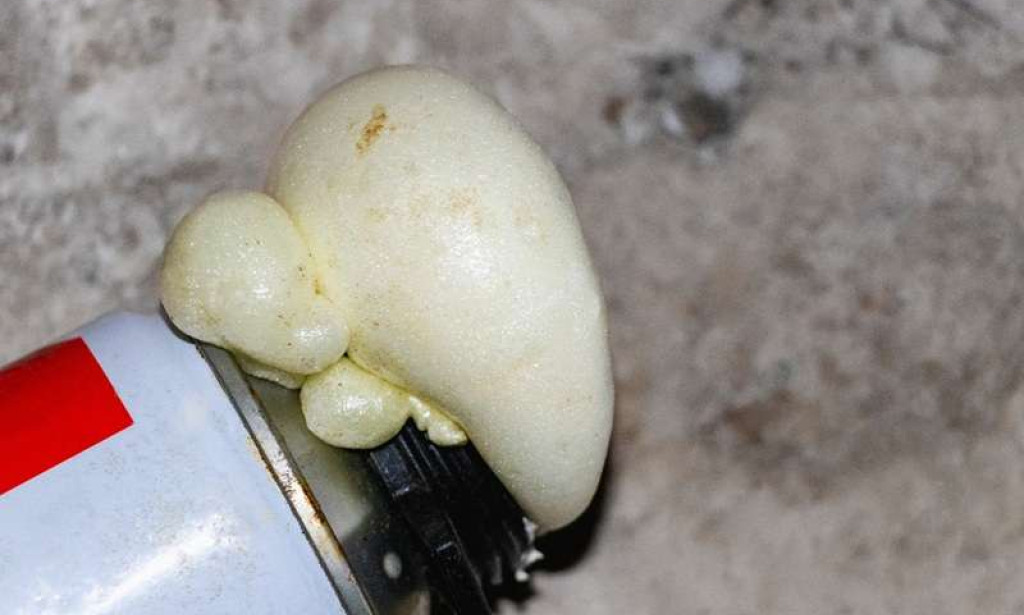
Foaming agents are additives used to create cell structures in plastics, specifically for manufacturing foamed plastics. Under specific conditions, they generate a large amount of gas, forming continuous or discontinuous pores, making the plastic a porous material with a gas-solid bond. This reduces the density of the plastic and enhances its sound and heat insulation properties. Based on the method of gas generation, foaming agents can be divided into two main categories: physical foaming agents and chemical foaming agents.
Foaming Agent Products List
| Catalog Number | Product Name |
|---|---|
| PS-RPA064 | EXP-60GE/F100 |
| PS-RPA065 | OBSH-75GE/F100 |
| PS-RPA066 | AC3000-75GE/F100 |
| PS-RPA067 | OBSH-80GS/F150 |
| PS-RPA068 | AC-80GS/F150 |
Physical Foaming Agents
Physical foaming agents primarily form cells in plastics through changes in their physical state.
Ideal physical foaming agents should meet the following conditions: inert, non-toxic; compatible with resin; have a low diffusion rate in the resin matrix; and readily volatilize when the resin reaction releases heat or when exposed to external heating.
Generally, physical foaming agents are classified into three categories: compressed gases; soluble solids; volatile liquids with a boiling point below 0°C. During processing, when pressure is released, compressed gas expands, liquids evaporate and expand upon heating, or dissolved soluble solids sublimate to produce gas.
There are many types of physical foaming agents, such as aliphatic hydrocarbons containing 5-7 carbon atoms, chlorinated hydrocarbons, chlorofluorocarbons, and carbon dioxide gas. Since the 1950s, chlorofluorocarbons (CFC-11) has been widely used as the preferred foaming agent for polyurethanes. However, due to its destructive effect on the atmospheric ozone layer, the use of CFC compounds must be prohibited to protect the Earth's ecological environment. For many years, domestic and foreign companies have been searching for and developing ideal alternatives. Therefore, the key to physical foaming agents lies in the development and application research of alternative products. To date, there are four main alternatives to the foaming agent CFC-11:

(1) Carbon Dioxide Foaming Agent
There are two types of carbon dioxide foaming agents: one is the reaction of isocyanate and water to produce carbon dioxide (water foaming) as the foaming agent, and the other is liquid carbon dioxide. Compared to CFC-11, water-based foaming agents have the advantages of zero ODP (ozone depletion potential), being non-toxic, safe, and having no recycling issues, requiring no investment in modifying foaming equipment. The disadvantages are higher viscosity of the polyol components during foaming, higher foaming pressure and temperature, and poorer adhesion between the foam and the substrate, especially for rigid foam products with high thermal conductivity. Currently, carbon dioxide foaming agents are mainly used in areas where insulation requirements are not high, such as heating pipe insulation, packaging foam, and agricultural foam.
(2) Hydrochlorofluorocarbon (HCFC) Foaming Agents
HCFC foaming agents contain hydrogen in their molecules, are chemically unstable, and are relatively easy to decompose. Therefore, their ODP is much lower than that of CFC-11, making HCFC a first-generation alternative to CFC foaming agents. Currently, the most mature commercially viable alternative to CFC-11 is HCFC-14LB. It exhibits good compatibility with polyols and isocyanates, allowing direct replacement of CFC-11 without additional equipment. Furthermore, it requires less CFC-11 to achieve the same density and similar physical properties in foams.
(3) Hydrocarbon Blowing Agents
The main hydrocarbon compound used in polyurethane blowing agents is cyclopentane. Cyclopentane-based rigid foam systems, in particular, possess advantages such as low thermal conductivity, anti-aging properties, and a zero ODP value, making them commonly used in refrigerators, cold storage facilities, and building insulation. In addition, using n-butane and isobutane as auxiliary foaming agents, the preparation of cyclopentane polyurethane rigid foam must address the following two issues: first, selecting explosion-proof equipment to address the flammability and explosiveness of cyclopentane; and second, employing measures such as using n-pentane and isobutane together with cyclopentane to improve foam flowability, thereby solving the problem of poor solubility of cyclopentane in polyether polyols.
(4) Hydrofluoric Alkane (HFC) Foaming Agents
HFC compounds have an ODP value of zero, making them an ideal substitute for CFC-11 in flexible PU foam production. Early HFC foaming agents were mainly HFC-134A and HFC-152A. These two foaming agents have low molecular weight and low boiling point, requiring less dosage than CFC-11 to achieve foams with the same density and similar physical properties, and exhibiting relatively stable performance. However, their drawbacks include high thermal conductivity and low solubility in general polyols, making the processing of combined polyethers containing HFC-134A and HFC-152A relatively difficult. Furthermore, foaming equipment is required to meet processing requirements.
Chemical Foaming Agents
Chemical foaming agents, also known as decomposition foaming agents, are uniformly dispersed in resins and decompose upon heating, producing at least one gas. They can be divided into inorganic and organic foaming agents. Organic foaming agents are the main foaming agents used in plastics, primarily azo, nitroso, and sulfonyl hydrazide compounds. Other foaming agent compositions release foaming gases through an endothermic reaction between two components.
Azodicarbonamide: An orange-yellow crystalline powder with a relative molecular mass of 116.1. Decomposition temperature: 190–205℃. Non-flammable. Gas emission: 200–300 ml/g, mainly nitrogen, carbon monoxide, and a small amount of carbon dioxide. Stable at room temperature and self-extinguishing, but prone to explosion in sealed containers above 120℃ due to the large amount of gas produced during decomposition.
Applications: Suitable for PE, PVC, PS, PP, ABS, etc. Its decomposition products are non-toxic, odorless, and non-polluting, and can produce pure white foam. This product has a high decomposition temperature, producing uniform and dense bubbles. It is suitable for various foamed products, including closed-cell foams, atmospheric or pressurized foams, thick or thin foams, such as PVC and plasticized paste foams, calendered and molded polyolefin foams, and foamed artificial leather.
2,2'-Azobisisobutyronitrile: 2,2'-Azobisisobutyronitrile is a white crystalline powder with a relative density of 1.1, volatile matter of 1%, methanol-insoluble matter of 0.1%, and a melting point >99℃. It is soluble in organic solvents such as methanol, ethanol, propanol, diethyl ether, and petroleum ether, but insoluble in water. The decomposition temperature is 98–110℃, releasing nitrogen gas at a rate of 130–155 ml/g. It decomposes slowly at room temperature and deteriorates significantly after several months of storage at 30℃; therefore, this product should be stored below 10℃.
Applications: Particularly suitable for PVC, and also for epoxy resins, PS, phenolic resins, and rubber. It has a low calorific value of approximately 125.6–167.5 J/mol, so even a dosage of up to 40% will not cause the product to scorch, resulting in a white product. Its low decomposition temperature allows it to be used in ordinary PVC.
Diisopropyl Azodicarbonate: An orange oily liquid with a relative molecular mass of 202, a freezing point of 2.4℃, and a boiling point of 75.5℃ (33.31 Pa). It remains stable at 240℃ when heated alone. It can be activated and its decomposition temperature lowered by using heat stabilizers such as lead salts, organotin compounds, cadmium soaps, and zinc soaps. Its gas evolution is 200–350 ml/g within the range of 100–200℃. It is soluble in common plasticizers.
Applications: Liquid foaming agent, suitable for PE, PP, PVC, etc. It disperses easily in plastics, producing a uniform and dense cell structure. The decomposition products are odorless, non-toxic, colorless, and non-polluting, allowing for the manufacture of very light-colored foamed plastics. By adjusting the formulation and processing conditions, closed-cell or open-cell foams can be obtained.
Diethyl Azodicarbonate: Red, odorless, oily liquid. Relative molecular mass 174.16. Decomposition temperature 110–120℃. No reaction to vulcanization accelerators. Metal salts (Cu, Fe, Co, Pb, Al, Sn, etc.) can promote decomposition.
Applications: Foaming agent for PVC and its copolymers, PE, polyester, epoxy resin, PS, and rubber. Dosage: 0.5–10%.
Azoaminobenzene: Yellow-brown crystals with a characteristic odor. Relative molecular mass: 197.24. Melting point: 96–98℃, decomposition temperature: 150℃. Gas evolution: 113 ml/g. Stable in storage. Easily crystallizes from the surface of products; decomposes at lower temperatures in acidic media; classified as a polluting foaming agent.
Applications: Can be used as a foaming agent for PVC and its copolymers, PS, PE, phenolic resin, epoxy resin, raw rubber and rubber, and silicone polymers. Dosage: 0.1–5%.
N,N-Dinitrospentamethylenetetramine (Foaming Agent H): Pale yellow crystalline powder, odorless, but has a formaldehyde odor when moist. Relative molecular mass: 186.18. Relative density: 1.45. Decomposition temperature: 190–205℃ (in air), 130–190℃. Gas evolution: 260–270 ml/g. Decomposition gas is mainly nitrogen, with small amounts of carbon monoxide and carbon dioxide. This product is flammable and will ignite rapidly upon contact with acids or acid fumes; therefore, it should not be stored with these substances and open flames should be strictly prohibited.
Applications: Primarily used as a foaming agent in PVC. Using organic acids such as salicylic acid, adipic acid, and phthalic acid, or urea as foaming aids can lower the decomposition temperature. High calorific value during decomposition, and the decomposition products have a foul odor.

You must be logged in to post a comment.