

Ultra-Low Phase Noise TCXO Solutions: High-Frequency Surface-Mount TCXOs from Xtaltq Technologies
Modern RF systems live and die by clock quality. Whether you design wireless infrastructure, microwave links, software-defined radios, or precision test equipment, your frequency source directly impacts spectral purity, modulation accuracy, and overall system stability. That is why engineers increasingly prioritize ultra-low phase noise TCXOs—temperature compensated crystal oscillators that maintain excellent frequency stability while delivering exceptionally clean output signals.
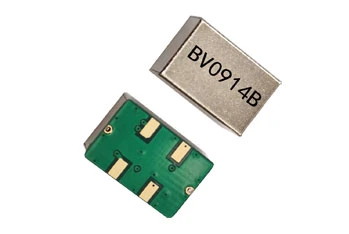
Xtaltq Technologies has introduced two new surface-mount TCXO 40mhz models built for high-frequency applications where phase noise performance matters as much as footprint and integration speed. These TCXOs target designers who need strong close-in phase noise at 1 kHz offset—an area that often determines real-world performance in PLLs, upconversion chains, and narrowband RF systems.
Below is a clear, design-focused overview of the new TCXO offerings, what their specifications mean, and where they fit best.
What Makes a Low Phase Noise TCXO Different from a Standard Oscillator?
A TCXO (Temperature Compensated Crystal Oscillator) uses compensation techniques to reduce frequency drift across temperature changes. Unlike a basic XO, a TCXO actively counteracts the crystal’s natural temperature-related frequency variation. That matters in environments where even small drift can cause:
carrier frequency error and reduced link margin
poor receiver sensitivity in narrowband systems
degraded clock performance in high-speed timing chains
longer lock times or unstable behavior in PLL designs
However, stability is only half the story. In many RF and timing designs, the more critical spec becomes phase noise.
Why Ultra-Low Phase Noise Matters (Especially at 1 kHz Offset)
Phase noise describes short-term frequency instability that spreads energy around the carrier. In practical terms, high phase noise can raise the noise floor, worsen adjacent-channel leakage, and reduce signal clarity. Close-in phase noise (such as at 1 kHz offset) is often the hardest to optimize and the most valuable when you need:
clean LO generation for RF up/down conversion
sharp filtering and low spurs in frequency synthesis
improved EVM (Error Vector Magnitude) in modulated signals
lower jitter contribution in sensitive clock paths
That is exactly why “-140 dBc/Hz @ 1 kHz” and “-145 dBc/Hz @ 1 kHz” are headline-worthy numbers for high-performance TCXOs.
New Surface-Mount TCXO Launch: Two Options for High-Frequency Designs
Xtaltq Technologies now offers two SMD TCXO products that focus on high frequency output and ultra-low phase noise performance. Each one serves a different integration need: one emphasizes a higher frequency in a larger package, while the other delivers even better close-in phase noise in a smaller footprint at a common RF-friendly frequency.
1) High-Frequency Ultra-Low Phase Noise TCXO (9.2 mm × 14.2 mm) — 100 MHz Output
For designs that demand a strong 100 MHz reference with clean spectral performance, Xtaltq’s first TCXO provides a compelling combination of frequency and close-in phase noise.
Key highlights
Package size: 9.2 mm × 14.2 mm (surface mount)
Output frequency: 100 MHz
Phase noise: -140 dBc/Hz @ 1 kHz
Where a 100 MHz low-noise TCXO fits best
A stable 100 MHz reference is widely used as a system backbone for:
frequency synthesizers and PLL reference inputs
RF signal generators and analyzers
high-performance clocks for data conversion chains
wireless infrastructure timing architectures
If your design multiplies a reference frequency up to RF or microwave bands, the reference phase noise can carry through the chain (depending on loop bandwidth and architecture). Starting with a low-noise 100 MHz source helps preserve spectral purity and reduce system-level compromises.
2) Compact Ultra-Low Phase Noise TCXO (7. mm × 5. mm) — 40 MHz Output
Designers who need premium phase noise performance in a tight layout will appreciate the second launch. This model pairs a compact footprint with an excellent close-in phase noise figure at 1 kHz offset.
Key highlights
Package size: 7. mm × 5. mm (surface mount)
Output frequency: 40 MHz
Phase noise: -145 dBc/Hz @ 1 kHz
Why 40 MHz remains a practical “sweet spot”
40 MHz is a highly useful reference frequency in RF and communication designs because it often aligns well with:
integer-N or fractional-N PLL planning
common clocking trees and timing subsystems
IF/reference schemes where 10/20/40 MHz families simplify division and multiplication
Achieving -145 dBc/Hz @ 1 kHz at 40 MHz in a small SMD footprint makes this part attractive for compact radios, modules, and dense mixed-signal PCBs where both performance and space matter.
Choosing Between the Two TCXOs: A Simple Engineering Comparison
When both options deliver strong ultra-low phase noise positioning, the selection becomes straightforward:
Choose the 100 MHz TCXO (9.2 × 14.2 mm) if you need:
a 100 MHz reference clock
high-frequency clocking without adding an extra multiplier stage
a design where footprint is less constrained than phase noise and frequency requirements
Choose the 40 MHz TCXO (7. × 5. mm) if you need:
a compact SMD package for space-limited layouts
best-in-class close-in phase noise at 1 kHz offset
a reference frequency that integrates easily with common PLL schemes
Best-Fit Applications for Ultra-Low Phase Noise TCXOs
These TCXO models align with system categories where close-in phase noise and temperature stability deliver immediate, measurable benefits.
Wireless infrastructure and RF front ends
Low phase noise improves spectral purity and can help meet demanding transmitter masks and receiver sensitivity requirements.
Microwave and frequency synthesis chains
Clean references reduce integrated phase noise and help maintain performance after multiplication—especially in narrow loop bandwidth designs.
Test and measurement instruments
Signal generators, analyzers, counters, and precision measurement devices benefit from low close-in phase noise and stable frequency over temperature.
High-performance industrial and aerospace electronics
Temperature variation is unavoidable in industrial cabinets and rugged deployments. A TCXO maintains clock integrity where a standard XO may drift.
Final Word: High-Frequency, Ultra-Low Phase Noise—Now in Surface-Mount TCXO Form
Xtaltq Technologies’ new SMD TCXO lineup gives designers two practical options for demanding clock and RF designs:
100 MHz TCXO (9.2 × 14.2 mm): -140 dBc/Hz @ 1 kHz
40 MHz TCXO (7. × 5. mm): -145 dBc/Hz @ 1 kHz
If you share your target frequency plan (PLL multiplication, offset requirements, and temperature range), I can help you determine which TCXO fits best and what supporting layout and filtering practices will preserve the phase noise performance on your PCB.

You must be logged in to post a comment.