
A lot has changed in search engine optimization over the past decade. There was a time when ranking well was largely about keywords, backlinks, and publishing new content regularly. Those factors still matter, but they are no longer enough on their own.
Today, search engines pay close attention to how websites perform in the real world. A page may have excellent content and strong authority, but if visitors encounter slow load times, server errors, or unexpected downtime, the overall experience suffers. Search engines notice those issues, and so do potential customers.
That shift has made website performance an important part of modern SEO. Businesses that invest in content, technical optimization, and link building are increasingly realizing that monitoring the health of their websites is just as important as creating them.
Whether you manage a small business website, an eCommerce store, a blog, or a growing SaaS platform, understanding website monitoring can help protect the SEO progress you’ve worked hard to achieve.
Modern SEO Is Built on More Than Rankings
Many website owners still think of SEO as a marketing activity. In reality, it has become a combination of marketing, technology, and user experience.
Google’s guidance consistently emphasizes the importance of creating helpful, reliable experiences for users. Factors such as page speed, mobile usability, security, and accessibility all contribute to how a website performs in search results.
The reason is simple. Search engines want to recommend websites that provide a positive experience. If a visitor clicks a search result and immediately encounters an error page or an unresponsive website, that experience reflects poorly on both the website and the search engine that recommended it.
This is why technical SEO has become such an important discipline. Technical SEO ensures that search engines can access, crawl, understand, and index website content effectively. Monitoring plays a direct role in maintaining that accessibility.
Why Website Downtime Matters for SEO
Most website owners have experienced downtime at some point. Sometimes it lasts only a few minutes. Other times, a hosting issue or configuration problem can keep a site offline for hours.
The immediate concern is usually lost visitors or missed sales. What many people overlook is the potential impact on search visibility.
Search engines regularly crawl websites to discover new content and update existing information. If crawlers repeatedly encounter server errors or unavailable pages, they may reduce crawling activity or delay indexing updates.
A single short outage is unlikely to create significant SEO problems. Repeated interruptions are a different story.
Imagine launching a new service page, publishing a major content campaign, or earning valuable backlinks from industry publications. If search engine bots encounter availability issues during important crawling periods, those opportunities may not deliver their full value.
Website availability is often viewed as an IT concern, but it also affects marketing performance. The two are more connected than many businesses realize.
User Experience and Search Performance Are Closely Linked
Website performance affects more than search engine crawlers. It directly influences visitor behavior.
When users arrive on a website, they expect it to load quickly and function properly. Even minor delays can create frustration. An unavailable page creates an even larger problem.
Research from Google has shown that users are far more likely to abandon pages that load slowly. While speed and uptime are separate issues, they contribute to the same outcome: visitor satisfaction.
A website that is consistently available builds trust. Visitors can access information when they need it, complete purchases without interruption, and interact with a brand confidently.
From an SEO perspective, maintaining that trust is important because positive user experiences support long-term engagement and business growth.
Why Monitoring Is Becoming a Standard SEO Practice
The challenge is that many website issues happen without warning.
A hosting outage can occur overnight. An SSL certificate may expire unexpectedly. DNS configuration errors can disrupt access. Third-party integrations sometimes create problems that are not immediately visible.
By the time a customer notices and reports an issue, valuable traffic may already have been lost.
This is where website monitoring becomes valuable.
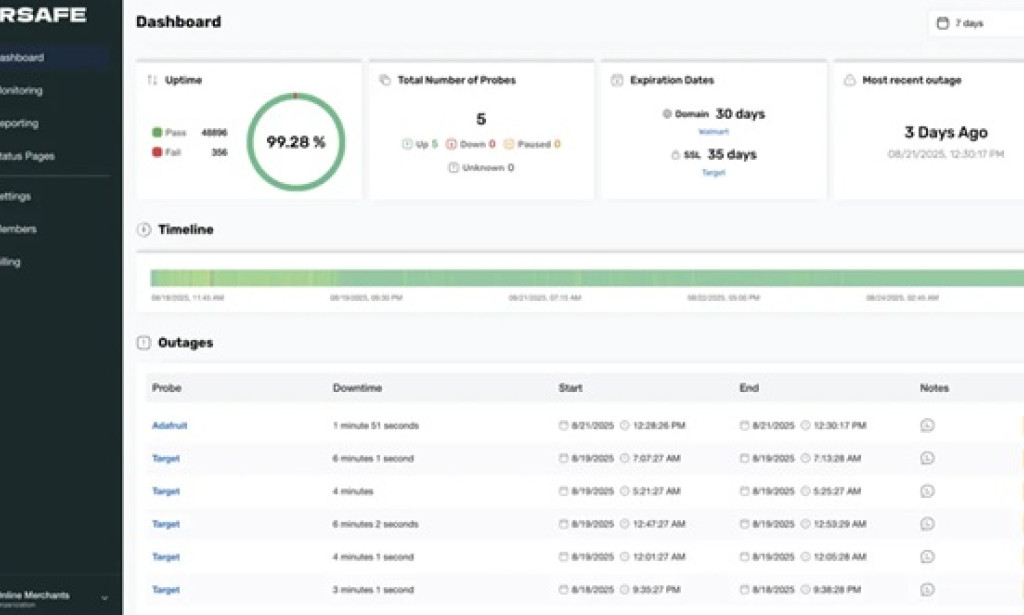
Rather than waiting for problems to surface, monitoring systems continuously check website availability and performance. When something changes, alerts can be delivered quickly so corrective action can begin.
For website owners who are just beginning to explore monitoring, a free website monitoring tool can provide an accessible way to understand how their site performs over time while identifying issues before they become larger problems.
What Website Monitoring Can Actually Track
Many people assume monitoring only checks whether a website is online. Modern monitoring solutions often go much further.
Uptime monitoring remains the foundation. It verifies whether a website is accessible from different locations and detects interruptions when they occur.
SSL monitoring helps identify certificate issues before browsers begin displaying security warnings to visitors.
Response time monitoring measures how quickly a website reacts to requests. While response time is not the same as page speed, it provides valuable insight into server health and infrastructure performance.
Domain monitoring can also help website owners avoid expiration-related problems that could suddenly take a website offline.
For businesses managing multiple digital assets, monitoring creates visibility into systems that are often difficult to track manually.
Website Monitoring Supports Technical SEO
Technical SEO focuses on ensuring that search engines can efficiently access and understand website content.
Monitoring supports this goal by helping maintain website stability.
A reliable website gives search engine crawlers consistent access to content. Important pages remain available. New content can be discovered and indexed more efficiently. Visitors experience fewer disruptions.
Monitoring does not replace SEO tools such as Google Search Console or Google Analytics. Instead, it complements them.
Search Console may show crawl errors after they occur. Analytics can reveal traffic declines after visitors have already been affected.
Monitoring adds another layer of visibility by helping identify potential issues as they happen.
This proactive approach can reduce the likelihood of small technical problems becoming larger SEO setbacks.
Building a Practical Monitoring Strategy
Website monitoring works best when it becomes part of a broader website management process.
Many successful organizations combine monitoring with regular SEO audits, performance testing, and security reviews.
Google Search Console remains one of the most valuable resources for understanding how Google views a website. Google PageSpeed Insights can help identify performance opportunities. Analytics platforms provide insight into user behavior and traffic trends.
Monitoring fills a different role. It focuses on operational reliability.
The most effective strategy is often a combination of these tools working together.
Businesses should pay particular attention to their highest-value pages. Service pages, lead generation pages, product categories, and checkout experiences deserve close monitoring because interruptions can have a direct impact on revenue and customer acquisition.
Reliability Is Becoming a Competitive Advantage
As websites become more sophisticated, expectations continue to rise.
Users expect instant access. Search engines expect consistent availability. Businesses expect digital channels to support growth around the clock.
Meeting those expectations requires more than publishing quality content.
It requires maintaining a website that remains accessible, secure, and dependable.
This is one reason why interest in website monitoring has grown steadily among marketers, developers, business owners, and SEO professionals. Reliability is no longer viewed as a purely technical metric. It has become part of the overall digital experience.
Companies such as Farsafe and other monitoring providers have helped increase awareness of this shift by making website monitoring more accessible to businesses of all sizes.
Final Thoughts
Modern SEO is built on a strong foundation of content quality, technical health, user experience, and website reliability.
A website that cannot be accessed consistently will struggle to maximize the value of its content, backlinks, and optimization efforts. Search visibility depends on more than what appears on a page. It also depends on whether users and search engines can reach that page when they need to.
For that reason, monitoring should be viewed as an important component of a long-term SEO strategy.
If you’re researching options for a free website monitoring tool, reviewing available monitoring platforms can help you better understand the features that support website reliability and long-term search performance.
FAQ
Does website downtime affect SEO rankings?
Short outages typically have little impact. However, repeated or prolonged downtime can interfere with crawling, indexing, and user experience, which may affect search visibility over time.
What is a free website monitoring tool?
A free website monitoring tool is a service that checks website availability and performance, then notifies users when issues occur. Common features include uptime monitoring, response time tracking, SSL monitoring, and alert notifications.
Can website monitoring improve Core Web Vitals?
Monitoring does not directly improve Core Web Vitals. It helps identify technical issues that may contribute to poor performance, allowing website owners to address problems more quickly.
How often should a website be monitored?
Continuous monitoring is generally recommended because website issues can occur at any time. Automated checks and alerts help identify problems as soon as they arise.
Is website monitoring important for small businesses?
Yes. Small businesses often rely heavily on their websites for leads, sales, and customer communication. Monitoring helps ensure that website issues are discovered before they result in lost opportunities.

You must be logged in to post a comment.