
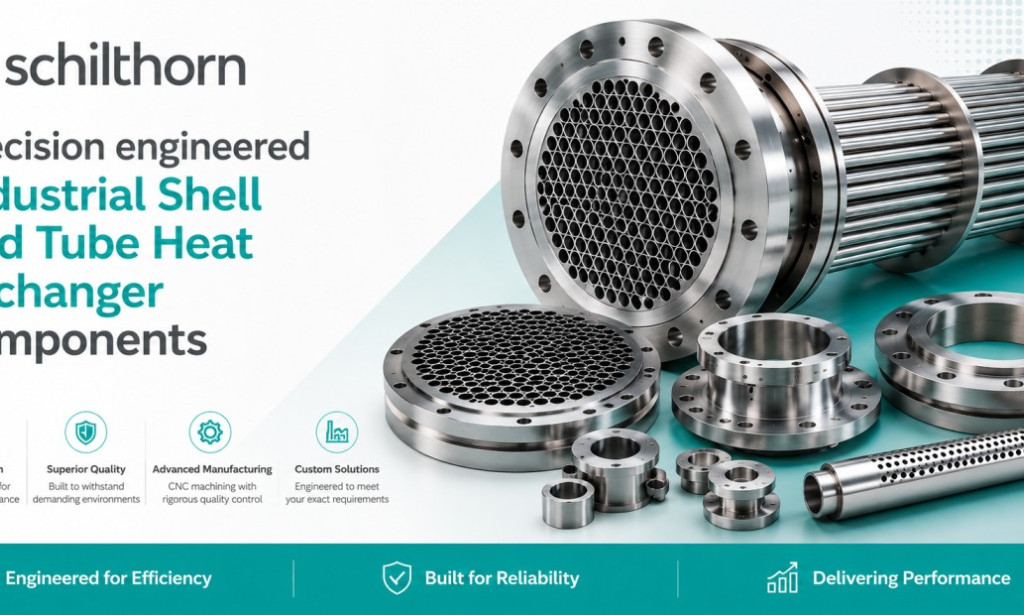
Industrial thermal management systems are evolving rapidly as industries seek higher efficiency, improved reliability, and greater sustainability. The Industrial Shell and Tube Heat Exchanger remains one of the most widely used heat transfer solutions across sectors such as oil & gas, power generation, chemical processing, HVAC, food processing, and industrial manufacturing.
As global industries embrace automation, digital manufacturing, and advanced materials, the future of heat exchanger technology is becoming increasingly sophisticated. Modern buyers are no longer looking solely for equipment; they seek engineered solutions that improve operational performance, reduce energy consumption, and support long-term reliability.
For OEMs, EPC contractors, and procurement professionals, understanding upcoming trends in heat exchanger technology is essential when selecting a reliable Shell and Tube Heat Exchanger Manufacturer capable of meeting future industry demands.
Evolution of Industrial Shell and Tube Heat Exchanger Technology
The Industrial Shell and Tube Heat Exchanger has been a cornerstone of industrial process systems for decades. Traditionally designed to provide efficient heat transfer between two fluids, these systems have evolved significantly in terms of design, materials, manufacturing precision, and performance optimization.
Early heat exchangers were primarily built for functionality. Today, manufacturers focus on:
-
Higher thermal efficiency
-
Reduced pressure drop
-
Improved corrosion resistance
-
Enhanced service life
-
Easier maintenance
-
Lower lifecycle costs
The integration of computational engineering tools and precision manufacturing techniques has transformed heat exchangers from standard products into highly optimized engineering assets.
Key Future Trends in Industrial Heat Exchanger Design
Digital Engineering and Simulation
Modern Industrial Heat Exchanger Design increasingly relies on advanced simulation technologies such as:
-
Computational Fluid Dynamics (CFD)
-
Finite Element Analysis (FEA)
-
Thermal performance modeling
-
Flow optimization software
These tools allow engineers to evaluate performance before production begins, minimizing design risks while maximizing efficiency.
Compact High-Performance Designs
Industrial facilities continuously seek ways to maximize productivity within limited space. Future heat exchanger designs are expected to feature:
-
Higher heat transfer rates
-
Compact footprints
-
Optimized tube configurations
-
Enhanced flow distribution systems
These advancements enable greater performance without increasing plant space requirements.
Data-Driven Design Optimization
Artificial intelligence and machine learning are beginning to influence Industrial Heat Exchanger Design by analyzing operating conditions and recommending optimized configurations for specific applications.
Role of Automation and Smart Manufacturing
Industry 4.0 Integration
Manufacturing facilities worldwide are adopting Industry 4.0 principles to improve productivity and quality consistency.
Smart manufacturing technologies include:
-
Automated CNC machining
-
Robotic welding systems
-
Real-time process monitoring
-
Digital quality inspection
-
Predictive maintenance systems
These technologies support the production of highly reliable Precision Engineered Heat Exchangers.
Digital Traceability
Future manufacturing environments will increasingly provide complete traceability throughout production.
Benefits include:
-
Enhanced quality assurance
-
Better compliance documentation
-
Faster root-cause analysis
-
Improved customer confidence
Digital manufacturing records are becoming particularly important for aerospace, power generation, and critical process industries.
Predictive Manufacturing
Advanced analytics now enable manufacturers to predict potential production deviations before they occur, improving consistency and reducing waste.
Advanced Materials and Corrosion Resistance
Material Innovation
One of the most significant developments in heat exchanger technology involves advanced material selection.
Industries operating in aggressive environments require superior corrosion resistance and durability.
Common advanced materials include:
|
Material |
Benefits |
|
Stainless Steel |
Excellent corrosion resistance |
|
Duplex Stainless Steel |
High strength and durability |
|
Titanium |
Outstanding seawater resistance |
|
Nickel Alloys |
Excellent performance in extreme environments |
|
Copper Alloys |
Superior thermal conductivity |
Surface Engineering Technologies
Future heat exchanger manufacturing will increasingly utilize:
-
Advanced coatings
-
Surface hardening
-
Corrosion-resistant treatments
-
Wear-resistant finishes
These technologies improve equipment lifespan while reducing maintenance costs.
Material Optimization Through Engineering
Modern Industrial Heat Exchanger Design focuses on selecting materials that balance performance, manufacturability, and cost-effectiveness.
Energy Efficiency and Sustainability
Rising Demand for Energy-Efficient Systems
Energy efficiency remains one of the strongest drivers shaping the future of the Industrial Shell and Tube Heat Exchanger market.
Industrial operators are under increasing pressure to:
-
Reduce carbon emissions
-
Lower energy consumption
-
Improve process efficiency
-
Meet sustainability goals
Heat Recovery Systems
Future heat exchangers will play an increasingly important role in waste heat recovery initiatives.
Applications include:
-
Process heat recovery
-
Boiler efficiency improvement
-
HVAC optimization
-
Industrial energy recycling
Sustainable Manufacturing Practices
Leading manufacturers are investing in:
-
Resource-efficient production
-
Waste reduction programs
-
Renewable energy integration
-
Sustainable supply chains
These practices align with growing environmental expectations from global customers.
Customization and Precision Engineering
Increasing Demand for Custom Heat Exchanger Solutions
Every industrial process presents unique thermal challenges.
As a result, demand continues to rise for Custom Heat Exchanger Solutions tailored to specific operating conditions.
Customization factors include:
-
Process temperature
-
Operating pressure
-
Fluid characteristics
-
Space constraints
-
Industry-specific standards
Precision Manufacturing Capabilities
Modern buyers increasingly expect tight tolerances and repeatable quality.
This has accelerated demand for:
-
High-precision CNC machining
-
Advanced fabrication
-
Precision drilling
-
Accurate tube sheet manufacturing
-
Tight dimensional control
These capabilities are critical for producing reliable Precision Engineered Heat Exchangers.
Engineering Collaboration
Future manufacturing partnerships will involve closer collaboration between customers and engineering teams throughout the design and production process.
Why Indian Manufacturers Are Gaining Global Attention
Competitive Engineering Excellence
The global market increasingly recognizes the strengths of Heat Exchanger Manufacturing India.
Indian manufacturers offer:
-
Strong engineering expertise
-
Advanced manufacturing capabilities
-
Competitive production costs
-
Skilled technical workforce
-
International quality standards
Expanding Export Capabilities
India has emerged as a preferred sourcing destination for industrial equipment due to its ability to deliver quality products while maintaining cost competitiveness.
Many international buyers now rely on Indian suppliers for:
-
Heat exchanger components
-
Precision-machined parts
-
Fabricated assemblies
-
Complete thermal systems
Quality-Driven Manufacturing
Leading Indian companies have invested heavily in:
-
CNC machining technology
-
Inspection equipment
-
Process controls
-
International certifications
As a result, global confidence in Indian manufacturing continues to grow.
Why Choose Schilthorn Precision Engineering Pvt. Ltd.
Selecting the right manufacturing partner is critical for long-term operational success.
Schilthorn Precision Engineering Pvt. Ltd. combines advanced manufacturing expertise with an engineering-driven approach to deliver reliable solutions for demanding industries.
What Sets Schilthorn Apart
Advanced CNC Machining Capabilities
High-precision machining enables consistent production of critical heat exchanger components with tight dimensional accuracy.
Engineering-Focused Manufacturing
Rather than simply producing components, Schilthorn works closely with customers to optimize manufacturability, performance, and cost efficiency.
Custom Heat Exchanger Solutions
The company supports customer-specific requirements through tailored manufacturing approaches designed to meet unique operational challenges.
Quality Assurance
Robust inspection processes and stringent quality controls help ensure consistency across prototype and production volumes.
Global Supply Potential
With experience serving industries where precision is critical, Schilthorn is positioned as a reliable Shell and Tube Heat Exchanger Manufacturer and precision engineering partner for domestic and international customers.
Conclusion
The future of the Industrial Shell and Tube Heat Exchanger industry will be shaped by automation, advanced materials, digital engineering, sustainability initiatives, and increasing demand for customization. Companies that invest in innovative manufacturing technologies and precision engineering capabilities will be best positioned to support evolving industrial requirements.
As industries continue to prioritize efficiency, reliability, and long-term performance, demand for Precision Engineered Heat Exchangers, advanced Industrial Heat Exchanger Design, and tailored Custom Heat Exchanger Solutions will continue to grow.
For organizations seeking a trusted manufacturing partner, Schilthorn Precision Engineering Pvt. Ltd. delivers the engineering expertise, manufacturing precision, and quality-focused approach required for modern industrial applications.
Contact Schilthorn Precision Engineering Pvt. Ltd.
Looking for a reliable partner for heat exchanger components, precision machining, or custom manufacturing requirements?
Contact Schilthorn Precision Engineering Pvt. Ltd. today to discuss your project requirements and discover how precision engineering can improve your operational performance.

You must be logged in to post a comment.