
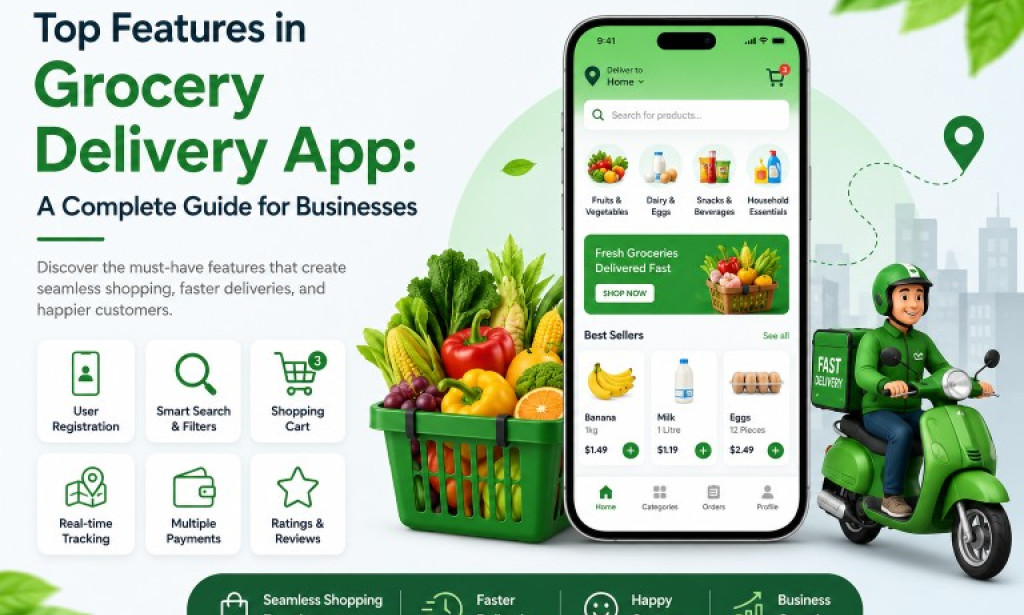
The grocery shopping industry has undergone a massive transformation over the past few years. Consumers now expect groceries to be delivered to their doorstep quickly, conveniently, and securely. As a result, grocery delivery apps have become an essential digital solution for supermarkets, retail chains, local grocery stores, and startups looking to meet changing customer demands.
However, building a successful grocery delivery platform requires more than just listing products online. The right set of features determines whether users will continue using the app or switch to competitors. From seamless ordering experiences to real-time delivery tracking, every feature plays a critical role in customer satisfaction and operational efficiency.
In this guide, we'll explore the core features in grocery delivery app development and understand why they are essential for business success.
Why Features Matter in a Grocery Delivery App
A grocery delivery app serves multiple stakeholders, including customers, delivery personnel, store managers, and business administrators. Each group requires dedicated functionalities to ensure smooth operations.
Well-designed features help businesses:
- Improve customer retention
- Increase order frequency
- Streamline inventory management
- Enhance delivery efficiency
- Generate valuable business insights
- Improve overall user experience
Let's explore the essential features required for each user segment.
Core Customer App Features
1. User Registration and Login
The registration process should be simple and secure. Users should be able to sign up using:
- Email address
- Mobile number
- Social media accounts
- Google or Apple login
Quick onboarding reduces drop-off rates and encourages app adoption.
2. User Profile Management
Customers should be able to manage their personal information, including:
- Name and contact details
- Saved addresses
- Payment methods
- Order preferences
- Delivery instructions
A personalized profile improves convenience and user engagement.
3. Product Search and Smart Filtering
One of the most important features in a grocery app is a powerful search function.
Users should be able to search products by:
- Product name
- Brand
- Category
- Price range
- Availability
- Popularity
Advanced filters help customers quickly find what they need.
4. Product Categories and Navigation
Proper categorization improves browsing experience.
Common grocery categories include:
- Fruits and vegetables
- Dairy products
- Beverages
- Snacks
- Household essentials
- Personal care items
Clear navigation helps users shop efficiently.
5. Shopping Cart Management
The shopping cart should allow users to:
- Add or remove products
- Update quantities
- Save items for later
- View estimated totals
- Apply coupons
A user-friendly cart directly impacts conversion rates.
6. Wishlist and Favorites
Customers often purchase the same products repeatedly.
Wishlist functionality allows users to:
- Save preferred items
- Create shopping lists
- Reorder frequently purchased products
This feature enhances convenience and encourages repeat purchases.
7. Real-Time Order Tracking
Modern consumers expect visibility into their deliveries.
Real-time tracking enables users to:
- Monitor order status
- View delivery progress
- Track delivery agents on a map
- Receive estimated arrival times
Transparency builds customer trust.
8. Multiple Payment Options
Offering flexible payment methods increases checkout completion rates.
Common payment options include:
- Credit cards
- Debit cards
- UPI payments
- Mobile wallets
- Net banking
- Cash on delivery
Secure payment gateways are essential for customer confidence.
9. Push Notifications
Notifications keep users informed and engaged.
Examples include:
- Order confirmations
- Delivery updates
- Promotional offers
- New product launches
- Restocked items
Timely communication improves customer experience.
10. Ratings and Reviews
Customers rely heavily on reviews before making purchasing decisions.
The review system allows users to:
- Rate products
- Leave feedback
- Share shopping experiences
Reviews also help businesses improve product quality and service standards.
11. Order History and Quick Reordering
Order history simplifies repeat purchases.
Users can:
- View previous orders
- Reorder with one click
- Download invoices
- Track spending patterns
This feature significantly increases customer retention.
Essential Delivery Partner App Features
Delivery personnel play a critical role in grocery fulfillment. Their app should focus on efficiency and productivity.
1. Delivery Partner Registration
Drivers should be able to register and submit:
- Personal information
- Vehicle details
- Identity verification documents
- Banking information
This ensures compliance and security.
2. Order Assignment System
The system should automatically assign deliveries based on:
- Location proximity
- Availability
- Delivery capacity
- Performance ratings
Automated allocation improves delivery speed.
3. Route Optimization
Route optimization helps delivery agents choose the fastest path.
Benefits include:
- Reduced fuel costs
- Faster deliveries
- Better productivity
- Improved customer satisfaction
4. GPS Navigation Integration
Integrated navigation helps drivers reach destinations efficiently.
Popular integrations include:
- Google Maps
- Apple Maps
- In-app navigation systems
5. Delivery Status Updates
Drivers should be able to update order status in real time.
Typical statuses include:
- Accepted
- Picked up
- Out for delivery
- Delivered
This keeps customers informed throughout the journey.
6. Earnings Dashboard
Delivery personnel should have access to:
- Daily earnings
- Weekly earnings
- Incentives
- Bonuses
- Completed deliveries
Transparency motivates performance.
Key Admin Panel Features
The admin dashboard acts as the control center for the entire grocery delivery operation.
1. Dashboard and Analytics
Administrators need access to real-time business metrics such as:
- Revenue
- Orders
- Customer growth
- Delivery performance
- Inventory trends
Analytics support data-driven decision-making.
2. User Management
Admins should be able to manage:
- Customer accounts
- Delivery partners
- Vendors
- Support requests
Effective management ensures smooth operations.
3. Product and Inventory Management
Inventory control is crucial for grocery businesses.
Features include:
- Product listing
- Stock monitoring
- Inventory alerts
- Bulk product uploads
- Category management
Accurate inventory prevents stock-related issues.
4. Order Management
Administrators need complete visibility into all orders.
Capabilities include:
- Order tracking
- Status updates
- Cancellation handling
- Refund processing
Efficient order management improves customer satisfaction.
5. Delivery Management
Admins should be able to:
- Monitor delivery agents
- Assign orders manually
- Track delivery performance
- Resolve delivery issues
This ensures efficient logistics operations.
6. Coupon and Promotion Management
Marketing campaigns can be managed through:
- Discount codes
- Referral programs
- Seasonal offers
- Loyalty rewards
Promotions help increase customer acquisition and retention.
7. Payment Management
The admin panel should provide visibility into:
- Transactions
- Refunds
- Revenue reports
- Payment settlements
Financial transparency is essential for business operations.
8. Reports and Insights
Detailed reports help identify opportunities for growth.
Important reports include:
- Sales reports
- Customer reports
- Inventory reports
- Delivery performance reports
These insights support strategic planning.
Advanced Features for Modern Grocery Delivery Apps
AI-Based Product Recommendations
Artificial intelligence can analyze customer behavior and suggest relevant products.
Benefits include:
- Higher order values
- Better personalization
- Increased engagement
Voice Search
Voice-enabled shopping improves accessibility and convenience.
Customers can simply speak product names instead of typing them.
Subscription-Based Deliveries
Subscription models allow customers to schedule recurring deliveries for:
- Milk
- Bread
- Fruits
- Household essentials
This generates predictable revenue.
Contactless Delivery
Contactless delivery has become increasingly important.
Features may include:
- Digital proof of delivery
- Photo confirmation
- Contactless payment
Multi-Vendor Marketplace Support
Businesses can onboard multiple stores and vendors within a single platform.
Advantages include:
- Larger product catalog
- Increased revenue opportunities
- Better customer choice
Loyalty and Rewards Programs
Reward systems encourage repeat purchases through:
- Cashback offers
- Reward points
- Exclusive discounts
In-App Chat Support
Real-time support helps resolve issues quickly.
Users can communicate directly with:
- Customer support teams
- Delivery partners
- Store representatives
Benefits of Including the Right Features
A feature-rich grocery delivery app offers numerous advantages:
Enhanced Customer Experience
Easy navigation and smooth ordering create a positive shopping journey.
Increased Customer Retention
Features like wishlists, subscriptions, and loyalty programs encourage repeat business.
Operational Efficiency
Automation reduces manual work and improves overall performance.
Higher Revenue
Personalized recommendations and promotional tools help increase average order values.
Competitive Advantage
Advanced features differentiate your app from competitors in a crowded market.
How to Prioritize Features Based on Your Business Model
Not every grocery business requires the same feature set.
For Startups
Focus on:
- Registration
- Product catalog
- Cart
- Payments
- Order tracking
For Established Retailers
Include:
- Inventory management
- Loyalty programs
- Analytics
- Customer segmentation
For Multi-Vendor Platforms
Prioritize:
- Vendor dashboards
- Commission management
- Multi-store support
- Vendor analytics
Choosing the right features helps optimize development costs and launch timelines.
Future Trends in Grocery Delivery App Development
The future of grocery delivery technology will likely include:
- AI-powered shopping assistants
- Predictive ordering systems
- Hyperlocal delivery networks
- Drone deliveries
- Smart inventory forecasting
- Advanced personalization engines
Businesses that adopt these innovations early can gain a significant market advantage.
Conclusion
The success of a grocery delivery platform largely depends on the features it offers. From intuitive customer experiences and efficient delivery management to powerful admin controls, every component contributes to operational success and customer satisfaction.
Businesses planning to invest in grocery delivery app development should focus on implementing essential features first and then gradually introduce advanced capabilities such as AI recommendations, subscription services, and loyalty programs.
By understanding the core features in grocery delivery app development, businesses can create scalable, user-friendly platforms that meet evolving consumer expectations and drive long-term growth.
Frequently Asked Questions
What are the core features in a grocery delivery app?
Core features include user registration, product search, shopping cart, secure payments, real-time order tracking, delivery management, and admin dashboards.
Why is real-time tracking important in grocery delivery apps?
Real-time tracking improves transparency, enhances customer trust, and provides accurate delivery updates.
What advanced features can improve a grocery delivery app?
AI recommendations, voice search, subscription deliveries, loyalty programs, and multi-vendor marketplace support are popular advanced features.
How do grocery delivery apps improve customer experience?
They offer convenience, faster shopping, multiple payment options, personalized recommendations, and doorstep delivery services.
Can a grocery delivery app support multiple vendors?
Yes. Multi-vendor functionality allows multiple stores to operate on a single platform while managing products, orders, and payments independently.

You must be logged in to post a comment.