
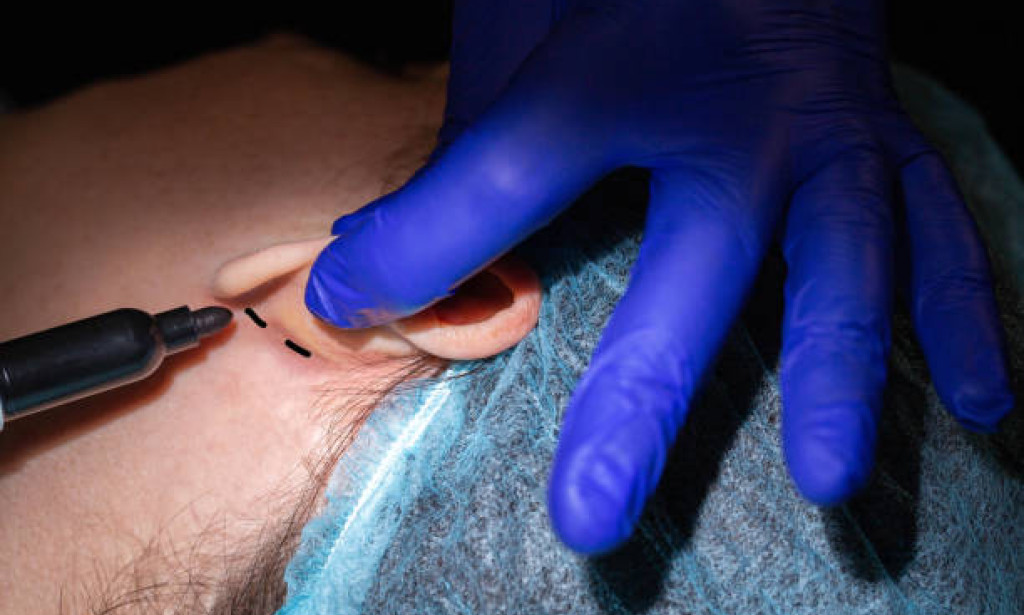
Prominent or protruding ears are one of the most common reasons people seek ear cosmetic surgery. For many individuals, ears that stick out more than usual have been a source of self-consciousness since childhood, affecting social interactions, confidence, and even professional opportunities. Ear Cosmetic Surgery in Dubai for Prominent Ears offers a permanent solution to this concern, providing natural-looking results that transform appearance and boost confidence. This comprehensive guide explores everything you need to know about correcting prominent ears, from understanding the causes and impact to learning about surgical techniques, recovery, and expected outcomes. Whether you're considering the procedure for yourself or a child, this information will help you make an informed decision about this life-changing treatment.
2. Understanding Prominent Ears
Prominent ears are a common anatomical variation that affects people of all ages.
What Are Prominent Ears?
Prominent ears, sometimes called "bat ears" or "protruding ears," are ears that stick out more than 2-3 centimeters from the head. While the exact measurement varies, the defining characteristic is that the ears are noticeably more visible from the front view than usual.
How Prominent Ears Differ from Normal Ears
In most people, the ears are positioned close to the head, with the ear and head forming an angle of about 15-30 degrees. In people with prominent ears, this angle is greater, causing the ears to stick out more. This condition can affect one or both ears.
The Antihelical Fold
The antihelical fold is a natural fold in the cartilage that pulls the ear closer to the head. In many people with prominent ears, this fold is underdeveloped or absent. Without this fold, the ear protrudes more than usual.
The Conchal Bowl
The conchal bowl is the bowl-shaped part of the ear. In some people with prominent ears, the conchal bowl is overly deep, contributing to the protrusion. Surgical correction may address both the antihelical fold and the conchal bowl.
3. Causes of Prominent Ears
Understanding the causes of prominent ears helps explain treatment options.
Genetic Factors
Prominent ears are often inherited. If a parent has prominent ears, their children are more likely to have them as well. The condition results from the way the ear cartilage develops, which is influenced by genetics.
Developmental Factors
The ears develop during the early months of life. By the time a child is born, the basic shape of the ears is established. While the ears continue to grow, their basic structure remains the same. Any developmental variation that affects the antihelical fold or the conchal bowl can result in prominent ears.
Anatomical Variations
Prominent ears can result from several anatomical variations. The antihelical fold may be absent or underdeveloped. The conchal bowl may be overly deep. The cartilage may be simply more flexible than usual. Often, a combination of these factors is present.
Asymmetrical Prominence
In some cases, one ear may be more prominent than the other. This asymmetry can be more noticeable than mild prominence in both ears. Surgical correction can address asymmetry, creating better balance.
4. When Prominent Ears Become a Concern
Prominent ears can affect people of all ages, but the impact often varies.
During Childhood
Children with prominent ears may experience teasing or bullying at school. This can lead to social anxiety, reduced self-esteem, and reluctance to participate in activities where ears are visible. Addressing the concern early can prevent these negative experiences.
During Adolescence
Teenagers are often acutely aware of their appearance and may feel self-conscious about prominent ears. This self-consciousness can affect social relationships, participation in activities, and overall well-being.
During Adulthood
Many adults have been self-conscious about their ears for years or decades. They may have developed habits to hide their ears, such as specific hairstyles. Addressing the concern at any age can provide relief from long-standing self-consciousness.
When Surgery Is Considered
Surgery for prominent ears is typically considered when the condition is causing significant self-consciousness or social anxiety. Both children and adults can benefit from the procedure.
5. Surgical Solutions for Prominent Ears
Several surgical techniques address prominent ears.
Cartilage Reshaping
The most common technique for correcting prominent ears involves reshaping the cartilage. The surgeon makes incisions behind the ears and uses sutures to create a new antihelical fold. This fold pulls the ear closer to the head, reducing protrusion.
Conchal Reduction
If the conchal bowl is overly deep, the surgeon may reduce it. This can be done through removing small wedges of cartilage or through suture techniques that tighten the area. Conchal reduction brings the ear closer to the head.
Combined Approach
Often, a combination of techniques is used. The surgeon may create a new antihelical fold while also reducing the conchal bowl. This combined approach achieves the most effective correction.
The Role of Sutures
Sutures play a key role in prominent ear correction. They hold the cartilage in its new position while it heals. Both permanent and dissolvable sutures may be used.
6. The Procedure for Prominent Ear Correction
The surgery to correct prominent ears is well-established and effective.
Anesthesia
Adults typically receive local anesthesia with sedation. Children usually receive general anesthesia. The choice depends on the patient's age and the surgeon's recommendation.
Incision Placement
Incisions are placed behind the ears within the natural crease. This placement ensures any scars are hidden. The incisions allow the surgeon to access the cartilage for reshaping.
The Surgical Process
The surgeon reshapes the cartilage through the incisions. Sutures are placed to create new folds and hold the cartilage in position. Once the desired correction is achieved, the incisions are closed with fine sutures.
Duration
The procedure typically takes one to two hours. This makes it a relatively short procedure that can be performed on an outpatient basis.
7. Recovery After Prominent Ear Surgery
Understanding recovery helps you prepare for the process.
First 48 Hours
You'll experience some swelling, bruising, and mild discomfort. Your ears will be wrapped in a protective dressing. Keep your head elevated and avoid any strenuous activity. Take prescribed pain medication as needed.
First Week
The dressing is typically removed after a few days. You'll see your ears for the first time, though swelling and bruising will still be present. Sutures are usually removed at the one-week mark.
Second Week
Most patients return to work or school during the second week. You'll continue wearing a headband at night to protect your ears during sleep. Swelling and bruising continue to subside.
Weeks 3-6
Swelling continues to resolve, and the final shape becomes more apparent. You can gradually resume normal activities, though contact sports should still be avoided.
Full Recovery
Full recovery takes about six weeks. By this time, the swelling has resolved, and the final results are visible.
8. Results and What to Expect
Understanding the results helps you appreciate the value of the procedure.
Natural Positioning
The goal of prominent ear correction is to position the ears naturally. They should be close enough to the head to be balanced but not so close that they look artificial. The result should look like the ears naturally belong.
Improved Profile
One of the most noticeable improvements is in the profile. With ears positioned closer to the head, the profile becomes smoother and more refined.
Enhanced Confidence
Many patients report a significant boost in confidence after surgery. They no longer feel self-conscious about their ears and can wear any hairstyle they choose.
Permanence of Results
The results are permanent. The reshaped cartilage maintains its new position, providing lasting correction.
9. Prominent Ear Correction in Children
Children are excellent candidates for prominent ear correction.
The Ideal Age
The ideal age for correction is around five to six years old. At this age, the ears have reached nearly adult size, and the child can benefit from the surgery before starting school.
Benefits of Early Correction
Early correction can prevent teasing and social anxiety. Children who undergo surgery at a young age can enter school with confidence. They can participate fully in activities without worrying about their ears.
Preparation for Surgery
Preparing a child for surgery is important. Explain the procedure in age-appropriate terms. Reassure them that the surgery will help their ears look more balanced. Address any concerns they may have.
Recovery for Children
Children typically recover quickly. They should wear the headband as directed and avoid contact sports for six weeks. Parents play an important role in ensuring their child follows all aftercare instructions.
10. Prominent Ear Correction in Adults
Adults also benefit from prominent ear correction.
When Adults Seek Correction
Adults may have been self-conscious about their ears for years. Some decide to address the concern for personal satisfaction. Others want to improve their professional image or feel more confident in social situations.
Adult Considerations
Adults typically receive local anesthesia with sedation. Recovery is similar to that of children, though adults may need to plan time off work. The results are equally satisfying.
The Transformative Effect
For adults who have been self-conscious for decades, the surgery can be truly transformative. The freedom from self-consciousness can affect every aspect of life.
Embracing the Change
Many adults wish they had undergone the procedure earlier. The surgery provides lasting correction and confidence that can be enjoyed for a lifetime.
11. Frequently Asked Questions
1. What causes prominent ears?
Prominent ears are usually caused by an underdeveloped antihelical fold or an overly deep conchal bowl. The condition is often inherited.
2. At what age can prominent ears be corrected?
The ideal age is around five to six years old, but correction can be performed at any age.
3. Will prominent ears come back after surgery?
No, the results are permanent. The reshaped cartilage maintains its new position.
4. Is prominent ear correction painful?
Patients experience some discomfort after surgery, which is manageable with prescribed pain medication.
5. How long is the recovery after prominent ear surgery?
Most patients return to normal activities within one to two weeks, though contact sports should be avoided for six weeks.
6. Can adults have prominent ear correction?
Yes, adults can benefit from the procedure at any age.
7. Will prominent ear correction affect my hearing?
No, the surgery is performed on the outer ear and doesn't affect hearing.
8. How natural will the results look?
With an experienced surgeon, the results look natural and balanced.
9. Can prominent ears be corrected without surgery?
Non-surgical options are available for infants, but surgery is the only permanent solution for older children and adults.
10. What is the success rate of prominent ear correction?
Success rates are high when the surgery is performed by an experienced surgeon.
12. Conclusion
Ear cosmetic surgery in Dubai for prominent ears offers a permanent solution to a common concern. Whether you're considering the procedure for a child who is being teased or for yourself after years of self-consciousness, the results can be truly transformative.
The surgery is well-established, safe, and effective. With an experienced surgeon, the results look natural and balanced, enhancing facial harmony and boosting confidence. The permanent nature of the correction ensures lasting benefits.
If you or a loved one has been self-conscious about prominent ears, ear cosmetic surgery may be the solution you've been seeking. The procedure can provide freedom from self-consciousness and confidence that lasts a lifetime.
When you're ready to explore correction for prominent ears, Tajmeels Clinic in Dubai offers the expertise and care you need. Their experienced surgeons understand the nuances of ear anatomy and can achieve natural, balanced results.
Contact Tajmeels Clinic today to schedule your consultation and discover how ear cosmetic surgery can transform your appearance and confidence.

You must be logged in to post a comment.