
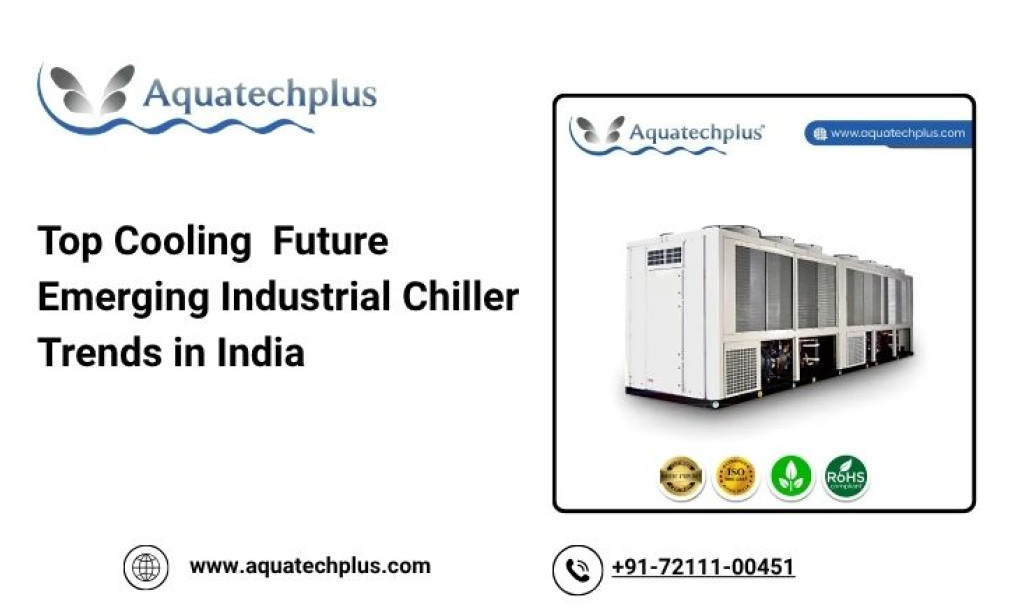
A plant manager in Gujarat rejected a batch last year—not because the machines failed, but because the Chillers were drawing 11% more power than quoted under peak load. That gap erased his margin for the quarter. That’s the reality buyers are dealing with in 2026. Energy costs are volatile, compliance pressure is rising, and a poorly specified system doesn’t just underperform—it compounds losses every hour it runs.
And yet, many buyers still treat chillers like a commodity purchase.
Where Industrial Chillers Are Actually Changing in 2026
The Shift Toward Application-Specific Designs
Most buyers still ask for “standard” Air Cooled Chillers. Which sounds efficient—until you realise process loads in plastics, pharma, and laser cutting vary wildly. A generic unit often overshoots or cycles too aggressively.
That cycling? It’s what quietly damages compressors within 18–24 months.
Screw vs Scroll: The Capacity Reality Buyers Ignore
Here’s where Screw Chiller systems are gaining ground. Once you cross ~80 TR, screw compressors aren’t just an option—they’re stability insurance.
Which means if a supplier is still pushing scroll systems for high-load continuous operations, they’re either clearing stock or avoiding engineering complexity.
Energy Efficiency Isn’t Just IPLV Anymore
Most datasheets highlight IPLV (Integrated Part Load Value). But in India’s climate—especially regions touching 42°C ambient—that number becomes misleading.
Nobody tells you this upfront: field efficiency can drop 9–14% compared to lab-rated IPLV if condenser sizing is compromised.
The Detail Buyers Skip: Pump Integration
A proper Chiller Turnkey Contractor integrates pumps, piping, and controls into one logic system. Yet many buyers source pumps separately to “save cost.”
That decision often leads to mismatched flow rates and unstable pressure—problems that don’t show up during installation, only during production peaks.
What You Should Actually Evaluate Before Finalizing a Supplier
1. Load Calculation Transparency
Ask how they calculated TR requirements.
Bad answer: “Based on your industry standard.”
That means guesswork. Real suppliers will show heat load breakdowns—machine load, ambient load, and process variability.
2. Compressor Sourcing
Ask where the compressors are coming from.
Bad answer: “Imported components.”
That’s vague. You need brand, origin, and service availability within 150 km—not promises of “global quality.”
3. Control System Logic
Ask for control panel logic diagrams.
Bad answer: “Fully automatic PLC system.”
Which PLC? What fail-safes? Without clarity, troubleshooting becomes guesswork later.
4. After-Sales Response Time
Ask for documented response timelines.
Bad answer: “We respond quickly.”
That’s not a policy. A real supplier commits to 24–48 hour on-site support—or explains why they can’t.
5. Warranty Terms That Actually Mean Something
Ask what voids the warranty.
Bad answer: “Standard warranty applies.”
That phrase has hidden clauses. Many suppliers quietly exclude voltage fluctuation damage—common in industrial zones.
The Benefits That Actually Protect Your Margins
Lower energy bills are obvious. The real benefits are less visible.
Stable Production Cycles
Consistent cooling avoids thermal fluctuation, which reduces rejection rates—especially in injection moulding.
Reduced Compressor Wear
Properly sized Air Chillers don’t cycle aggressively. That alone can extend compressor life by 2–3 years.
Predictable Maintenance Costs
Systems designed by experienced Air Chillers Manufacturers come with clearer maintenance intervals—not reactive repairs.
Lower Downtime Risk
That’s where good Chiller Manufacturers stand apart. They design for fault tolerance, not just efficiency.
Better ROI Over 3–5 Years
Initial savings from cheaper units disappear fast if energy consumption creeps up by even 8%.
Compliance Readiness
Environmental norms are tightening. Systems from reliable Air Cooled Chiller Manufacturers already account for refrigerant transitions and emission standards.
Availability in Gujarat and Supply Chain Reality
Rajkot isn’t just another industrial cluster—it’s a logistics advantage.
With operations based at Survey No 127/2, Prayag Industrial Park, near Ruda Transport Nagar, Aquatech Plus is positioned within a 6–8 hour delivery radius to major hubs like Ahmedabad, Surat, and even parts of Maharashtra.
Which means faster installation. But more importantly—faster service.
Most buyers underestimate this: a supplier located 1,200 km away adds 3–5 days of downtime during critical failures. That delay alone can cost more than the initial equipment price difference.
Who We Are (And What We’ve Learned the Hard Way)
We’ve been building and supplying industrial chillers long enough to know where projects go wrong—and it’s rarely during manufacturing.
It breaks down during integration.
We design and deliver as a Chiller Turnkey Contractor, not just a machine supplier. That means pumps, controls, piping, and load balancing are engineered as one system.
Back in 2022, we stopped offering a certain imported control module after three clients reported erratic readings during voltage dips. We replaced it—even though it cost us more—because unstable controls ruin trust faster than hardware failure.
That’s the difference between selling a unit and owning the outcome.
What You Should Send Before We Quote
If you’re evaluating options, don’t send a one-line requirement.
Send us:
- Machine load details (kW or TR)
- Operating hours per day
- Ambient temperature range
- Industry/application
- Site layout (if available)
We typically respond within 24 hours.
MOQ depends on system type, but we don’t push bulk orders where they don’t make sense. One correctly engineered unit is better than three mismatched ones.
The Direction Industrial Chillers Are Moving
Chillers in 2026 aren’t just about cooling—they’re about energy control, system integration, and risk reduction.
And the gap between average suppliers and serious engineering teams is widening fast.
FAQs
1. How do I choose between Air Chillers and water-cooled systems?
Air Chillers are easier to install and maintain, especially where water availability is limited. But they’re less efficient in very high ambient temperatures. If your plant runs above 40°C regularly, you’ll need careful sizing—or reconsider water-cooled options.
2. Are all Chiller Manufacturers offering the same efficiency levels?
Not even close. Two units with the same TR rating can differ by 10–15% in energy consumption. Efficiency depends on condenser design, compressor quality, and control logic—not just specs on paper.
3. What do Air Cooled Chiller Manufacturers often hide in quotes?
Electrical panel quality and piping scope. Many quotes exclude proper cabling or use lower-grade panels. That shows up later as failures—not during installation.
4. Is a Screw Chiller always better for large plants?
Generally yes beyond certain capacities, but not always. If your load fluctuates heavily, a poorly configured screw system can still underperform. It needs proper control logic to deliver benefits.
5. How reliable are smaller Air Chillers Manufacturers compared to large brands?
Some smaller manufacturers are excellent. Others cut corners. The difference shows in after-sales support and component sourcing. You need to verify both.
6. Why do some Chillers fail within 2 years?
Mostly due to improper sizing or poor installation—not manufacturing defects. That’s why working with a proper Chiller Turnkey Contractor matters.
7. How important is location when choosing Air Cooled Chiller Manufacturers?
More than most buyers expect. Service delays kill productivity. A local or regionally present manufacturer reduces downtime risk significantly—even if initial pricing is slightly higher.

You must be logged in to post a comment.