
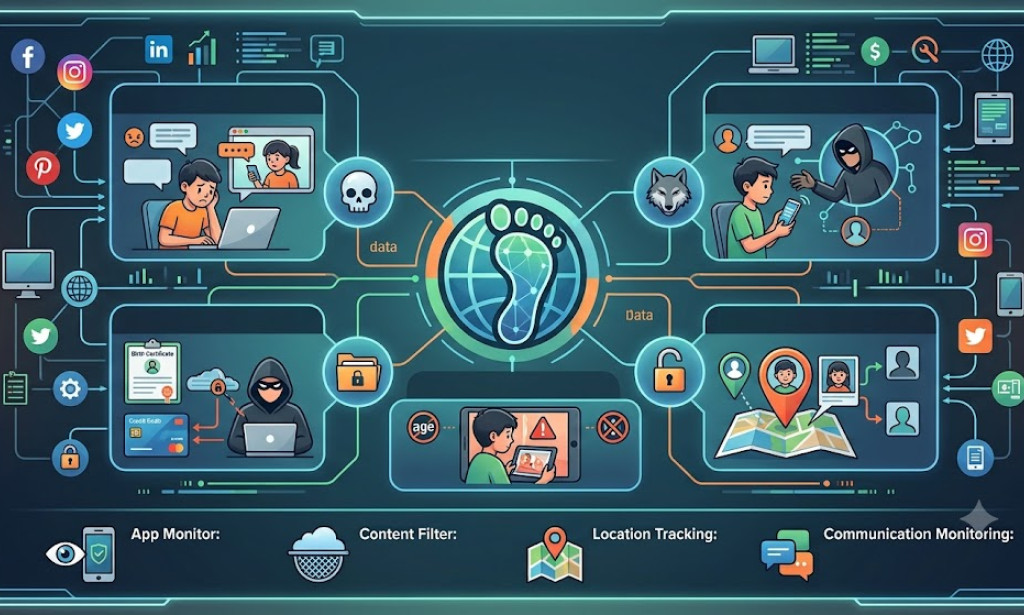
Most children use the internet every day without thinking about the information they leave behind. They watch videos, play online games, use social media, search for school projects, and chat with friends. These activities may seem harmless, but together they create a digital footprint.
A digital footprint is simply a record of someone's online activity. While every internet user has one, children often don't realize how much information they are sharing. Over time, this information can reveal personal details that may increase online risks.
Parents do not need to stop their children from using technology. Instead, they should understand the common risks that can be hidden within a child's digital footprint and teach them how to use the internet more responsibly.
Personal Information Can Spread Quickly
Children sometimes share information without realizing how many people can see it.
A photo taken outside their school, a birthday celebration, or a post about a weekend trip may seem like a normal update. However, these small details can reveal where they spend their time, who they spend it with, and even where they live.
The more personal information shared online, the easier it becomes for others to learn about a child's daily life.
Public Profiles Increase Exposure
Many social media platforms allow users to create public accounts.
If a child's profile is public, anyone may be able to see their photos, videos, comments, and other personal information. This increases the chances of unwanted attention from strangers.
Parents should encourage children to review their privacy settings regularly and understand who can view their online content.
Talking to People They Don't Know
One of the biggest online risks is communicating with strangers.
Children may receive friend requests or messages from people who appear friendly but are actually unknown to them. Young users often trust others easily and may not realize that online identities can be misleading.
Teaching children to communicate only with people they know is an important part of online safety.
Sharing Location Without Knowing It
Many apps automatically collect or display location information.
Children may accidentally reveal where they are by sharing photos, checking in at locations, or allowing apps to access location services.
Parents should explain how location sharing works and help children decide when it is appropriate to turn these features off.
Spending Too Much Time Online
A growing digital footprint often goes hand in hand with increased screen time.
When children spend long hours using social media, watching videos, or playing online games, they naturally share more information and interact with more digital platforms.
Encouraging a healthy balance between online and offline activities helps reduce unnecessary digital exposure.
Downloading Apps Without Checking Permissions
Many mobile apps ask for access to contacts, cameras, microphones, photos, or location information.
Children usually accept these permissions without reading what they mean. As a result, apps may collect much more information than necessary.
Parents can teach children to think carefully before installing new apps and understand why permissions matter.
Why Digital Awareness Matters
The internet is an important part of modern life, and children should feel confident using it.
Instead of creating fear, parents should focus on building awareness. When children understand how their online actions affect their digital footprint, they become more careful about what they share.
Simple conversations about privacy, respectful communication, and responsible internet use often have a lasting impact.
How Mobile Monitoring Can Help
As children become more independent, it becomes harder for parents to know how they use their devices.
Mobile monitoring helps parents gain a better understanding of digital habits without constantly checking a child's phone. It allows parents to notice changes in online behavior and start supportive conversations when needed.
The purpose is to guide children, not to replace trust or communication.
How TheOneSpy Supports Families
TheOneSpy helps parents stay informed about their child's digital activity through its mobile monitoring features. By providing insights into device usage, it becomes easier to understand online habits and identify situations where guidance may be helpful.
Rather than waiting until a problem occurs, parents can use this information to discuss online safety, encourage responsible technology use, and help children build positive digital habits.
TheOneSpy is designed to support families who want to create a safer online environment while maintaining trust and open communication.
Final Thoughts
Every child leaves a digital footprint, and that is a normal part of using today's technology. The important thing is helping children understand that every photo, comment, app download, and online interaction adds to that footprint.
Parents who stay involved, teach good online habits, and encourage responsible internet use can greatly reduce many of the risks children face online.
With guidance from parents and support from solutions like TheOneSpy, children can enjoy the benefits of technology while learning how to protect their privacy and build a safe digital future.

You must be logged in to post a comment.