
A buyer approves a copper lot on price, receives material 11 days later, and then the machining team finds variation in hardness, finish, or size tolerance. That is not a small issue. Copper Products are used in electrical, thermal, fabrication, marine, construction, HVAC, and industrial components, so one poor batch can affect delivery schedules, rework cost, and customer trust. India’s copper demand reached 1,878 KT in FY2025, growing 9.3% year on year, which means serious buyers are no longer sourcing casually.
And yet, many procurement teams still compare copper only by per-kg rate.
That is a mistake.
Trusted suppliers reduce risk before the material leaves the warehouse. They understand grade, form, dispatch urgency, packing, certification, and the kind of technical detail that protects repeat orders.
Copper Products Specification: The Grade Detail Most Buyers Skip
Common Copper Forms Used in Industry
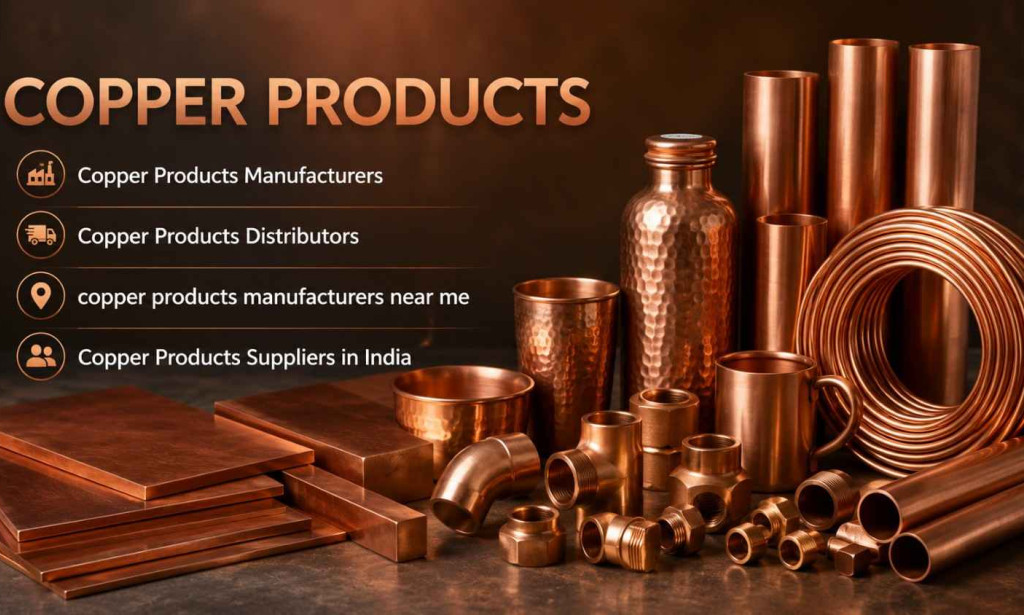
Typical purchases of industrial buyers consist of copper rods, bars, sheets, plates, pipes, tubes, flats, bushes, and ingots. The copper range at Ganga R Ispat Metals allows for products like electrical panels, busbars, heat exchangers, components of transformers, earthing systems, HVAC lines, and components of General Engineering.
Most buyers ask for “copper rod” or “copper plate.” That is not enough.
Grades, Conductivity, and Application Fit
Copper grades can behave differently under heat, forming, load, and machining. For high-purity work, C10100 OFE copper is often chosen. C11000 ETP copper is more common in the electrical and industrial fields. Concerning conductivity, copper is compared to the International Annealed Copper Standard. It is known that IACS (International Annealed Copper Standard) considers annealed copper to be 100% at the temperature of 20°C.
Here’s the detail buyers often miss: thickness tolerance matters as much as grade in fabrication.
One Overlooked Buying Detail
A 2 mm sheet and a 20 mm plate may both be “copper,” but they create very different handling, packing, cutting, and freight risks. Copper demand in India’s building and construction segment held a 25% sector share in FY2025, so buyers handling project-based supply should not ignore dimensional consistency.
Supplier Evaluation Objective: 5 Questions That Expose Weak Vendors
-
Ask for grade clarity. A good supplier explains grade, form, standard, and application fit. A bad answer sounds like, “All copper is same, sir.” Nobody tells you this early enough, but that line usually means the supplier is selling stock, not solving procurement risk.
-
Ask for test and inspection support. A serious supplier can discuss chemical, mechanical, and dimensional checks. A bad answer is, “Material is fresh, no issue.” Fresh material can still be wrong material.
-
Ask about packing method. Good packing protects surface finish, edges, and oxidation-sensitive material. A bad answer is, “Transporter will handle it.” That is not packing. That is hope.
-
Ask about standard and tolerance. BIS IS 191:2007 covers copper refinery shapes such as wire bars, cakes, billets, and ingots. A weak supplier avoids standards and only talks about rate.
-
Ask about repeat-order consistency. A good supplier discusses batch uniformity and dispatch planning. A bad supplier says, “Whatever is available, we will send.” Most buyers regret that sentence after the second order.
Benefits of Sourcing Copper Products from Trusted Suppliers
Lower Rejection Risk
Trusted suppliers reduce rejection by matching the product form with the actual application. If the buyer needs copper for busbars, conductivity and flatness matter. If it is for machining, hardness and size control matter. India’s industrial copper demand held a 17% sector share in FY2025, so small errors scale fast.
Better Margin Protection
Cheap copper is expensive when it causes rework. A supplier who quotes low but sends mixed tolerances can damage cutting plans, machine time, and customer delivery dates. That is margin leakage, not saving.
Safer Bulk Procurement
Bulk buyers need repeatability. Copper rods, plates, and sheets should not vary wildly between dispatches. In FY2025, secondary copper made up 42% of India’s total copper demand, so source traceability and grade understanding matter even more.
Stronger Project Planning
Good suppliers help buyers plan stock, dispatch, and project timelines. Which means fewer emergency purchases at inflated rates. A project buyer should never depend on last-minute market availability for a critical copper size.
Better Sustainability Value
Copper is 100% recyclable without loss of performance, making it attractive for buyers who care about lifecycle value, resale recovery, and responsible material use.
Availability in India: Why Location Is a Supply Chain Decision
Buyers searching for copper products manufacturers near me often want speed, not just proximity. That search makes sense when a project is delayed, a machine line is waiting, or an urgent replacement part is needed. But location alone does not guarantee capability.
Ganga R Ispat Metals serves buyers across India from Ahmedabad, Gujarat, with factory support in Bhilwara, Rajasthan. For Copper Products Suppliers in India, this western and north-western industrial access matters because Gujarat and Rajasthan connect well with engineering, fabrication, casting, and transport networks.
Here’s the practical point.
If you are a wholesaler, OEM buyer, or procurement manager, choosing nearby Copper Products Distributors can reduce lead time, but choosing technically aware suppliers reduces repeat risk. India’s copper demand is projected to reach around 3–3.3 million tonnes by 2030, so dependable supply relationships will matter more each year.
About Ganga R Ispat Metals
We work with industrial buyers who need copper, brass, bronze, aluminium bronze, phosphor bronze, gun metal, and related non-ferrous products for real operating conditions. Our copper range includes rods, bars, plates, sheets, bushes, pipes, flats, and ingots for electrical, thermal, fabrication, and engineering use.
We have learned one thing from repeat industrial supply: a dispatch can look perfect on paper and still fail if grade, thickness, finish, and packing are not checked together.
We do not treat copper as a commodity item only. We look at application, form, size, dispatch location, and usage pressure before recommending supply.
Share your grade, product form, drawing if available, OD/ID, thickness, length, quantity, delivery location, and required timeline with Ganga R Ispat Metals.
We usually respond to enquiries within 48 hours. MOQ depends on grade, size, form, and stock condition because a 6 mm copper rod and a 50 mm copper plate cannot carry the same minimum. Send the requirement clearly, and we will confirm availability, pricing, dispatch feasibility, and packing details.
Conclusion
Copper Products will remain critical for electrical, industrial, construction, HVAC, and manufacturing applications. The real advantage is not only buying copper at the right price; it is buying the right grade, form, and tolerance from a supplier who understands the risk. As India’s copper demand grows toward 2030, buyers who build dependable supply relationships early will have fewer surprises later.
FAQs
1. Which Copper Products should I source for electrical applications?
Copper bars, rods, flats, and sheets are commonly used for busbars, earthing, panels, transformer parts, and power distribution work. For electrical use, do not buy only by weight. Ask for grade, conductivity suitability, thickness tolerance, and surface finish before confirming the order.
2. How do Copper Products Manufacturers support bulk buyers?
Good Copper Products Manufacturers help with grade selection, standard sizes, custom dimensions, packing, and repeat dispatch planning. The caveat is simple: not every manufacturer keeps every grade ready in stock, so urgent orders may need size flexibility.
3. Are Copper Products Distributors useful for wholesalers?
Yes, Copper Products Distributors are useful when wholesalers need faster access, mixed sizes, and repeat supply. But a distributor who cannot explain grade, source, or tolerance is only a trader with stock. That can work for basic jobs, not for critical industrial use.
4. Why do buyers search for copper products manufacturers near me?
When buyers want faster delivery and less pressure from freight, they’ll search for local copper product manufacturers. Even though being close helps, it won’t take the place of an inspection. A nearby wrong supplier is still expensive.
5. What makes Copper Products Suppliers in India suitable for industrial projects?
Copper Products Suppliers in India are knowledgeable about the requirements of local projects and the demands of positioning copper in the various Indian industrial clusters and the various applications of copper. Many Indian buyers require custom cutting, bulk availability and document support. The top suppliers take care of both material and procurement communication.
6. Can Copper Products Manufacturers supply custom sizes?
Numerous manufacturers of copper products produce goods in a range of custom dimensions, though time of delivery is contingent on grade, thickness, diameter and quantity. For products that need to be built to non-standard dimensions, it is important to submit the design as early as possible. Copper products that are built to custom dimensions and are ordered at the last minute will frequently be more expensive, as well as being likely to take longer to deliver.
7. Do Copper Products Distributors provide certificates?
Some Copper Products Distributors provide certificates and test support, but buyers should confirm this before placing the order. Do not assume documentation will arrive later. Ask for grade confirmation, invoice details, and any required test report at quotation stage.

You must be logged in to post a comment.