

Opening a profitable bowling center starts with choosing the right bowling alley equipment. From lanes and pinsetters to scoring systems and ambiance elements, every component affects play quality, customer experience, maintenance costs, and ultimately your ROI. This guide distills the six core equipment areas every operator should prioritize — and explains how to evaluate a reliable bowling alley equipment manufacturer for turnkey projects.
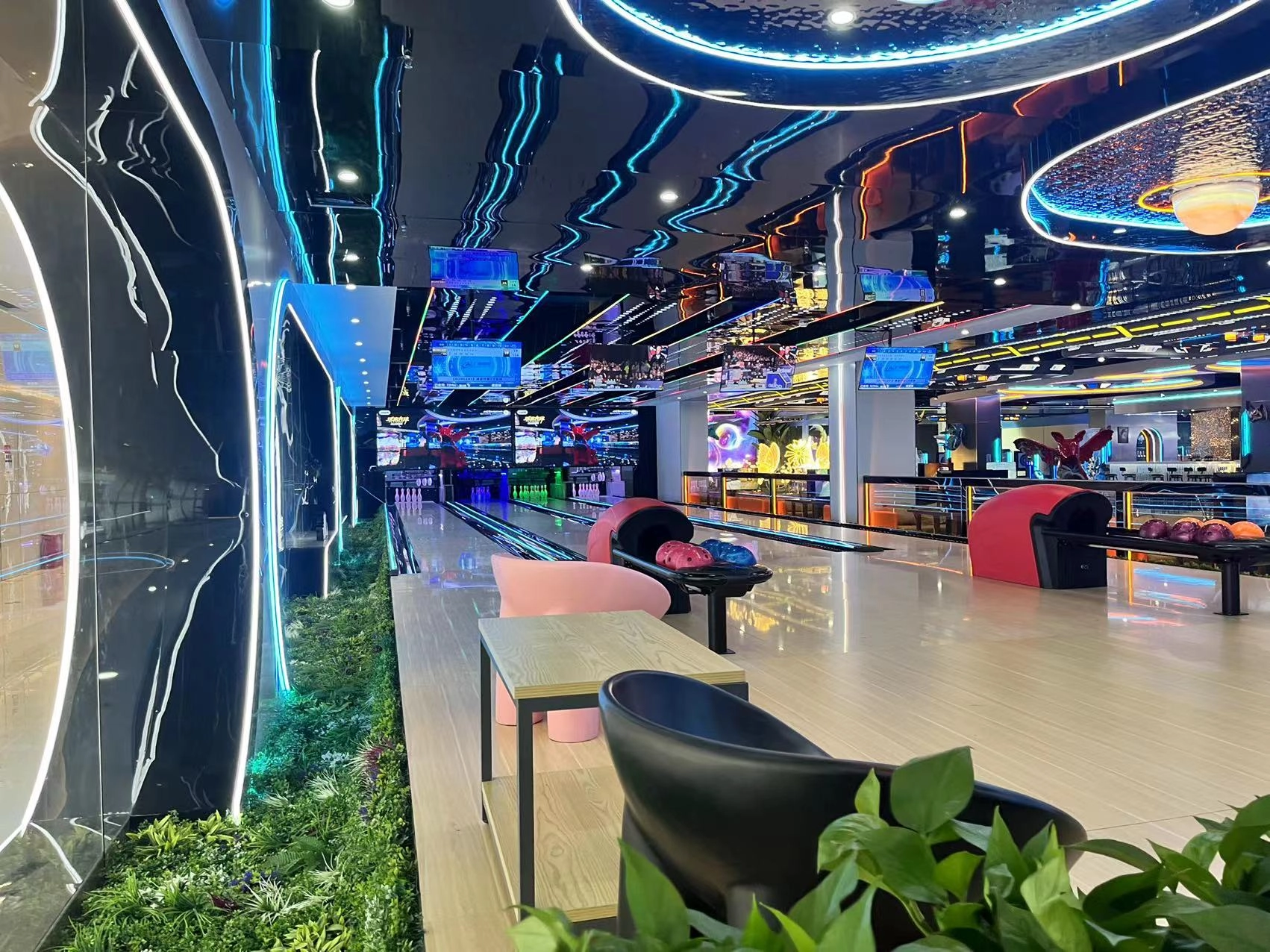
What “bowling alley equipment” really includes
“Bowling alley equipment” refers to the integrated hardware, software, and venue fixtures that make a modern center operate: lanes (synthetic or wood), pinsetters, ball return systems, scoring and management software, bowling balls and pins, plus lighting, seating and audio systems. For commercial venues, equipment durability and automation level are critical to daily operations and guest satisfaction. f
The six essential components (and what to look for)
1. Lane system (the heart of the venue)
Commercial lanes are typically synthetic for durability and ease of maintenance; regulation lanes measure 60 ft from the foul line to the head pin and about 41.5 in wide. Modular lane systems speed installation and provide consistent playing surfaces for guests. When specifying lanes, insist on certified materials and proven installation methods.
2. Scoring & management system
Modern scoring systems are cloud-ready, support real-time displays, multi-language UI, reservation and membership features, and can integrate promotions or party-packages. A robust scoring system reduces staff workload and increases per-visitor engagement.
3. Pinsetters & ball return machines
Commercial pinsetters must withstand thousands of games with minimal downtime. Prioritize low-noise, energy-efficient units with easy-to-service modules and readily available spare parts.
4. Bowling balls & pins
Choose commercial-grade balls and pins built from durable materials; include options for children’s play areas. Consider custom-branding or colored/glow finishes for themed events and promotions.
5. Mini/Duckpin systems (space-savvy options)
Mini and duckpin systems let operators add lanes in smaller footprints (e.g., malls, FECs, bars) while opening additional revenue streams through casual-play, leagues, or events.
6. Lighting, seating & sound (the guest experience)
Good ambient and LED lighting, comfortable seating, and integrated sound systems keep visitors longer and improve per-capita spend. These “soft” elements are essential for recurring business.
How to choose the right bowling alley equipment manufacturer
Selecting a vendor determines installation quality, lifetime cost, and after-sales experience. Use the following checklist when evaluating any bowling alley equipment manufacturer:
-
Certifications & product quality — look for international standards and factory test reports.
-
Turnkey capabilities — design, manufacturing, logistics, installation and training from one vendor reduce project risk.
-
Field experience — proven case studies and global installations signal reliability.
-
Spare parts & support — check lead times for parts and availability of remote troubleshooting or on-site service.
-
Customization ability — from lane finishes to branded bowling balls and themed scoring UIs.
Reputable manufacturers provide these capabilities and document them in product catalogs and project galleries.
Typical costs & simple ROI framing
Costs vary by equipment grade, number of lanes, and level of customization. As a high-level reference, industry averages per lane are often reported in the mid-thousands for lanes and several thousands for pinsetters and scoring — full 6–10 lane commercial builds commonly land in the $100,000–$300,000 range depending on finishes and extras. When modeling ROI, include estimates for occupancy rates, food & beverage take, events/leagues, and misc. revenue sources.
Installation, maintenance & timeline
Expect full commercial installations to run from roughly 30 to 90 days depending on scope and local site conditions. Planned maintenance (quarterly mechanical checks, weekly lane cleaning, and software updates) preserves uptime and reduces emergency repairs. Confirm the supplier’s installation team, training plan, and remote diagnostic support before contracting.
Why partner with an experienced manufacturer (final checklist)
An experienced bowling equipment manufacturer delivers measurable benefits:
-
Faster, more predictable installations
-
Certified equipment and quality assurance
-
Lower lifetime maintenance and downtime
-
Turnkey project management (reduce coordination overhead)
-
Competitive factory-direct pricing and upgrade paths
If you’re sourcing commercial-grade bowling alley equipment or seeking a full design-build partner, choose a supplier that can demonstrate international projects, certified lanes, and end-to-end services. FlyBowling (overview and product catalog) is one such supplier that publishes detailed guides and project references for operators planning new builds or modernizations.
Conclusion & call to action
Investing in the right bowling alley equipment is foundational to guest satisfaction and long-term profitability. Evaluate suppliers against quality, turnkey capabilities, global installation experience, and spare-part support — and ensure your budgeting includes realistic installation and maintenance costs. For a detailed equipment checklist, cost references, and manufacturer case studies, review the FlyBowling equipment guide and product pages.

You must be logged in to post a comment.