

1) Glaciers and ice sheets hold about 69 percent of the world's freshwater :

Simply, more than 96% of the aggregate sum of the world's water is held in its seas, as per Water in Crisis: A Guide to the World's Fresh Water Resources through the United States Geological Survey (USGS). Notwithstanding, that is principally saltwater. To observe the heft of the world's freshwater you want to journey to the shafts, as 68.7% of it is encased in ice covers, long-lasting snow, and icy masses. For additional realities sent right to your inbox, pursue our everyday pamphlet.
2) The fastest gust of wind ever recorded on Earth was 253 miles per hour :

Hold tight to your caps because this isn't your normal breeze storm. In 1996, a typhoon named Olivia hit off the bank of Barrow Island, Australia with such power that it broke an extraordinary record. As indicated by The Weather Channel, "Olivia's eye wall delivered five outrageous three-revitalizing surges of energy blasts, the pinnacle of which was a 253 mph blast," which blew past the past wind record of 231 mph set in Mount Washington, New Hampshire back in 1934.
3) There are fossilized plants in Greenland under 1.4 km of ice :

Around 80% of Greenland is covered by the Greenland Ice Sheet, which Britannica clarifies is the biggest and conceivably the main relic of the Pleistocene glaciations in the Northern Hemisphere. Indeed, at the lower part of a 1.4 km center example, which was taken in 1966 at Camp Century during the Cold War, scientists found "all around protected fossil plants and biomolecules", which implies that the enormous sheet dissolved and changed once over the most recent million years.
4) Whale songs can be used to map out the ocean floor :

Balance whales are fundamentally the Barry White of the sea. The profound, howling tunes that guys use to draw inmates are viewed as the most intense of all marine life and can be "heard as much as 1,000 kilometers (600 miles) away," as indicated by Scientific American. They can likewise be utilized to sonically outline the seafloor on account of the way that the sound can arrive at profundities of 2.5kilometers (1.6 miles) under the water, which bobs back and gives analysts precise estimations. Past that, a recent report in Science showed how utilizing a blade whale's tune can be undeniably more valuable and contrarily affect ocean life than utilizing a huge compressed air firearm, which is the run-of-the-mill instrument scientists depend on.
5) Mount Everest is bigger now than the last time it was measured :

Mount Everest might not have genuinely developed, having arrived at development quite some time ago, be that as it may, the latest estimation performed by assessors addressing China and Nepal has the mountain top standing taller than we'd suspected previously. Past readings have gone from 29,002 feet above ocean level in 1856 down to 20,029 out of 1955, as per NPR. However, after the long course of estimating the mountain with GPS gadgets, specialists have now expressed that Mount Everest remains at an incredible 29,031.69 feet, because of plate tectonics.
6) The longest place name on the planet is 85 letters long :
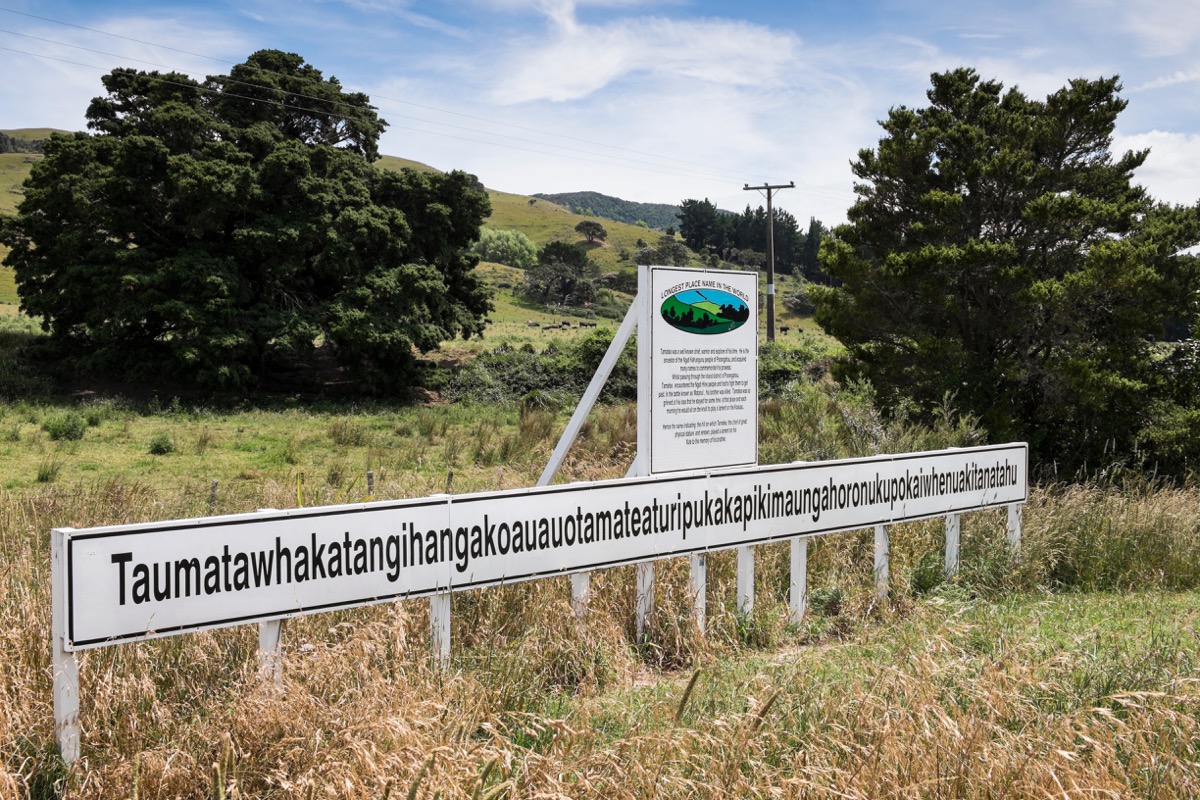
Individuals who live in Hill, Australia, need a little tolerance with regard to figuring out how to spell their old neighborhood's name. Yet, guess what? So do the people from Lake in Massachusetts and, South Africa. However, not a solitary one of them has very as much work to do when writing down their location as the people who live in New Zealand. At 85 letters in length, this is the longest spot name on the planet.
7) Four babies are born every second :

Consistently, we invite four new infants into our general populace. Do a little math, and you'll discover that implies there are roughly 250 births every moment, 15,000 every hour, and 360,000 every day.
8) The Earth's ozone layer will make a full recovery in 50 years :

On account of contamination, the Earth's ozone layer has endured a great deal. That is awful information for everybody, since the delicate gas layer shields our planet and safeguards us from the sun's unsafe bright beams. Luckily, environmental change specialists accept that the ozone layer will completely recuperate within 50 years, as indicated by a 2018 report from the United Nations. The recuperation is thanks in enormous part to the Montreal Protocol of 1987, which put a worldwide prohibition on the utilization of one of the fundamental guilty parties for the harm: chlorofluorocarbons (CFOs). Already, CFOs had been normal in coolers, vapor sprayers, and dry-cleaning synthetic compounds.
9) The most expensive coin in the world was sold for more than $7 million :

The 1933 Double Eagle was a $20 U.S. coin made of gold that never went into dissemination. A couple of the coins were made, however, most were annihilated—save for nine that were assumed taken by the U.S. After a long time flowing in the globe and falling under the control of a couple of striking proprietors—including the ruler of Egypt—one of the coins was unloaded at Sotheby's in 2002 for a staggering $7,590,020. That made it the most costly coin at any point sold whatsoever.
10) There's a website that tracks the world's population in real-time :
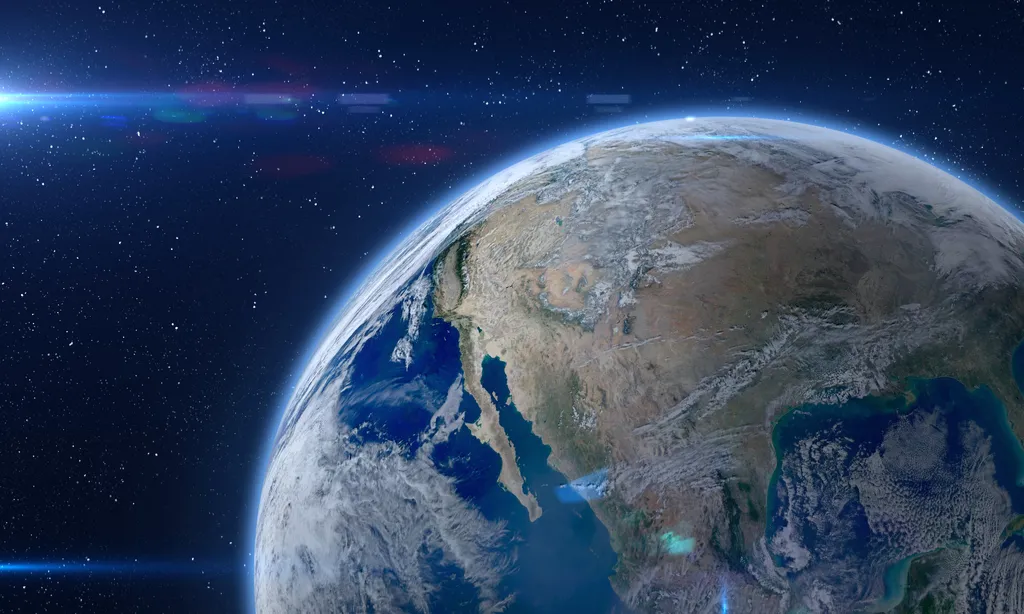
Starting at 2021, the general human populace is assessed to be more than. Furthermore, assuming you need to watch that expansion progressively, you can tune into the World Population Clock, which shows the increases and down ticks as infants are conceived and individuals bite the dust.

You must be logged in to post a comment.