

We are humans of the 21st century. We have created amazing technologies that are beneficial to our way of life. We developed everything which was very futurities about 100 years ago.
However, each of these factors has its own set of benefits and drawbacks. As a result of this development, we are currently the only species that benefit from it. Other 2 million species, on the other hand, are currently suffering as a result of human activity.
This species lost their natural habitat, and many of them are already extinct because of the human interface. So, if we continue to do nothing to conserve these animal kingdom species, a day is not far away when we will have lost them all.
So, here are ten of the most endangered animal species that are currently near the extinct stage, and if we are unable to save them, we will lose them forever.
1. Vaquita
 The vaquita is a porpoise species at the risk of extinction. According to a March 2019 assessment, there may only be 10 or 12 of them left in the wild. As a result, the vaquita is one of the world's most endangered cetaceans.
Since 1996, the number of vaquitas has decreased dramatically. The main reason is that the Gulf of California has been severely overfished, and vaquitas are occasionally trapped in fishing nets and drowned, much like other dolphins.
In July 2016, conservation efforts resulted in introducing a gillnet ban in the vaquita habitat, but illegal fishing continues, and the threat remains. The focus now is on implementing the gillnet ban and arresting those who violate it.
The Mexican government has spent tens of millions of dollars attempting to avoid this deadly overfishing, but still, the vaquita has suffered a lot. The vaquita will become extinct unless strong steps are taken soon.
2. Amur leopard
 Sad to say, Amur leopards are one of the most endangered large cats on the planet.
The IUCN Red List of Threatened Species lists them as Critically Endangered, and there were only about 92 Amur leopards left in their natural range between 2014 and 2015. That figure is now thought to be under 70.
Hunters love their glossy coats, as well as their bones, which they sell for use in traditional Asian medicine. They are also threatened by habitat loss, which is mostly caused by natural and artificial fires. Climate change is also affecting the habitat of Amur leopards, resulting in a decline in prey supply.
3. Kakapo
 The kakapo, which looks like a hybrid between a parrot and an owl, is the world's only wingless parrot species. Kakapos are also known as owl parrots or night parrots.
Kakapos are midnight ground-dwelling parrots native to New Zealand, and they are critically endangered, with only about 140 individuals left, each with their name.
One of the most serious threats to Kakapos is predation by introduced species such as cats and stoats, which hunt by smell.
Kakapos were found throughout New Zealand before the Polynesians arrived 700 years ago, but now they can only be found on two small islands off New Zealand's southern coast: Codfish/Whenua Hou and Anchor. These islands are free from a predator so, though this kakapo may live for a long time.
4. Black Rhinoceros
 The black rhinoceros, also known as the hooked-lip rhinoceros, is a critically endangered species mostly because of its horns.
Hunting for their distinctive horns is their greatest threat. They are used as a status symbol and a demonstration of richness and used in Traditional Chinese medicine. Rhino horn, on the other hand, is now worth more than its weight in gold! They are so valuable that one kilogram of rhino horn may cost up to $30,000 on the illegal market.
Rhino horns are also used to make knife and dagger handles, which resulted in a 95% decline in the black rhino population between 1970 and 1992. The subspecies of Black rhino (African rhino) have unfortunately become extinct. Black rhinos are now highly protected in wildlife reserves.
5. Hawksbill Sea Turtle
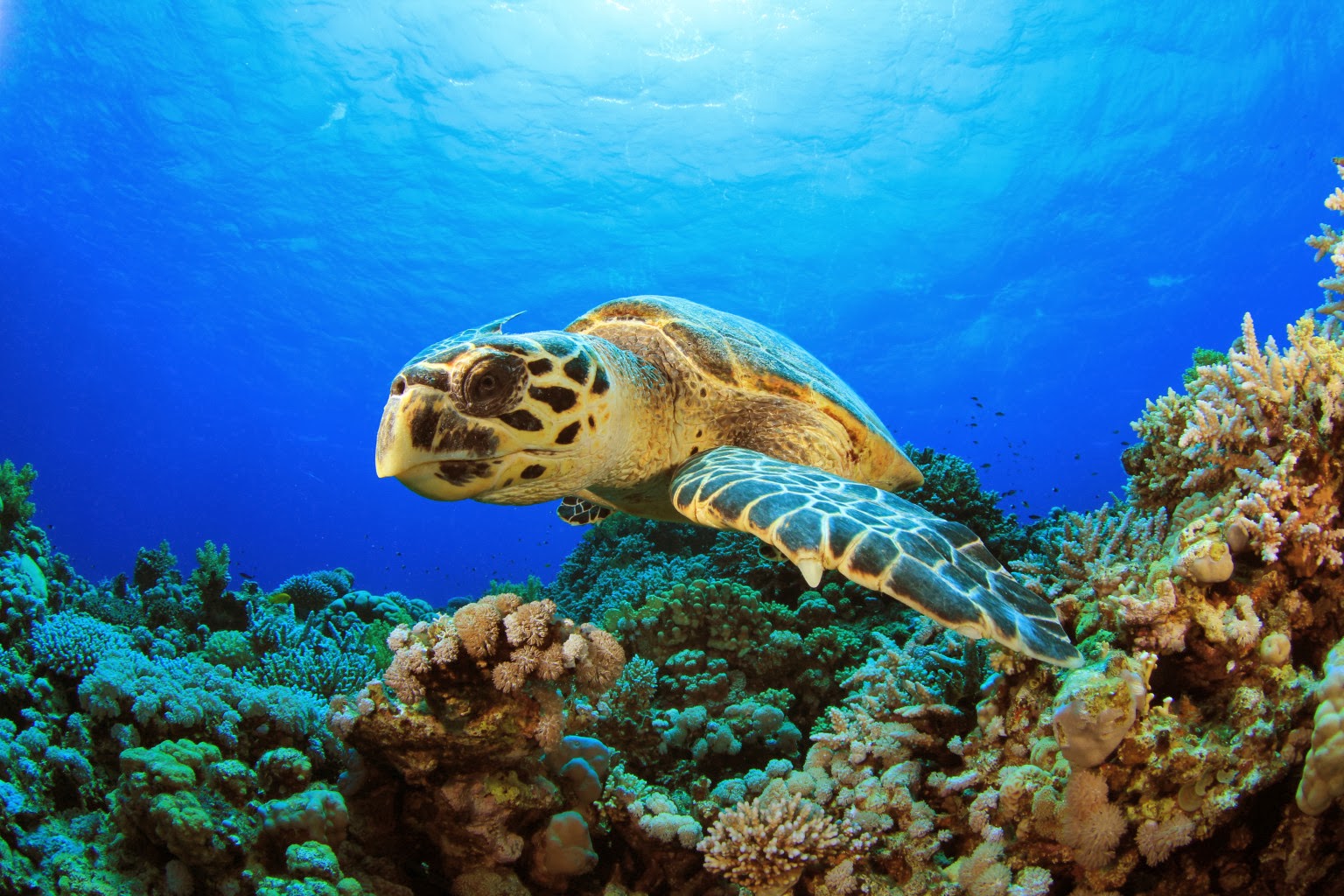 The hawksbill sea turtle can be found along tropical coral reefs all around the world. This species was listed as a critically endangered species in 1996, with its global population dropping by 80% in the last 100 to 150 years.
Illegal catching, pollution, and the removal of nesting sites by urban development contribute to the turtle's population reduction.
The hawksbill sea turtle has a large, curved beak that is more noticeable than that of other turtle species, and its shell has serrations around its edges. Adults achieve a height of 3 feet and a weight of 180 pounds on average.
This species is hunted for its meat and beautiful shell. The Hawksbill Sea Turtle has been protected by the US Fish and Wildlife Service and the National Marine Fisheries Service since 1970. The Convention on International Trade in Endangered Species prohibits the killing or bullying of these turtles and the export or import of turtle products.
6. Mountain Gorilla
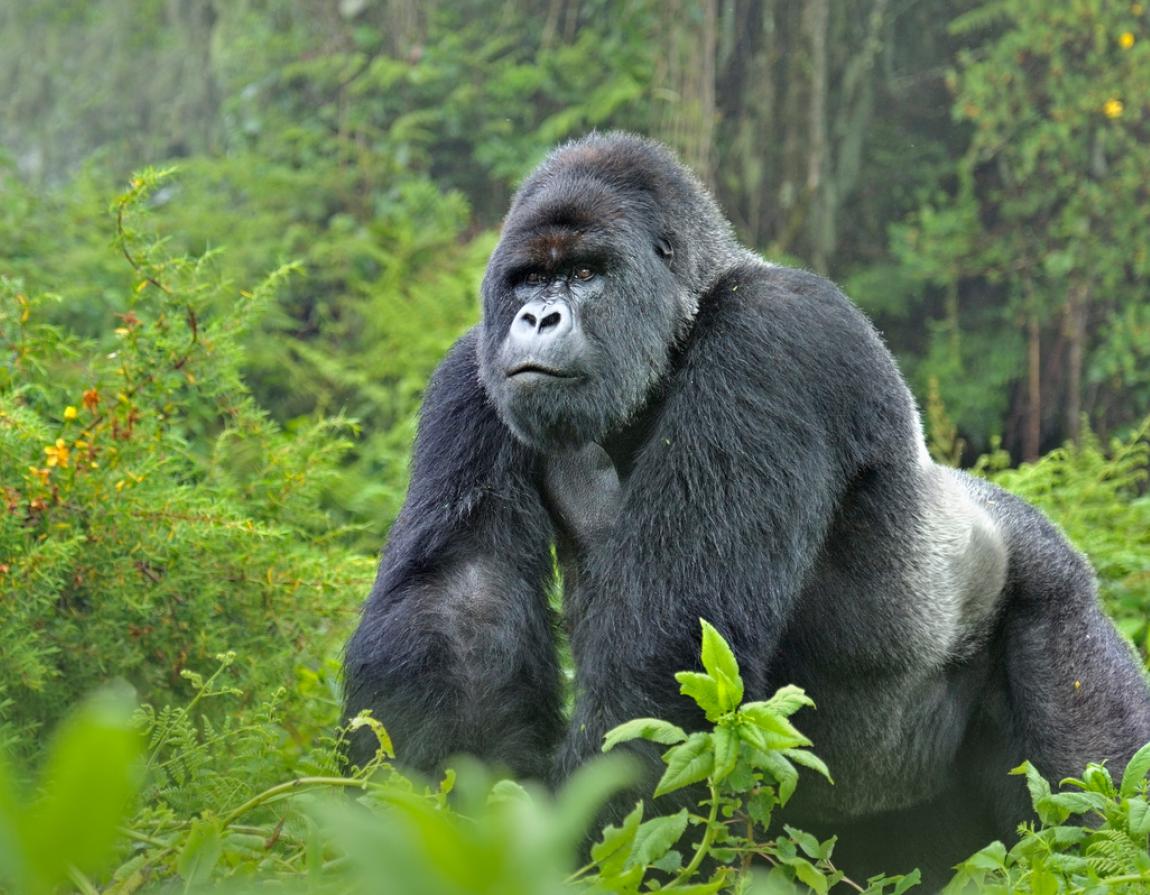 Mountain gorillas are one of the world's largest primates, reaching 6 feet in length and weight over 400 pounds. They are found mostly in forests on the Visoke, Karisimbi, and Mikeno mountains on the Uganda-DRC border.
The IUCN lists mountain gorillas as severely endangered; as of 2018, only around 1,000 mountain gorillas remain in two different groups in Central Africa's hilly regions.
Mountain gorillas have thick fur because they live in volcanic zones at elevations ranging from 7,000 to 14,000 feet, where the weather is often foggy, cool, if not freezing, and gloomy.
A 500-pound adult male mountain gorilla can eat 75 pounds of grass, fruit, and insects each day. Mountain gorillas are affected by various factors, including hunting, habitat loss, sickness, wars, and political unrest.
Several conservation measures are taken by armed guards, such as continuous monitoring to reduce population decline.
7. North Atlantic Right Whale
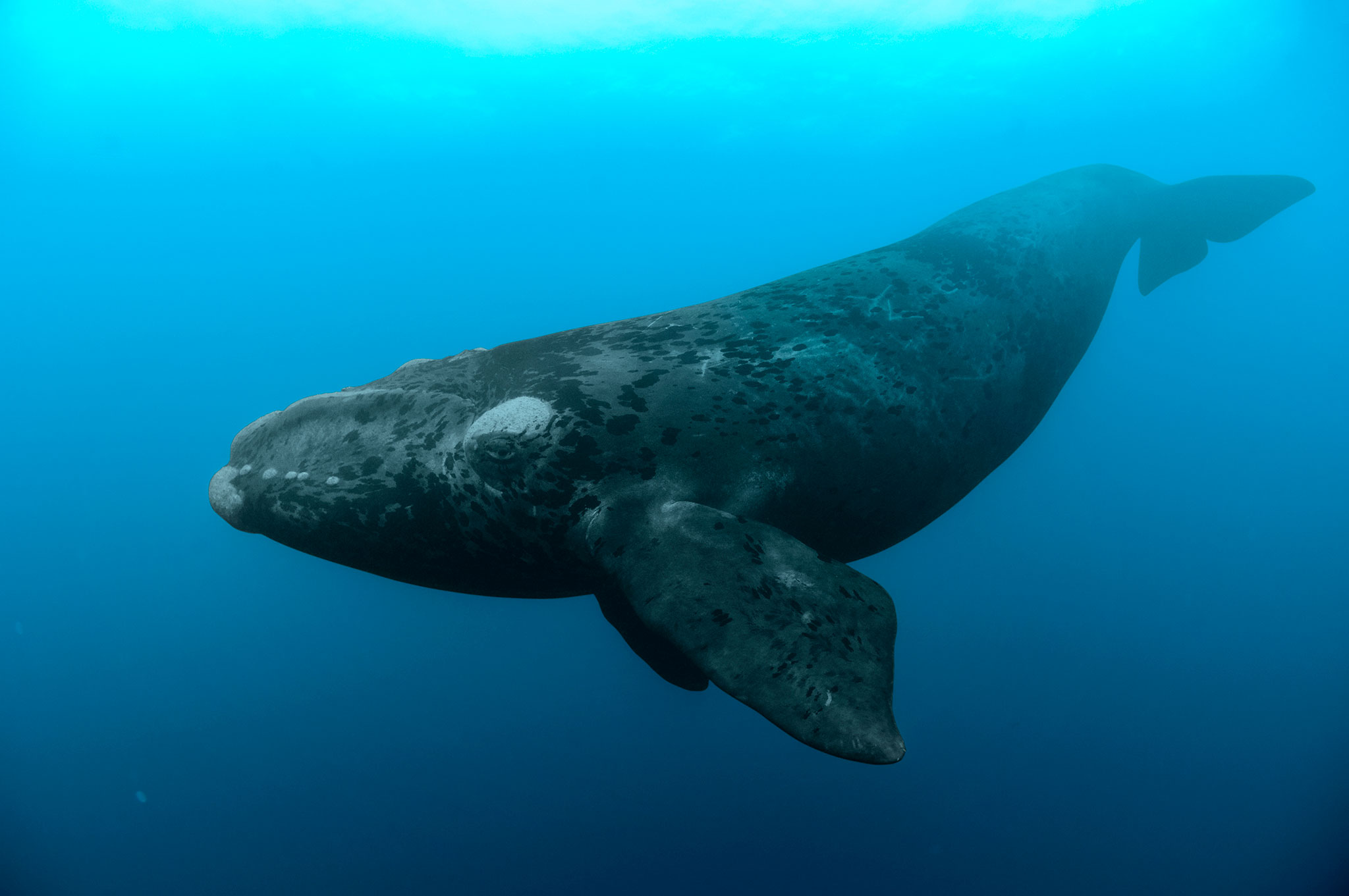 The North Atlantic Right Whale was formerly known as the baleen whale, but it was given the name North Atlantic Right Whale because it appeared to be the "right" whale killed by whalers.
They are gentle giants who stay close to coasts and spend lots of time grazing on zooplankton at the surface. This makes them an easy target for the "right whale" to kill.
Also, major threats were Hunters, they nearly wiped them out for their meat and oil-rich blubber, and they are today one of the most endangered big whales.
Only approximately 400 of these whales live in the North Atlantic Ocean, their principal habitat, and only about 100 of them are breeding females.
So they are now protected, and hunting is prohibited; population recovery is slow because females do not reproduce for the first ten years of their lives and then give birth to a single offspring every six to ten years. But they are still endangered, with boat impacts and trapping in fishing gear.
8. Gharial
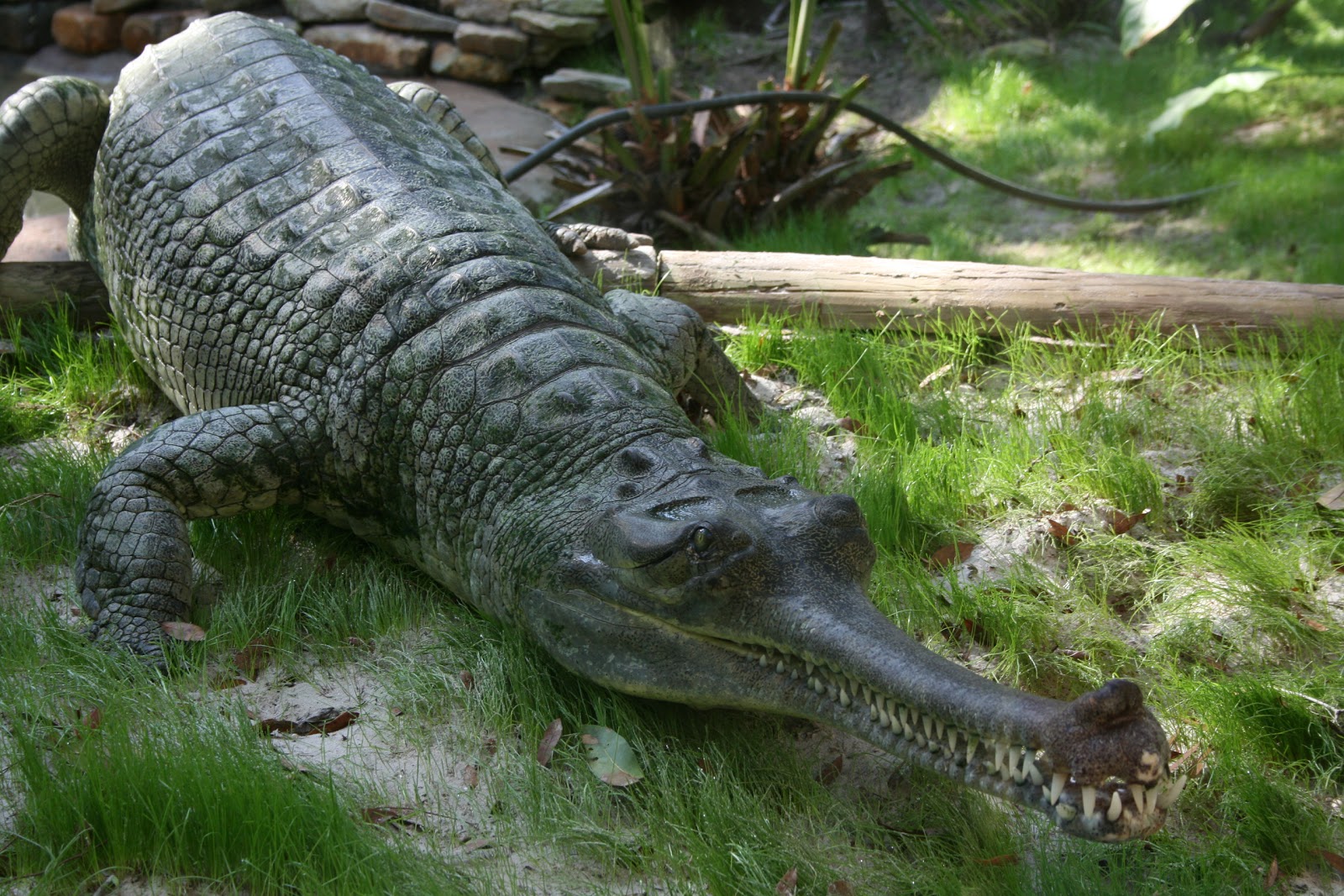 The gharial is a fish-eating crocodile seen in the Indian Subcontinent's northern regions.
They have long, thin snouts with a huge bulge on the end that looks like a Ghara pot; that's why they got their name"Gharial."
They spend large amounts of time in freshwater rivers, only leaving to lay eggs and relax in the sun. Gharials can be found in Pakistan's, India's, Nepal's, and Bangladesh's river systems.
Sadly, Gharial numbers have been declining since the 1930s, and this big crocodilian is now at risk of extinction. There are only about 100 to 300 of these animals left in the wild. Increase human population in these countries are major threats for gharial.
The increase in the human population causes habitat loss, pollution, hydroelectric projects, hunting, and death by fishing nets, making it an unsuitable environment for Gharials.
The Indian government runs conservation programs for gharials to protect the species before they would be extinct.
9. Orangutan
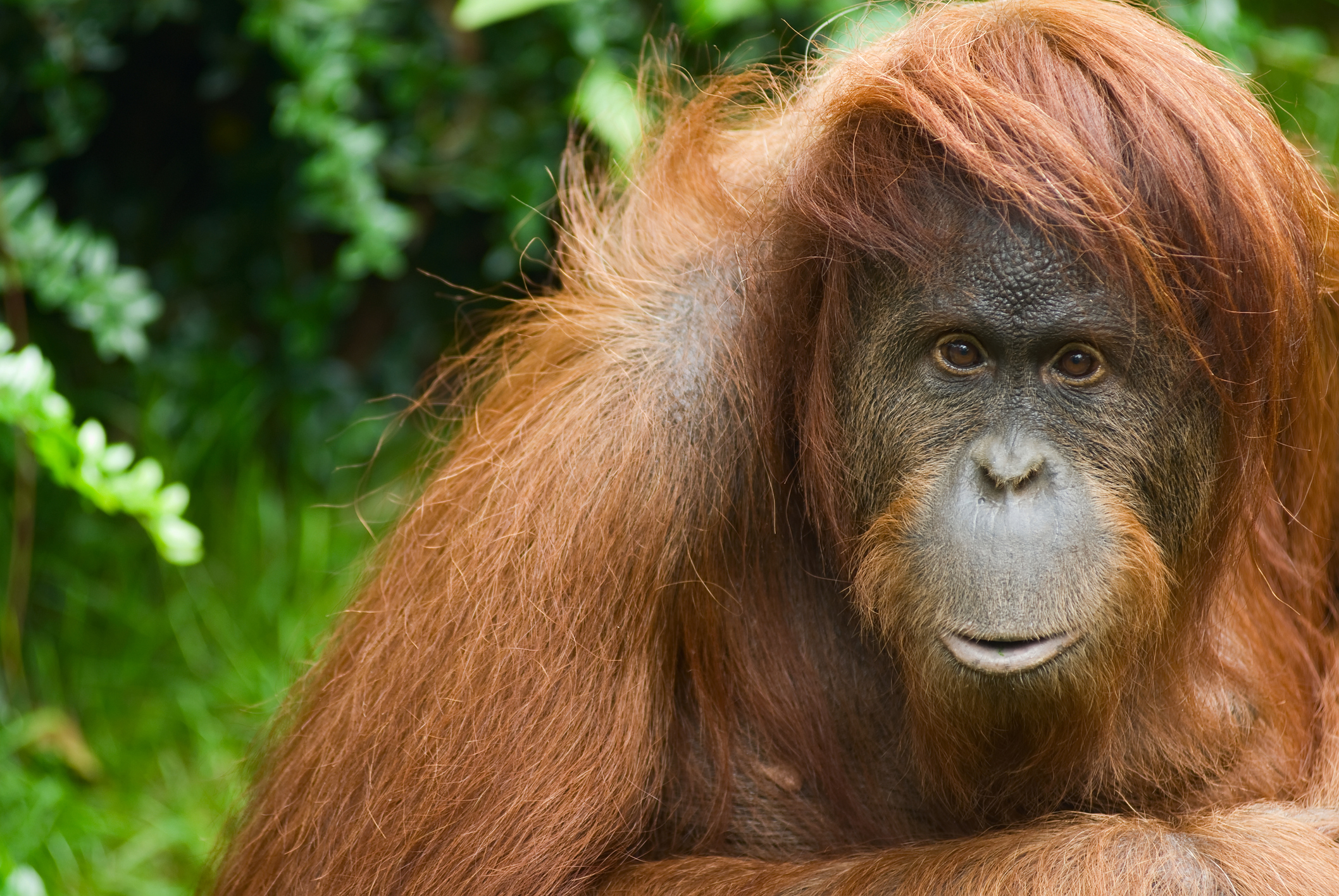 The orangutan, also known as the "man of the forest," can be found on the islands of Borneo and Sumatra. Orangutans can eat fruit, vegetation, honey, bird eggs, and insects and live almost entirely in trees.
Orangutans are often researched for their capacity to develop tools and use them in inventive ways; they also know how to treat diseases by eating specific plants, soil types, or minerals.
The Bornean and Sumatran orangutans are two species of orangutan that have seen major population decreases. Around 100 years ago, there were estimated more than 230,000 orangutans, but based on current geographic distribution, the Bornean orangutan is presently estimated to number 104,700.
Orangutans are classified as severely endangered due to habitat degradation, hunting, and the illegal wildlife trade.
In the last 75 years, the population has decreased by 80%. By 2025, current predictions suggest that fewer than 50,000 Orangutans will be left.
10. Tigers
 On the International Union for Conservation of Nature's (IUCN) Red List of Threatened Species, tigers are classified as "Endangered."
Tigers are the most endangered of all the big cats, with only 3,900 left in the wild and only 4% of their native region. Sunda tigers, in particular, are extremely endangered, with numbers believed to be less than 400 today.
The tiger population has declined rapidly due to illegal hunting and habitat loss; the tiger's habitat is also being affected by road construction. Forest conversion for cropland and farming has frequently resulted in tiger-livestock encounters.
Now tigers are protected by many organizations, including the Save Tigers Now Foundation, supported by actor Leonardo DiCaprio, and the World Wide Fund for Nature (WWFN); with this hope, they can live in the wild for decades.
Conclusion
Most of the animal species are remain in numbers due to human interruption to their natural habitat. As the human population increased, we required more land to live, more food to grow, so we used the forest for our beneficiary without any hesitation. Due to this, many animal species are extinct. And not only any particular species were harmed but also we damaged the ecosystem of our planet. So now we have to take action to protect these animals and the ecosystem of our planet.

You must be logged in to post a comment.