

If some of the many thousands of human volunteers needed to test coronavirus vaccines could have been replaced by digital replicas—one of this year's Top 10 Emerging Technologies—COVID-19 vaccines might have been developed even faster, saving untold lives. Soon virtual clinical trials could be a reality for testing new vaccines and therapies. Other technologies on the list could reduce greenhouse gas emissions by electrifying air travel and enabling sunlight to power industrial chemicals directly. With “spatial” computing, the digital and physical worlds will be integrated into ways that go beyond the feats of virtual reality. And ultrasensitive sensors that exploit quantum processes will set the stage for such applications as wearable brain scanners and vehicles that can see around corners.
1. Quantum Sensors Could Let Autonomous Cars ‘See’ around Corners

Quantum computers get all the hype, but quantum sensors could be equally transformative, enabling autonomous vehicles that can “see” around corners, underwater navigation systems, early-warning systems for volcanic activity and earthquakes, and portable scanners that monitor a person's brain activity during daily life.
Quantum sensors reach extreme levels of precision by exploiting the quantum nature of matter—using the difference between, for example, electrons in different energy states as a base unit. Atomic clocks illustrate this principle. The world time standard is based on electrons in cesium 133 atoms complete a specific transition 9,192,631,770 times a second; this is the oscillation that other clocks are tuned against.
Other quantum sensors use atomic transitions to detect minuscule changes in motion and tiny differences in gravitational, electric, and magnetic fields.
2. Microneedles Could Enable Painless Injections and Blood Draws

“microneedles” are poised to usher in an era of pain-free injections and blood testing. Whether attached to a syringe or a patch, microneedles prevent pain by avoiding contact with nerve endings. Typically 50 to 2,000 microns in length (about the depth of a sheet of paper) and one to 100 microns wide (about the width of a human hair), they penetrate the dead, top layer of skin to reach into the second layer—the epidermis—consisting of viable cells and a liquid known as interstitial fluid.
But most do not reach or only barely touch the underlying dermis, where the nerve endings lie, along with blood and lymph vessels and connective tissue.
Many microneedle syringes and patch applications are already available for administering vaccines, and many more are in clinical trials to treat diabetes, cancer, and neuropathic pain. Because these devices insert drugs directly into the epidermis or dermis, they deliver medicines much more efficiently than familiar transdermal patches, which rely on diffusion through the skin.
3. Sun-Powered Chemistry Can Turn Carbon Dioxide into Common Materials
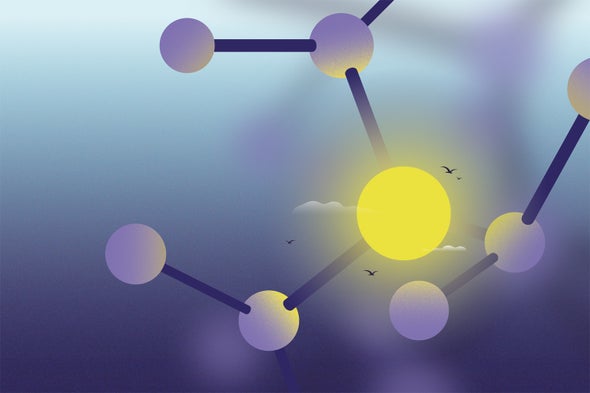
The manufacture of many chemicals important to human health and comfort consumes fossil fuels, contributing to extractive processes, carbon dioxide emissions, and climate change. A new approach employs sunlight to convert waste carbon dioxide into these needed chemicals, potentially reducing emissions in two ways: by using the unwanted gas as raw material and sunlight, not fossil fuels, as the source of energy needed for production.
This process is becoming increasingly possible thanks to advances in sunlight-activated catalysts or photocatalysts. In recent years investigators have developed photocatalysts that break the resistant double bond between carbon and oxygen in carbon dioxide. This is a critical first step in creating “solar” refineries that produce useful compounds from the waste gas—including “platform” molecules that can serve as raw materials for synthesizing such varied products as medicines, detergents, fertilizers, and textiles.
4. Virtual Patients Could Revolutionize Medicine
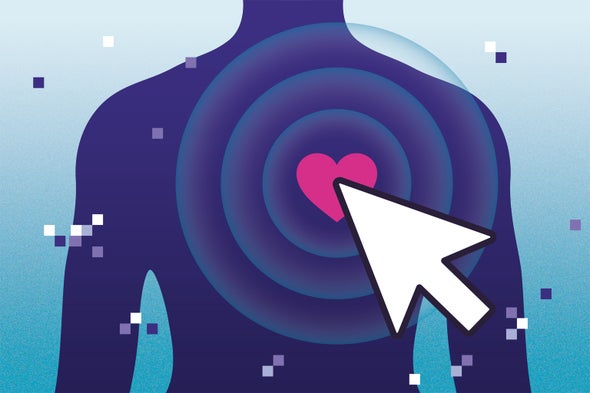
Every day, it seems, some new algorithm enables computers to diagnose a disease with unprecedented accuracy, renewing predictions that computers will soon replace doctors. What if computers could replace patients as well? If virtual humans could have replaced real people in some stages of a coronavirus vaccine trial, it could have sped the development of a preventive tool and slowed down the pandemic.
Similarly, potential vaccines that weren't likely to work could have been identified early, slashing trial costs and avoiding testing poor vaccine candidates on living volunteers. These are some of the benefits of “in silico medicine,” or the testing of drugs and treatments on virtual organs or body systems to predict how a real person will respond to the therapies.
WThe modeling begins with virtual organsfeeding anatomical data drawn from noninvasive high-resolution imaging of an individual's actual organ into a complex mathematical model of the mechanisms that govern that organ's function. Algorithms running on powerful computers resolve the resulting equations and unknowns, generating a virtual organ that looks and behaves like real.
5. Spatial Computing Could Be the Next Big Thing

Imagine Martha, an octogenarian who lives independently and uses a wheelchair. All objects in her home are digitally cataloged; all sensors and the devices that control objects have been Internet-enabled, and a digital map of her home has been merged with the object map. As Martha moves from her bedroom to the kitchen, the lights switch on, and the ambient temperature adjusts. The chair will slow if her cat crosses her path. When she reaches the kitchen, the table moves to improve her access to the refrigerator and stove, then moves back when she is ready to eat. Later, if she begins to fall when getting into bed, her furniture shifts to protect her, and an alert goes to her son and the local monitoring station.
The “spatial computing” at the heart of this scene is the next step in the ongoing convergence of the physical and digital worlds. It does everything virtual-reality and augmented-reality apps do: digitize objects that connect via the cloud, allowing sensors and motors to react to one another and digitally represent the real world.
6. Electric Aviation Could Be Closer Than You Think

In 2021 air travel accounted for 2.5 percent of global carbon emissions, which could triple by 2050. While some airlines have started offsetting their contributions to atmospheric carbon, significant cutbacks are still needed. Electric airplanes could provide the scale of transformation required, and many companies are racing to develop them. Not only would electric propulsion motors eliminate direct carbon emissions, but they could also reduce fuel costs by up to 90 percent, maintenance by up to 50 percent, and noise by nearly 70 percent.
Electric motors generally have longer life spans than the hydrocarbon-fueled engines in their current aircraft; they need an overhaul at 20,000 hours versus 2,000.
7. Low-Carbon Cement Can Help Combat Climate Change

Concrete, the most widely used human-made material, shapes much of our built world. The manufacture of one of its key components, cement, creates a substantial yet underappreciated amount of human-produced carbon dioxide: up to 8 percent of the global total, according to London-based think tank Chatham House. It has been said that if cement production were a country, it would be the third-largest emitter after India and China, and the U.S. Currently, four billion tons of cement are produced every year, but because of increasing urbanization, that figure is expected to rise to five billion tons in the next 30 years,
The emissions from cement production result from the fossil fuels used to generate heat for cement formation and the chemical process in a kiln that transforms limestone into clinker, which is then ground and combined with other materials to make cement.
8. Digital Medicine Can Diagnose and Treat What Ails You

Could the next prescription from your doctor be for an app? A raft of apps in use or under development can now detect or monitor mental and physical disorders autonomously or directly administer therapies.
Collectively known as digital medicines, the software can enhance traditional medical care and support patients when access to health care is limited—a need that the COVID-19 crisis has exacerbated.
9. Green Hydrogen Could Fill Big Gaps in Renewable Energy

When hydrogen burns, the only by-product is water—which is why hydrogen has been an alluring zero-carbon energy source for decades. Yet the traditional process for producing hydrogen, in which fossil fuels are exposed to steam, is not even remotely zero-carbon. Hydrogen produced this way is called gray hydrogen; it is called blue hydrogen if the CO2 is captured and sequestered.
Green hydrogen is different. It is produced through electrolysis, in which machines split water into hydrogen and oxygen; the situation is changing for two reasons. First, significant amounts of excess renewable electricity have become available at grid-scale; rather than storing excess electricity in arrays of batteries, the extra electricity can be used to drive the electrolysis of water, “storing” the electricity in the form of hydrogen. Second, electrolyzers are getting more efficient.
10. Whole-Genome Synthesis Will Transform Cell Engineering

Early in the COVID-19 pandemic, scientists in China uploaded the virus's genetic sequence (the blueprint for its production) to genetic databases. A Swiss group then synthesized the entire genome and produced the virus from it—essentially teleporting into their laboratory for study without waiting for physical samples. Such speed is one example of how whole-genome printing is advancing medicine and other endeavors.
Thank you for reading.

You must be logged in to post a comment.