
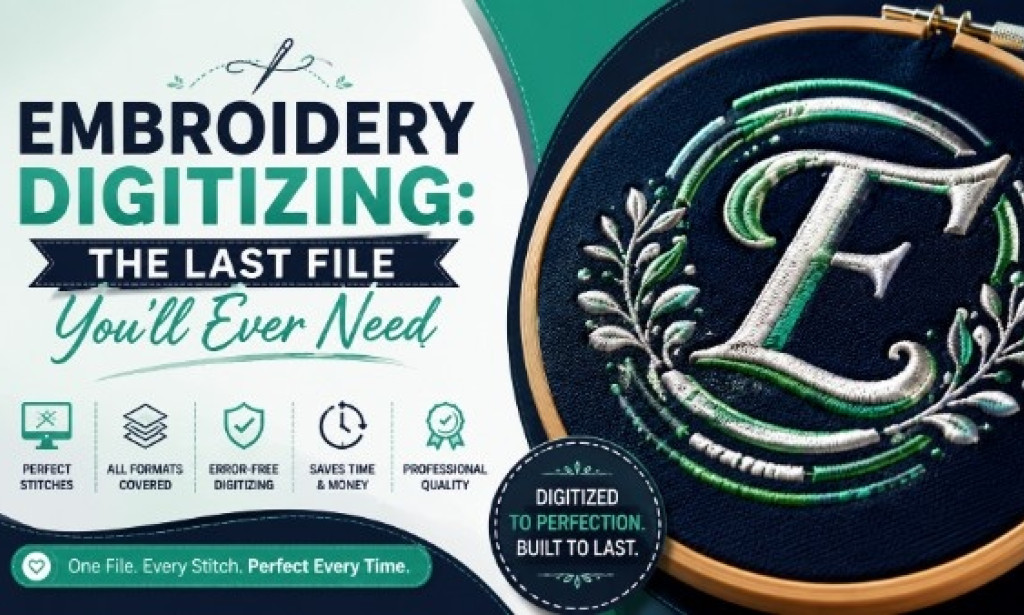
A single, well-built stitch file can serve your brand for years. That is the promise of great embroidery digitizing. It means you send your logo once to anexpert embroidery digitizer, get a clean digital file back, and use it across every garment, every machine, and every production run without ever starting over. One file. Done right. That is the goal.
Most businesses do not realize this until they have already paid for the same design three or four times. They get a cheap file, it stitches poorly, they send it back for fixes, and the cycle keeps going. The truth is, a high-quality embroidery digitizing service builds the file correctly from the start. No back and forth. No re-digitizing. Just a file that works every single time.
What Makes a Stitch File Truly "Final"?
A final embroidery file is one that runs cleanly on a real machine without puckering, thread breaks, or distortion. It holds its shape on every wash. It looks sharp on a polo, a hoodie, a cap, and a jacket back without any adjustments. That kind of file does not happen by accident.
It takes a skilled digitizer who understands stitch density, underlay stitches, pull compensation, and stitch sequencing. Each of these elements must be set correctly for the specific fabric and garment where the design will be sewn. A file built this way becomes the last one you will ever need for that design.
Why Most Embroidery Files Fail Before the Machine Even Starts
You may notice that many businesses go through multiple rounds of revisions before they get a usable file. That happens because the original file was built without enough attention to how fabric behaves under a needle. When stitches pull inward on knit fabric, the design shrinks. When density is too high, the garment stiffens and puckers. When sequencing is wrong, thread breaks happen constantly.
A trusted digitizing service for embroidery prevents all of this by planning the file around the fabric type, the garment style, and the machine being used. That preparation at the start saves enormous amounts of time, money, and frustration later. I've noticed that the businesses who invest in quality digitizing the first time rarely come back with production problems.
How the Right File Saves You Money Over Time
Think about what a bad file actually costs. There is the cost of the re-digitizing fee. Then the wasted thread and stabilizer from failed test runs. Then the machine downtime while you wait for a corrected file. Then the garments that get ruined in the process. It adds up quickly.
A properly built file from a reliable custom embroidery digitizing service costs a little more upfront. But it runs cleanly every time, on every machine, from a Tajima to a Brother to a Janome. That consistency means zero wasted production time and zero rejected garments. Over a full production year, the savings are significant. That is why smart embroidery businesses choose the best embroidery digitizing services in USA rather than the cheapest option.
What Goes Into Building a File That Lasts?
Let's look at the key decisions a skilled digitizer makes when building a long-lasting stitch file.
Stitch type selection is the foundation. Satin stitches give borders and lettering their smooth, glossy look. Fill stitches cover large areas cleanly. Running stitches outline and add fine details. Choosing the wrong stitch type for any element creates weak spots in the design that break down over time.
Underlay stitches come next. These hidden foundation stitches lock the fabric in place before the visible stitches go down. Without proper underlay, even a well-designed file will distort on stretchy or textured fabric. A center-run underlay keeps small text sharp. A zigzag underlay stabilizes knit fabrics before satin columns are applied.
Pull compensation is what keeps the design true to its original shape. When a needle hits fabric repeatedly, the material pulls inward and makes the design appear smaller or narrower than intended. A good digitizer from a professional online embroidery digitizing service extends certain stitch areas slightly in the file so the final stitched result matches the artwork exactly.
Stitch sequencing ties everything together. A logical stitch path means the machine moves efficiently across the design, with fewer jump stitches and color changes. Fewer trims mean a cleaner back on the garment and faster production time.
The File Formats That Work on Every Machine
A file that lasts must also be delivered in the right format. DST is the standard for Tajima machines and is widely accepted across commercial embroidery equipment. PES is the format used by Brother machines. JEF works with Janome. EXP, HUS, and VP3 serve other major brands.
A professional custom embroidery digitizing services in USA provider delivers your file in every format your machines require. You do not need to convert or reformat anything. The file is ready the moment it arrives. That is one of the hallmarks of the best embroidery digitizing service provider in USA providers. They build for your setup, not a generic standard.
Vector vs Raster: Why Your Artwork Format Matters
The quality of your final stitch file depends heavily on the quality of the artwork you submit. Vector files in AI, EPS, or SVG format give the digitizer clean, scalable paths to work from. These files hold their sharpness at any size, whether the design is going on a small left chest logo or a large jacket back.
Raster images like JPG and PNG can still be used, but they require more work to interpret cleanly. A skilled digitizing embroidery service can work with either format, but they will always produce a sharper result from a clean vector file. That is why many embroidery digitizing services online recommend submitting vector artwork whenever possible.
How IDigitize Builds Files You Will Never Need to Replace
IDigitize has built its reputation as one of the most trusted providers of embroidery digitizing services USA by doing one thing better than most. They build every file as if it needs to last forever, because it should. Their digitizers review each design manually, plan the underlay and density settings for the specific fabric, apply correct pull compensation, and sequence every stitch path for the cleanest possible machine run.
Whether a client needs a digitize embroidery service for a simple left chest logo, a detailed cap design, a jacket back, or a complex 3D puff design, IDigitize treats every job with the same level of care. They deliver in all required machine formats, offer fast turnaround, and back every file with unlimited revisions. As one of the best embroidery digitizing services providers in the USA, IDigitize makes sure the file you receive is the last one you will ever need for that design.
How to Know If Your Current File Is Built to Last
There are a few quick signs that your existing stitch file is not performing the way it should. If thread breaks happen more than once in a production run, the stitch sequencing or density is likely off. If the design looks smaller or narrower on the actual garment than it does on screen, pull compensation was not applied correctly. If the edges of the design look rough or ragged after washing, the underlay was not strong enough for the fabric type.
Any of these issues signals that the file needs to be rebuilt by a professional embroidery digitizing service near me or a trusted best embroidery digitizing services provider. A correctly built file does not produce these problems. It runs clean from the first stitch to the last.
Final Thoughts
The right embroidery digitizing file is not something you replace every season. It is something you build once, correctly, and use for as long as your brand needs it. Every stitch is planned. Every setting is matched to the fabric and machine. The result is a file that feels permanent because it works every single time.
IDigitizeunderstands what it takes to build that kind of file. Their team combines deep technical skill with real production knowledge to deliver embroidery digitizing service in us results that hold up under real-world conditions. If you are tired of re-digitizing the same design or dealing with files that cause machine problems, it is time to get it done right with an online embroidery digitizing service provider that treats every file as a long-term investment in your brand.
Frequently Asked Questions
What is embroidery digitizing?
Embroidery digitizing is the process of converting artwork into a digital stitch file that tells an embroidery machine exactly where and how to place each thread. A well-built file runs cleanly on any machine without distortion or thread breaks.
Why do embroidery files need to be rebuilt so often?
Most files are rebuilt because the original was built without proper stitch density, underlay, or pull compensation settings. A professionally built file from the start eliminates the need for repeated re-digitizing.
What file format should I ask for when ordering embroidery digitizing services?
Request the format your machine requires. DST works for most commercial machines. PES is standard for Brother. JEF suits Janome. A quality custom embroidery digitizing service delivers all formats you need at no extra charge.
How do I know if an embroidery digitizing service is reliable?
A reliable digitizing service for embroidery offers fast turnaround within 24 hours, unlimited revisions, a physical test sew-out or digital proof, and file delivery in your required machine format. Consistency across multiple orders is the strongest sign of quality.
Can one embroidery digitizing file work on all garment types?
A single file can be adapted for different garments, but specific settings may need adjustment for curved surfaces like caps versus flat garments. The best embroidery digitizing service provider in usa builds separate, optimized files for each garment type when needed.

You must be logged in to post a comment.