
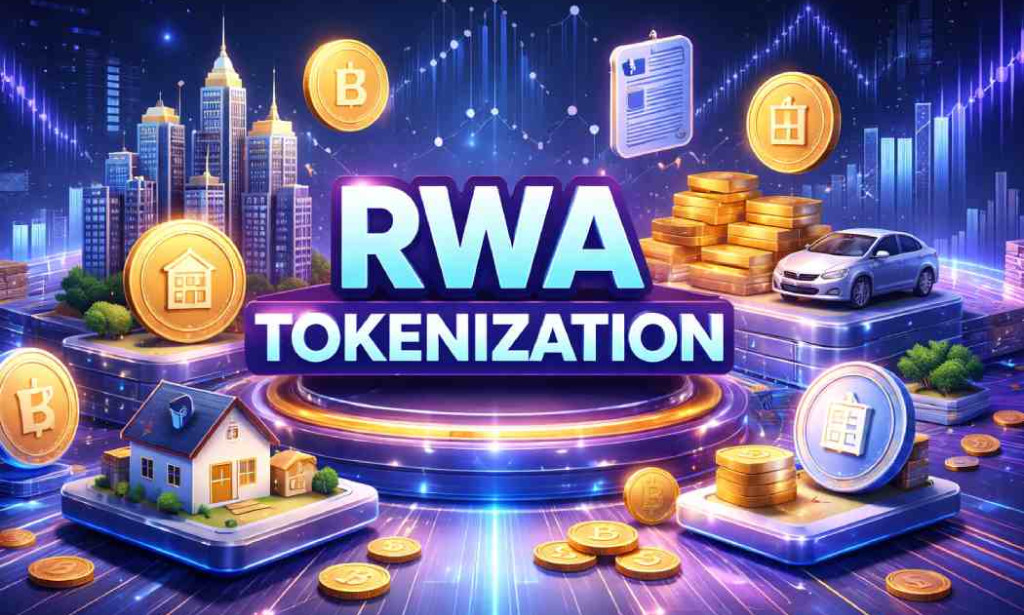
Real World Asset (RWA) tokenization is transforming how physical and traditional financial assets are represented, managed, and exchanged. By converting ownership rights into blockchain-based digital tokens, tokenization introduces greater accessibility, transparency, liquidity, and operational efficiency into markets that have historically been fragmented or difficult to access.
As blockchain infrastructure matures and institutional interest increases, multiple asset categories are becoming central to this transition. From real estate and private credit to intellectual property and commodities, tokenized assets are creating new models of ownership and investment participation. Here are the top asset classes accelerating the growth of real world asset tokenization.
1. Real Estate Tokenization
Real estate continues to be one of the largest and most active sectors in RWA tokenization. Properties such as residential developments, commercial buildings, industrial facilities, and land assets can be divided into digital ownership units. This enables fractional participation and improves liquidity in traditionally illiquid markets. Real estate tokenization also supports more efficient capital formation, portfolio diversification, and streamlined asset administration.
Key Drivers:
-
Fractional ownership opportunities
-
Increased liquidity
-
Global investor accessibility
-
Automated asset administration
2. Private Credit and Debt Instruments
Private credit markets are increasingly adopting tokenization to improve capital access and operational efficiency. Debt instruments such as loans, receivables, and structured credit products can be represented digitally and distributed more efficiently. Tokenization improves transparency and may simplify reporting and servicing processes.
Key Drivers:
-
Faster capital allocation
-
Improved debt accessibility
-
Digital servicing frameworks
-
Enhanced transaction transparency
3. Government and Corporate Bonds
Tokenized bonds are becoming an important category in digital financial infrastructure. Bond issuance, settlement, and lifecycle management can be streamlined through blockchain-based systems. Tokenization enables more efficient ownership tracking and may reduce operational complexity.
Key Drivers:
-
Digital issuance models
-
Improved settlement efficiency
-
Lower administrative overhead
-
Greater investment accessibility
4. Commodity Tokenization
Physical commodities are increasingly being represented through digital ownership frameworks. Asset classes such as precious metals, agricultural commodities, industrial materials, and energy resources can be tokenized to improve accessibility and transfer efficiency. Commodity tokenization also supports more transparent ownership records.
Key Drivers:
-
Enhanced market access
-
Improved asset transfer processes
-
Greater portfolio diversification
-
Transparent asset verification
5. Infrastructure Assets
Infrastructure projects are becoming attractive candidates for tokenization due to their long investment horizons and capital requirements. Assets such as transportation systems, utilities, energy facilities, and public infrastructure can be structured into tokenized investment models. This allows broader participation in infrastructure development.
Key Drivers:
-
Diversified funding models
-
Long-term investment structures
-
Improved capital efficiency
-
Scalable ownership frameworks
6. Equity and Private Market Ownership
Equity tokenization is expanding access to ownership opportunities in both public and private market environments. Businesses can represent ownership interests digitally and create more flexible investment structures. This model introduces programmable ownership and broader investor participation.
Key Drivers:
-
Fractional equity access
-
Digital ownership management
-
Improved investor reach
-
More efficient capital formation
7. Invoice and Receivables Tokenization
Invoices and receivables are becoming important liquidity-generating asset classes within RWA markets. Businesses can convert outstanding payments into tokenized instruments that improve working capital flexibility. This asset class supports faster access to capital and improved cash flow management.
Key Drivers:
-
Liquidity enhancement
-
Faster financing cycles
-
Reduced dependency on traditional intermediaries
-
Improved operational efficiency
8. Intellectual Property and Royalties
Intellectual property is emerging as a growing tokenization segment. Assets such as patents, licensing agreements, trademarks, publishing rights, and royalty streams can be digitized and structured into investable formats. Tokenization introduces new ways to manage and monetize intangible assets.
Key Drivers:
-
Expanded monetization models
-
Transparent royalty management
-
Digital ownership structures
-
Flexible licensing frameworks
9. Renewable Energy and Sustainability Assets
Energy infrastructure and sustainability-linked assets are becoming increasingly active in tokenized ecosystems. Renewable energy projects, environmental credits, and sustainability-linked financial structures can be represented digitally to improve transparency and participation. This asset class supports broader engagement in sustainability initiatives.
Key Drivers:
-
Transparent environmental tracking
-
Diversified participation models
-
Improved funding accessibility
-
Digital sustainability reporting
10. Land and Agricultural Assets
Land and agricultural assets are gaining attention as tokenization expands into productive real-world sectors. Agricultural land, crop-related revenue models, and land ownership structures can be digitized and managed through blockchain systems. Tokenization supports improved access and more flexible participation structures.
Key Drivers:
-
Fractional land ownership
-
Agricultural investment accessibility
-
Transparent ownership records
-
Improved capital deployment
How These Asset Classes Are Reshaping Financial Markets
The growth of RWA tokenization is creating a more connected financial environment where ownership, capital formation, and asset management become increasingly digital.
Across these asset classes, tokenization introduces several common advantages:
-
Improved accessibility to previously restricted assets
-
Greater operational efficiency
-
Increased transparency and auditability
-
Flexible ownership structures
-
Enhanced liquidity mechanisms
As infrastructure continues to mature, these benefits are expected to influence broader financial market evolution.
Conclusion
Real world asset tokenization is expanding beyond digital finance and creating new pathways for how value is represented and exchanged. Real estate, private credit, bonds, commodities, infrastructure, equities, invoices, intellectual property, sustainability assets, and agricultural assets are emerging as the leading asset classes driving this growth. Together, these categories are shaping a more programmable, transparent, and accessible asset ecosystem that bridges traditional markets with blockchain-enabled financial infrastructure.

You must be logged in to post a comment.